


Overview of Target Market Strategy
Target Market Strategy, why is it essential to have one? So you have put in endless hard work and finally made that killer product or service. But your appointment is not over yet. You have to introduce it to your target market. While it’s comparatively simple to develop some general branding and advertising content for the masses, you must devote your time and resources to hunt for more targeted markets that will help you to maximize your return on investment (ROI).
For example, General Motors and Ford will likely know that marketing their pickup trucks in Texas or North Dakota will be far more effective than vending them in New York or California. Thus, before introducing a new product or service, carefully analyze whom you want to market it to and how and when. The process, i.e., knowing whom to promote your product or service, often results in a higher ROI and involves implementing systems rather than depending on indiscriminate marketing.
Steps Target Market Strategies for Successful Business
If you are unsure where to begin, here are some ways to define your target market strategy.
1. Sharpen your focus on the target market strategy
One of the most valuable things to smartly market your product or service is to narrow your gaze, i.e., prioritize. But what are the efforts to prioritize? Here are some tips to help you redirect your marketing approaches.
- Determine the needs that your product fulfills:
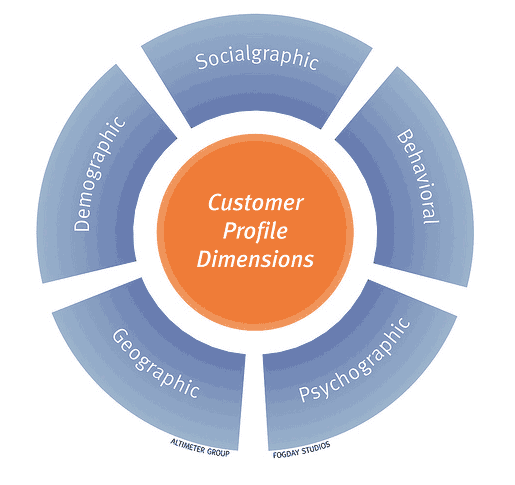
Who are the people most likely to use your product? As you answer this question, consider the factors like age, geographical location, purchasing power, marital status, etc. For instance, a fresh college graduate who has just started her first job will have a different need than a mother of three teenagers. While both will require basic necessities like food, clothing, and shelter, they will likely spend their disposable income differently. Around 50% of all millennial women shop for clothes more than twice every month, compared to only 35% of women from the older generation. Millennial men, on the other hand, spend twice as much on clothing as non-millennials.
What does that mean in the context of business? Whether you’re a clothing merchandiser offering $500 coats or $15 custom t-shirts will take you to different target market strategy segments. A t-shirt that sells for $15 can be purchased several times a year, while the $500 coat is most likely a lifetime buy. If you’re target market strategy planning to sell $15 t-shirts, you now have a much better idea about your target market, i.e., millennials who want variety at a lower price point.
- Use the funnel approach:
For some CEOs, it is usually helpful to think that target market strategy selection is a multiple-staged funnel. For instance, gender is often the first bucket. If the product or service is gender specific, your audience narrows down immediately. Age could be the second filter. If you manufacture surfboards, promoting your product to septuagenarians will unlikely lead to success. The final sieve could be the level of income. A family buying a Kia probably comes from a different income bracket than the one purchasing a Lexus.

As you pass through the successive filters, you’ll reach a more targeted market for your product and service. You can experiment with the order of the funnel and different combinations or filters to see if you reach a different final result. The final group you arrive at will make it easy to find the sweet spot, i.e., the intersection of the “able to buy” and the “highly interested.”
- Emphasize the primary value proposition:
Who are the people likely to be interested in the value of your product or service? For instance, let’s consider your company manufactures baby strollers that can be easily folded into a compact and portable shape. What type of parents would be interested in the product? Perhaps those who have to travel frequently. Maybe you’re a DSLR camera manufacturer that can withstand water and submersion on hard rocks. In such cases, your target market analysis could be outdoor photographers who buy from stores like REI or Patagonia. Regardless of the product or service, jot down your product’s core values. Then, draw a line to the demographic group which gives priority to these values.
 Image source: pixabay.com
2. Obtain data for your target market strategy
Hunting down the right target market strategy means infusing a conclusion with objective data. The data may come from many sources. While gathering your data, here are some guidelines to keep in mind.
Recommended courses
- Gather survey data to locate potential markets:
Metrics are an excellent way to pinpoint probable demographic groups. This may include surveys via newsletters and email blasts. Or you may find hiring a marketing firm to collect the preliminary data worthwhile. The key, either way, is to collect the demographic data through the survey. It will help you correlate positive responses for your product with particular demographic groups. These are the same groups your product should target later.
- Aggressively draw on existing data:
It’s nothing unlikely that your company is offering a product or service mainly similar to those already existing in the market. Do as much homework as possible in such a case. What demographic target market strategy group is buying the product? When do they buy it? Which item in the product lineup is trendy? Enough data is available online to get a macro view of the cross-section of customers purchasing products similar to what you offer. You can also get your macro view regarding the type of customers.
Here’s how you can carry out market research yourself. Spend half a day at a local coffee shop. Whenever the customers place an order, take careful notes about what each person is buying. How old are they? What are gender division and ethnicity? Is there any particular drink that is more popular than the rest? When is the busiest time in the store? Once you have your data, apply the findings to marketing efforts for your coffee company.
- Look at your network:
The next time you spend time with friends and family, look at the products they use. Would they be interested in your product or service? Ask blunt questions like “Would you use this? Do you need this product?” or “Do you know anyone who would use this?” These questions can provide essential data.
You can tap into your network of colleagues, mentors, and funders. Ask them to scrutinize your products. They can even try them out for free for some days. They may surprise you with targeted marketing you never imagined and reveal innovative ways to target other prospective customers to use the product.
Whenever possible, draw diverse perspectives while you build marketing efforts. The goal will be to let the demographic groups see the connection between their need and your product. Analyzing multiple data streams and continued efforts to identify target customers will help you reach that end, besides maximizing your ROI.
3. Refocus branding efforts
Branding campaigns are essential to build product awareness among prospective buyers that you have not scoured as yet. While working on these campaigns, you can use the help of a professional digital marketing Perth agency to help you gain a competitive edge and credibility. These campaigns also help increase awareness and engagement among existing prospects and shape the perception of your market strategy company, brand, and product offering. The final goal of a branding campaign is to net more prospects at the top of the funnel and increase the flow of leads through the funnel, converting an opportunity into a customer.
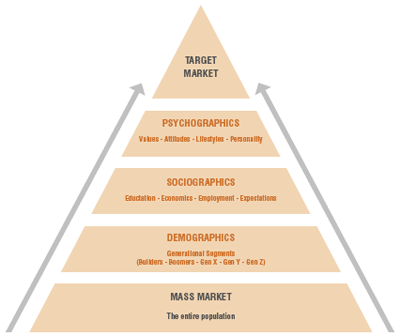
Use the collected customer segmentation data for developing exclusive “buyer personas” for stakeholders involved in influencing and taking the “buy” call. This could be information like a role in the organization, business needs and challenges, preferred marketing content, and buying habits.
4. Engage through relevant content
Your product or service may have a definite edge over the competition. But prospects may not become customers until they get familiar with and build trust in your brand. Nice things happen when your targeted marketing understands who you are, your work, and how different you’re from the rest. Towards that end, give them all opportunities to educate themselves whenever they find the time.
Try developing an integrated online market strategy approach that extends exhaustive coverage via social marketing, display advertisements, emails, and various other tactics that allow putting relevant content before prospective customers at every stage of the funnel. Remember, your content must be appropriate. Tailor the content to address the “target personas” you have defined and map your content to the proper purchase stage of the online channel that’s most likely to engage the prospective customer.

5. Retarget to increase conversion
Prospects that click on your advertisements, share social media messages, or visit your corporate or website blog, are already engaged with the brand. They have already sent a signal of interest in your product or service. These prospects are more likely to be considered lower in the marketing funnel and more highly qualified prospects.
With display advertisement retargeting, you can keep your brand messages and offers right in front of your target customer/market, regardless of where they are, thereby increasing the chances of conversion. While launching a retargeting campaign, create customized advertisements based on a particular audience segment defined by the prospects’ demographics or interests. For instance, if someone visits your homepage but does nothing else, retarget that person with a creative advertisement focusing on increasing brand awareness and highlighting your product’s overall value proposition. But if that person navigates to a particular product page on the website, grab the opportunity to focus the advertisement on reinforcing the value of that product.
Evaluating your decisions in the target market
Once you have zeroed in on your target market strategies, consider the following questions.
- Are there enough people to fit your criteria?
- Will your target market benefit from what you have to offer? Is there a demand for it?
- Can you understand what drives your target market to make decisions?
- Are they able to afford your product or service?
- Can you reach your message to the target market?
- Can you reach them with your message, and are they easily accessible?
Try not to break down your target market strategy too far. Remember, there could be multiple niche markets. Consider whether the marketing message should be different for each market. If you can reach all niches with a standard message, maybe your market has been broken down too far. Also, if only 40 people fit your criteria, you may have to re-evaluate your target. The trick is to identify the correct balance.

All said and done, defining a target market strategy is difficult. But if you know who you want to target, it becomes easier to find out the media you can exploit to reach them and the messages that’ll strike a chord with them. Trust on emails to deliver the goods instead of physical mail. Save money to get a better ROI.
A high-end portrait studio had several sales units spread over several destination malls. The studio sent direct emails to targeting who they “thought” were customers within a pre-fixed radius. They did this consistently and found no results from the expensive campaigns. The studio called a marketing firm to help them out. The first thing the firm did was to look into its current customer database. They found enough client information since it was a high-end studio that kept exhaustive details of their customers. The studio would complete a questionnaire about the customer’s name, address, children, and likes and dislikes.
The firm scanned the data and identified each customer’s location on the map. The best customers came from beyond the studio’s target radius since it was a destination mall. The majority of the customers came from between 13 to 18 miles away. The firm took the data and devised a new geography-targeted mailing list for families living within this range, considering other customer data.
The next time the studio ran a direct mail campaign, it was a grand success.
Recommended Article
Here are some articles that will help you to get more detail about the Target Market Strategy, so go through the link.

