


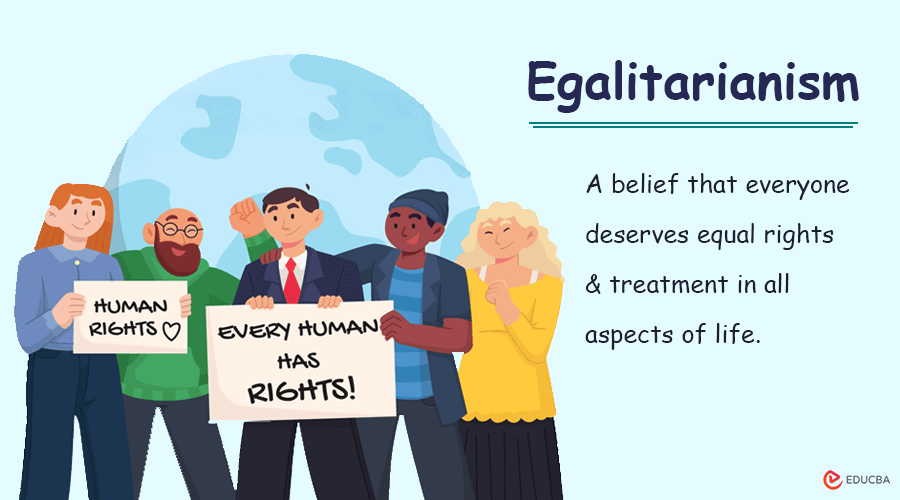
What is Egalitarianism?
Egalitarianism is the belief that everyone should be treated equally and have the same political, economic, social, and civil rights.
It advocates for fairness, justice, and equality in all aspects of life. In a truly egalitarian society, no one is privileged or disadvantaged due to their race, gender, social class, or other inherent factors.
For example, if a company implements equal pay for all employees doing the same job, regardless of their gender or background, it reflects an egalitarian principle. It fosters a fair and just workplace, ensuring everyone receives what they deserve based on merit rather than external factors.
Historical Background
The concept of egalitarianism has roots in various historical movements and philosophies. Many ancient societies practiced some form of equality. However, systematic efforts to establish egalitarian principles became more prominent during the Enlightenment (17th and 18th centuries). Philosophers like John Locke, Jean-Jacques Rousseau, and Thomas Paine supported equal rights and justice, questioning the strict social hierarchies of their time.
Egalitarian ideals influenced major historical events, such as the French Revolution (1789), which aimed to end aristocratic privileges, and abolitionist movements that fought to end slavery. The 20th and 21st centuries saw continued efforts in civil rights, gender equality, and economic justice movements worldwide.
Types of Egalitarianism
Egalitarianism can be classified into several categories based on its focus and application:
- Political Egalitarianism: Advocates for equal participation in political processes. This includes equal voting rights, access to public office, and freedom of speech for all citizens.
- Economic Egalitarianism: Seeks to reduce income and wealth disparities by promoting fair wages, access to resources, and social welfare programs.
- Social Egalitarianism: Focuses on eliminating discrimination based on race, gender, caste, religion, and other social factors.
- Legal Egalitarianism: Ensures that laws apply equally to all individuals, regardless of their background.
- Gender Egalitarianism: Advocates for equal opportunities and rights for all genders, including equal pay, representation, and personal freedom.
- Religious Egalitarianism: Promotes the idea that all religious beliefs should be treated with equal respect and that individuals should not face discrimination based on their faith.
Benefits of an Egalitarian Society
A society that embraces egalitarian values benefits in numerous ways:
- Greater Social Harmony: Conflicts and social unrest decrease when people feel treated fairly.
- Economic Growth: Providing equal opportunities allows talented individuals to contribute to economic progress.
- Innovation and Development: A fair society encourages diverse perspectives, leading to creativity and technological advancements.
- Improved Quality of Life: Equal access to healthcare, education, and resources leads to a healthier, more prosperous society.
- Stronger Democracy: Political equality ensures that governance represents the interests of all people.
Egalitarianism in Modern Society
In today’s world, egalitarianism plays a crucial role in shaping policies, laws, and societal norms. Governments and organizations strive to implement egalitarian principles to create inclusive environments.
- Workplace Equality: Many companies have policies to ensure fair pay and equal opportunities for everyone, regardless of gender, race, or nationality.
- Education: Schools and universities aim to provide equal learning opportunities for all students, including scholarships for the underprivileged.
- Healthcare: Many countries aim for universal healthcare so everyone can access medical services, no matter their financial situation.
- Legal Reforms: Laws against discrimination, hate speech, and workplace harassment are enforced to uphold egalitarian values.
Challenges to Egalitarianism
Despite progress, achieving complete equality remains challenging due to deep-rooted biases and systemic inequalities. Some common obstacles include:
- Economic Disparities: The rich are getting richer while the poor struggle more, making economic equality harder to reach.
- Gender Inequality: Women and marginalized communities still face barriers in employment, wages, and leadership roles.
- Cultural and Social Norms: Some societies resist change due to long-standing traditions that support hierarchies.
- Political Resistance: Certain governments or political groups may oppose policies that promote equality, fearing loss of power or economic interests.
Final Thoughts
Egalitarianism is a fundamental principle that strives for fairness and justice in all aspects of life. Although progress has been made, challenges still exist to achieve these goals fully. By promoting equal rights, access to resources, and opportunities for all, societies can move closer to achieving true equality. A world that embraces egalitarian values ensures dignity, respect, and prosperity for everyone, making it a goal worth striving for.
Frequently Asked Questions (FAQs)
Q1. Is egalitarianism the same as equity?
Answer: No. Equality means treating everyone the same, while equity means providing different levels of support to ensure fairness. Egalitarianism often aligns more with equity, recognizing that some people need more assistance to achieve equal outcomes.
Q2. Is egalitarianism the same as socialism?
Answer: No, though they share similarities. Socialism is an economic system advocating for collective ownership of resources. In contrast, egalitarianism is a broader philosophy promoting equality in different aspects of life, including politics, economy, and society.
Q3. Can businesses be egalitarian?
Answer: Yes, companies can adopt egalitarian principles by ensuring fair wages, equal promotion opportunities, diverse hiring, and inclusive work environments.
Q4. Are there examples of egalitarianism in history?
Answer: Yes, some historical examples include:
- Hunter-gatherer societies shared resources and had a minimal social hierarchy.
- The French Revolution (1789) promoted the idea of liberty, equality, and fraternity.
- Feminist movements advocating for gender equality.
Q5. What is the difference between horizontal and vertical egalitarianism?
Answer: The difference is:
- Horizontal egalitarianism: Treating everyone equally in status and decision-making (e.g., workplace democracy).
- Vertical egalitarianism: Addressing inequalities through policies that redistribute resources and opportunities (e.g., progressive taxation).
Recommended Articles
We hope this guide on egalitarianism has been helpful. Check out these recommended articles for more insights on social justice, economic equality, and policies that promote fairness in modern society.

