
What is a DDoS Botnet?
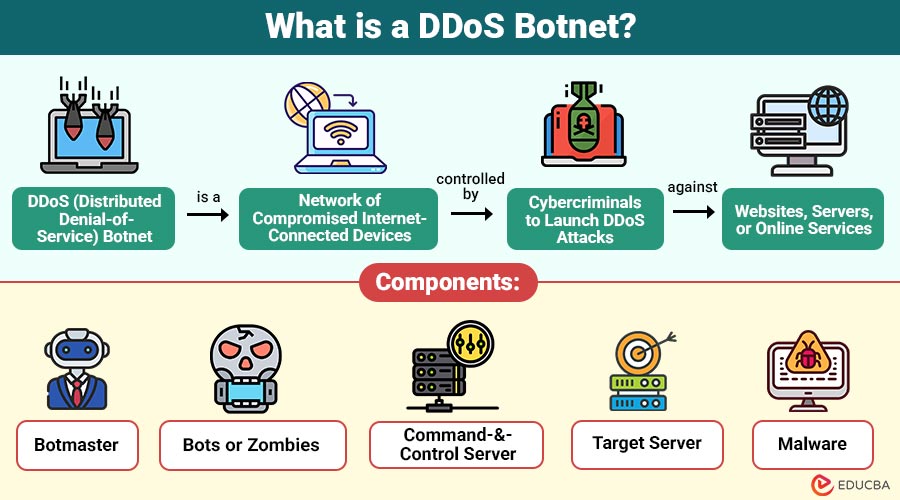
A DDoS (Distributed Denial-of-Service) botnet is a network of compromised internet-connected devices controlled by cybercriminals to launch DDoS attacks against websites, servers, or online services.
In a DDoS botnet attack, thousands or even millions of infected devices simultaneously flood a target system with traffic. This overloads the target’s bandwidth, server resources, or applications, causing the service to be slow, unavailable, or completely offline.
Botnets commonly consist of:
- Computers
- Smartphones
- IoT devices
- Routers
- CCTV cameras
- Smart home devices
Cybercriminals infect these devices with malware and remotely control them through command-and-control (C&C) servers.
Table of Contents:
Key Takeaways:
- DDoS botnets use hacked devices to send huge traffic and overload servers at once.
- Weak passwords, viruses, and unpatched security issues help hackers build large botnet networks.
- DDoS attacks cause money loss, service problems, reputation damage, and higher security costs.
- Strong security, regular monitoring, and DDoS protection tools help prevent major cyberattacks.
How Does a DDoS Botnet Work?
A DDoS botnet attack follows a structured process.
1. Device Infection
Attackers distribute malware through:
- Phishing emails
- Malicious downloads
- Weak passwords
- Software vulnerabilities
- Fake applications
Once infected, the device becomes a “bot” or “zombie.”
2. Botnet Formation
Thousands of infected devices connect to a central control system called the Command-and-Control (C&C) server. The attacker can remotely issue commands to all infected devices simultaneously.
3. Attack Initiation
The botmaster instructs the bots to flood a target website or server with traffic.
This traffic may include:
- Fake requests
- Large data packets
- Repeated connection attempts
4. Service Disruption
The target system becomes overloaded and unable to handle legitimate user requests.
As a result:
- Websites crash
- Applications slow down
- Online services become inaccessible
Components of a DDoS Botnet
A DDoS botnet consists of several key components that work together to launch large-scale cyberattacks against targeted systems and networks.
Types of DDoS Attacks
DDoS botnets can launch multiple attack types depending on the attacker’s objective.
1. Volumetric Attacks
Volumetric attacks overwhelm network bandwidth by generating enormous volumes of traffic, making websites, servers, or online services inaccessible.
Examples:
- UDP Flood
- ICMP Flood
2. Protocol Attacks
Protocol attacks exploit vulnerabilities in network communication protocols, exhausting server resources and disrupting legitimate connection requests.
Examples:
- SYN Flood
- Ping of Death
3. Application Layer Attacks
Application-layer attacks target web applications by sending excessive requests, thereby slowing or crashing online services.
Examples:
- HTTP Flood
- Slowloris Attack
4. Amplification Attacks
Amplification attacks misuse public servers to generate amplified traffic responses that massively overwhelm targeted victim systems.
Examples:
- DNS Amplification
- NTP Amplification
Common Botnet Infection Methods
Cybercriminals use various methods to infect devices with malware and add them to malicious botnet networks.
Real-World DDoS Botnet Examples
Several famous botnet examples have shown how powerful and damaging large DDoS cyberattacks can be worldwide.
1. Mirai Botnet
The Mirai botnet became famous in 2016 for infecting IoT devices such as cameras and routers. It launched massive attacks against:
- DNS providers
- Internet infrastructure companies
- Online platforms
Mirai exposed the security weaknesses of IoT devices globally.
2. Mēris Botnet
The Mēris botnet exploited vulnerable MikroTik devices, generating extremely high traffic volumes. It targeted:
- Financial institutions
- Technology platforms
- Internet service providers
3. GameOver Zeus
Although mainly known for financial theft, this botnet also had DDoS capabilities. It demonstrated how botnets can serve multiple cybercriminal purposes simultaneously.
Impact of DDoS Botnet Attacks
DDoS botnet attacks can cause severe operational and financial damage.
Prevention Methods of DDoS Botnet
Organizations can reduce the risk of DDoS botnet attacks by implementing strong cybersecurity practices and proactive security measures.
Final Thoughts
A DDoS botnet is a major cybersecurity threat that uses compromised devices to flood networks, websites, or applications with massive traffic. This causes service disruptions, financial losses, and operational damage. Strong cybersecurity measures, monitoring, secure configurations, and DDoS protection strategies help organizations defend their digital infrastructure effectively.
Frequently Asked Questions (FAQs)
Q1. Can small businesses become victims of DDoS botnet attacks?
Answer: Yes, attackers frequently target small businesses because they often lack advanced cybersecurity infrastructure and protection mechanisms.
Q2. Are DDoS botnet attacks illegal?
Answer: Yes, launching or operating a DDoS botnet is illegal and considered a serious cybercrime in most countries.
Q3. Why are IoT devices commonly targeted in DDoS botnets?
Answer: Many IoT devices use weak security settings, outdated firmware, and default passwords, making them easy attack targets.
Recommended Articles
We hope that this EDUCBA information on “DDoS Botnet” was beneficial to you. You can view EDUCBA’s recommended articles for more information.


