


All About The CRM vs PRM
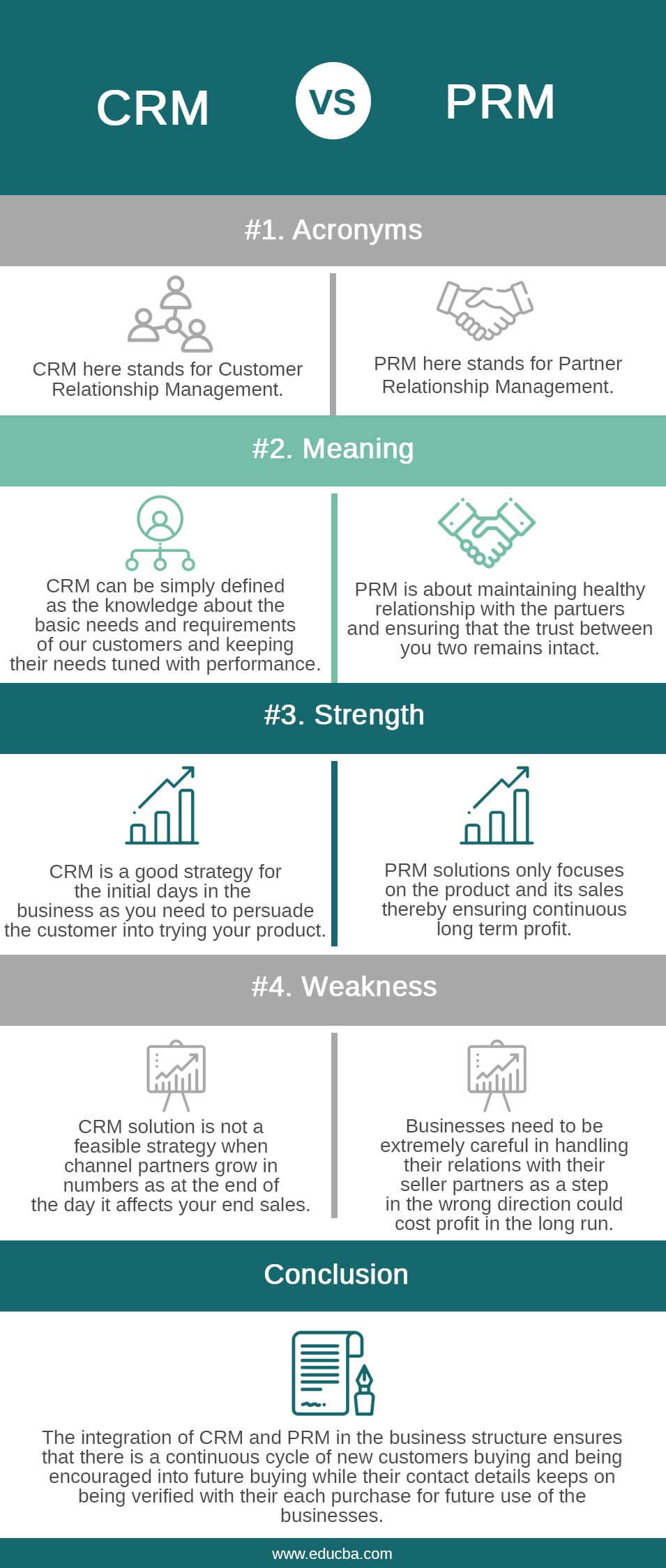
CRM stands for Customer Relationship Management, and PRM stands for Partner Relationship Management. Both terms are distinct and not invented or coined just a few minutes ago. These terms repackage old concepts into new forms with functional differences. PRM (Partner Relationship Management) involves multiple layers, as a business may work with multiple partners. Therefore, aligning with more business processes and workflows may be necessary to ensure a great sales enterprise. It is a sophisticated loop, with each partner playing a multidimensional role in bringing value to the fore across production, sales, and consumption. In this article, we will see the difference between CRM and PRM.
CRM vs PRM
Managing customers and technology in channel sales can be challenging but crucial for market expansion. CRM (Customer Relationship Management) is about understanding and meeting customers’ needs to ensure satisfaction and drive revenue. Implementing CRM vs PRM requires customer interaction technologies across channels.
CRM vs PRM Infographics
#TIP: Relationships with customers are not the primary focus of businesses, despite the comparison between PRM and CRM. They focus on enticing customers to spend more to boost their profits. Thus, corporate CRM collects data on customers’ spending habits to understand their needs.
Partner Relationship Management is about maintaining a healthy relationship with partners and ensuring that the trust that brought you together remains intact. Communication is integral to the business structure when a partner is involved, as it is essential to understand your partner’s needs while articulating your own requirements. PRM structure fosters business growth through collaborative decision-making among partners. PRM challenges partners to build a brighter future on a positive note while developing an exciting, profitable business idea.
Pros of CRM
- CRM has seen an increase in expenditure from many businesses as this approach uses modern technology, phone, SMS, email, and post, to continuously promote their product to direct individual customers
- CRM, through extensive interaction, reads the habits of its consumers and achieves their confidence in buying the idea that a new product is always desirable and bought
- It is a persuasive strategy in the initial days of business to encourage customers to try your product.
Cons of CRM
- CRM relies on data collected from customer behavior, but it struggles with the unpredictability of human behavior and the rapid changes in personal details in today’s fast-paced world.
- CRM may not be feasible with a growing number of channel partners, as it can impact end sales.
Pros of PRM
- PRM solutions only focus on the product and its sales, thereby ensuring continuous long-term profit
- It helps the organization manage future sales by encouraging customers to return for future purchases.
- PRM fosters a powerful collaboration between the dealers, vendors, and channel partners and allows a business model within the extended sales ecosystem
Cons of PRM
- Businesses need to be extremely careful in handling their relations with their seller partners, as a step in the wrong direction could cost profit in the long run
- PRM is still considered to be a part of the sales department, and its role as a solution for continuous profit is ignored in the strategic planning of the business meetings
Can the CRM and PRM Strategies Co-exist in a Business Model?
The boundaries of any country no longer confine businesses. They are going global, and the hunger to expand and achieve higher revenues has made businesses more interdependent. To achieve global reach, businesses must build strong relationships through PRM strategies.
A business venture like this would aim to optimize customer management and drive long-term profitability. The coexistence of CRM and PRM strategies can help businesses achieve global reach through strong customer relationships.
CRM would help generate new customers and keep existing customers satisfied through data collection. There are even free online sales CRM options you can use. At the same time, PRM will further support CRM to ensure new customers continue to provide business opportunities by returning for future purchases. When the customer returns to the business, their personal details can be easily verified and stored for future reference.
To operationalize this coexistence, many companies layer a dedicated partner portal on top of their CRM. Modern PRM software integrates partner onboarding, enablement, deal registration, MDF approvals, and co-marketing within the same account and opportunity data in the CRM, giving channel teams visibility from referral to closed-won. This alignment reduces channel conflict, accelerates approvals, and enables partners to self-serve content and training while keeping sales and marketing data centralized. When evaluating solutions, prioritize native CRM integrations, granular permissions, and analytics that attribute revenue to partner-sourced and partner-influenced deals.
Thus, integrating CRM and PRM into the business structure ensures a continuous cycle of acquiring new customers and encouraging them to buy again. At the same time, their contact details are verified with every purchase for future use by businesses.
Recommended Articles
So here are some articles that will help you get more details about CRM vs PRM, PRM vs CRM, and CRM and PRM. Please use the link below.

