
Introduction to Types of Digital Media
Types of digital media refer to the various formats in which digital content is created, distributed, and consumed online. These include videos, social media, podcasts, websites, blogs, and other digital platforms. Understanding these types enables businesses, creators, and users to engage effectively in communication, entertainment, and marketing within today’s fast-paced digital environment.
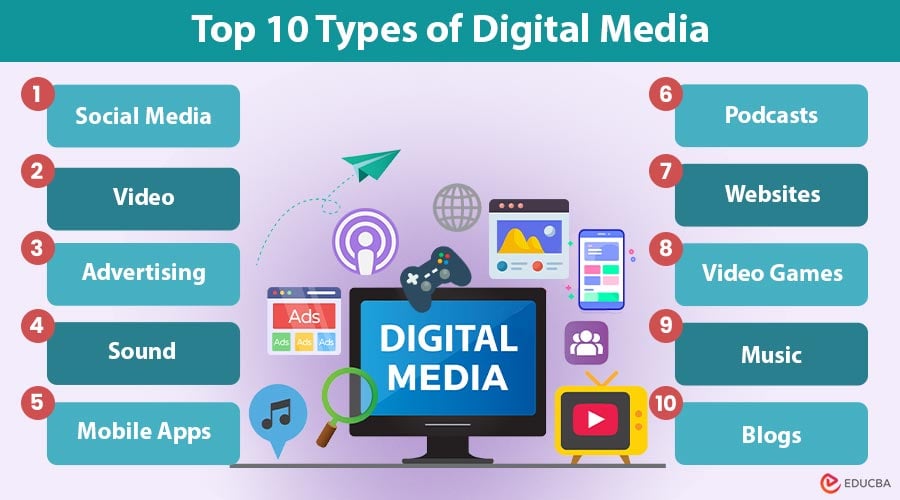
Top 10 Types of Digital Media
Explore the most impactful and commonly used digital media types shaping today’s digital landscape.
#1. Social Media
Social media platforms are interactive digital channels that enable users to create, share, and engage with content, fostering real-time communication, community-building, brand interaction, and information sharing across global audiences.
Characteristics:
- User-generated content
- Community interaction
- Real-time communication
Examples:
- Facebook: Community engagement, marketplace, events
- Instagram: Photo/video sharing, influencer marketing
- TikTok: Short-form video content and trends
#2. Video
Video is a multimedia format combining visuals and audio to convey stories, instructions, or messages. Marketers, educators, and entertainers widely use it due to its high engagement potential.
Characteristics:
- Visual and auditory elements
- High engagement
- Easy to consume across devices
Examples:
- YouTube tutorials and vlogs
- Instagram Reels and stories
- Explainer videos for products or services
#3. Advertising
Digital advertising involves leveraging online platforms to promote products or services to specific audiences through paid advertisements. It encompasses search, display, social media, and video ads, providing targeted visibility, measurable performance, and extensive market reach.
Characteristics:
- Targeted based on user data
- Pay-per-click or impressions
- Trackable and scalable
Examples:
- Google Ads: Search and display advertising
- Facebook Ads: Demographic targeting
- YouTube Pre-roll Ads: Short video ads before content
#4. Sound
Sound-based digital media encompasses audio elements such as effects, music, and alerts. It enhances user experience, supports branding, and is essential in games, apps, websites, and multimedia storytelling environments.
Characteristics:
- Audio-only or as a supporting element
- Enhances ambiance and experience
- Often paired with visual content
Examples:
- Sound effects in mobile games
- Ambient music in meditation apps
- Notification tones on smartphones
#5. Mobile Apps
Mobile apps are downloadable software programs designed for smartphones and tablets, offering functionalities like shopping, gaming, finance, health tracking, or productivity, and enabling personalized, on-the-go user experiences.
Characteristics:
- Installed on a device
- Platform-specific (iOS, Android)
- Interactive and user-centric
Examples:
- Zomato or Uber Eats for food delivery
- Banking apps like HDFC or SBI
- Fitness apps like MyFitnessPal
#6. Podcasts
Podcasts are digital audio programs released in episodes, covering diverse topics like interviews, news, education, and storytelling. They provide a convenient, hands-free way for listeners to learn and stay entertained across multiple platforms.
Characteristics:
- Audio-only format
- Subscription-based or freely available
- Often hosted by individuals or media groups
Examples:
- True crime series
- Tech or business podcasts
- Language learning podcasts
#7. Websites
Websites are digital spaces accessible via browsers, hosting a variety of content, services, or tools. They support brand presence, information sharing, e-commerce, blogs, and multimedia, serving both individuals and businesses online.
Characteristics:
- Can be static or dynamic
- Often optimized for desktop and mobile
- Indexed by search engines
Examples:
- News websites like the BBC or CNN
- E-commerce platforms like Amazon
- Portfolios for artists or freelancers
#8. Video Games
Video games are interactive digital entertainment experiences that blend graphics, sound, and user control. They include sophisticated learning or professional training simulations as well as lighthearted mobile games.
Characteristics:
- Immersive environments
- Real-time interaction
- Often includes storylines, objectives, or open worlds
Examples:
- Fortnite: Multiplayer battle royale
- Minecraft: Sandbox creativity
- FIFA: Sports simulation
#9. Music
Digital music refers to audio content distributed through streaming or downloads. It is used for entertainment, branding, and emotional engagement, and is embedded in platforms such as playlists, ads, and multimedia content.
Characteristics:
- Streamed or downloaded
- Can be monetized via licensing
- Often embedded in other media
Examples:
- Spotify playlists
- Apple Music albums
- Jingles used in ads
#10. Blogs
Blogs are web-based articles or journal entries that inform, entertain, or educate. They regularly update their readers, support SEO, and use them widely for thought leadership, branding, and content marketing.
Characteristics:
- Informal, informative, or opinion-based
- Search engine optimized
- May include images, videos, or comments
Examples:
- Travel blogs
- Tech tutorials
- Product review blogs
Benefits of Using Various Digital Media Types
Digital media offers several strategic benefits across communication, marketing, education, and entertainment. Below are key benefits that highlight its value in today’s connected world.
- Wider Reach: Digital media reaches global audiences at any time, from anywhere, ensuring 24/7 availability and accessibility across devices, locations, and time zones.
- Cost-Effective: Platforms like blogs and social media allow low-cost or free publishing, making it budget-friendly for individuals and small businesses.
- Interactive: Digital media enables two-way communication, allowing users to engage with content creators through comments, shares, feedback, and real-time discussions.
- Measurable: You can track performance using analytics tools to measure engagement rates, views, conversions, click-throughs, and audience behavior in real-time.
- Multimedia Integration: Combines text, audio, video, and images into a single experience, making content more dynamic, engaging, and easier to comprehend.
Emerging Trends in Digital Media
Digital media is rapidly evolving. Below are the latest trends reshaping how content is created, delivered, and consumed across platforms.
- Short-form Video: Platforms like TikTok and Instagram Reels capture attention quickly, promoting high engagement through bite-sized, easily consumable video content.
- AI-Generated Content: AI tools, such as ChatGPT and MidJourney, streamline content creation, enabling faster, more scalable, and increasingly human-like digital media production.
- AR & VR Experiences: Augmented and virtual reality offer immersive training, marketing, and entertainment, transforming user interaction with realistic, engaging digital environments.
- Interactive Content: Polls, quizzes, and gamified experiences increase user participation, encouraging deeper engagement and longer time spent with digital media.
- Personalized Media: Content tailored using user data and behavior insights delivers customized experiences, improving relevance, satisfaction, and conversion across platforms.
Final Thoughts
In the connected world of today, it is crucial to comprehend the different forms of digital media. Each format—from social media and videos to blogs and podcasts—offers unique opportunities for engagement, branding, and communication. These formats change along with technology, so it’s critical for people and organizations to keep current. Embracing the right digital media types can significantly boost visibility, interaction, and impact in the digital landscape.
Recommended Articles
We hope that this EDUCBA information on “Types of Digital Media” was beneficial to you. You can view EDUCBA’s recommended articles for more information.


