
What is Price Anchoring?
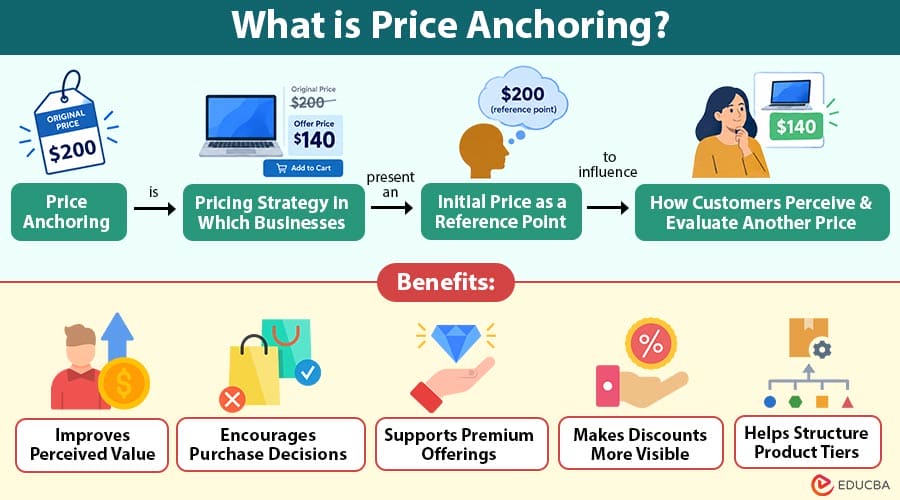
Price anchoring is pricing strategy in which businesses present an initial price as a reference point to influence how customers perceive and evaluate another price.
When customers compare prices, the first price they see can affect their judgment of whether another offer is expensive, affordable, or valuable. Businesses use this psychological effect to make selected prices appear more attractive.
For example, a retailer may display a product with an original price of $200 and offer it for $140. Even if customers do not know the product’s actual market value, the $200 price can become a reference point. The $140 price may then appear more reasonable because customers compare it with the higher amount.
Price anchoring is commonly used in retail, e-commerce, subscriptions, restaurants, travel services, and many other industries.
Table of Contents:
- Meaning
- Importance
- Working
- Types
- Examples
- Benefits
- Limitations
- Difference
- Factors Affecting Price Anchoring
- Applications
Key Takeaways:
- Price anchoring uses an initial price as a reference point for evaluating another price.
- Businesses often display higher original prices before presenting discounted or alternative prices.
- The strategy is based on how people use reference points when making decisions.
- Anchoring can influence customers’ perceptions of value, savings, and affordability.
- Effective pricing should use accurate and transparent price information.
Importance of Price Anchoring
Price anchoring can influence customer decision-making and help businesses structure their pricing presentation.
1. Influences Price Perception
Price anchoring provides a reference point that can affect how customers perceive whether a product’s current price seems affordable, expensive, or reasonable.
2. Highlights Discounts
Displaying an original price alongside a reduced price helps customers see the difference and understand the potential savings.
3. Supports Product Positioning
Businesses can present premium products or higher-priced plans to establish a reference point that influences how customers perceive the value of other options.
4. Simplifies Comparisons
Presenting multiple prices together allows customers to compare products, plans, or packages more easily and identify differences in features, benefits, and costs.
5. Supports Revenue Strategies
Businesses can create multiple price points to accommodate customers with different budgets while encouraging comparisons between products and potentially increasing purchase value.
How Does Price Anchoring Work?
Price anchoring works because customers often evaluate prices comparatively rather than independently. Instead of asking whether a product is objectively worth a certain amount, they may compare its price with another amount shown earlier.
The process generally involves the following steps:
1. Establishing a Reference Price
The business presents an initial price that serves as the customer’s reference point. This may be an original price, premium option, standard price, or competitor-related comparison.
2. Presenting the Target Price
The business then presents the price it wants customers to consider. This price may be lower than the anchor or may offer additional features at a higher price.
3. Creating a Price Comparison
Customers naturally compare the two prices. The difference can influence their perception of savings, affordability, or product value.
4. Supporting the Perceived Value
Features, benefits, quality, discounts, or additional services can reinforce the customer’s understanding of why the target price is reasonable.
Types of Price Anchoring
Below are common types of price anchoring used in marketing and pricing strategies.
1. Original Price Anchoring
Original price anchoring uses a product’s previous or listed price as a reference point, making the current lower price appear more attractive.
2. Premium Product Anchoring
Premium product anchoring presents an expensive product first, establishing a higher reference point that can influence customers’ perception of affordable alternatives.
3. Tiered Price Anchoring
Tiered price anchoring offers multiple pricing levels, allowing higher-priced options to create reference points that influence perceptions of moderately priced choices.
4. Bundle Anchoring
Bundle anchoring compares individual product prices with a combined package price, helping customers see the bundle as offering greater overall value.
5. Comparative Price Anchoring
Comparative price anchoring compares a product’s price with another relevant price, helping customers judge whether the price seems reasonable or attractive.
Examples of Price Anchoring
Below are common examples of price anchoring across different industries and customer purchasing situations:
1. Restaurant Menu
A restaurant places a premium meal priced at $80 near other meals priced at $35 and $45. The $80 option creates a higher reference point, which can affect how customers perceive the prices of the other meals.
2. Travel Services
A travel company may initially display a luxury package priced at $2,500 and then present a standard package at $1,400. The higher-priced package can establish a reference point for comparing the standard package.
3. E-Commerce Product Pricing
An online store lists a premium smartphone at $1,200 before showing another model priced at $750. The higher price creates a reference point, making the $750 smartphone appear more affordable.
Benefits of Price Anchoring
Below are the key benefits of price anchoring:
1. Improves Perceived Value
A suitable reference price helps customers understand an offer’s value by providing a clear basis for comparing pricing options.
2. Encourages Purchase Decisions
Clear price comparisons simplify customer evaluation by showing differences between available options, helping buyers make purchase decisions with greater confidence.
3. Supports Premium Offerings
A high-priced option sets a reference point that helps businesses position premium products or services as valuable, differentiated choices.
4. Makes Discounts More Visible
Customers can quickly recognize savings when the original reference price and current selling price are displayed together during purchasing decisions.
5. Helps Structure Product Tiers
Businesses can create multiple price levels to guide customers toward suitable products or service plans based on features and perceived value.
Limitations of Price Anchoring
Despite its usefulness, price anchoring has limitations businesses should consider.
1. Customers May Question the Anchor
If the reference price seems unrealistic, inflated, or unsupported, customers may question the pricing and lose confidence in the business.
2. It May Not Work for Informed Buyers
Customers familiar with market prices, product features, or competing offers may recognize the actual value and give less importance to the presented anchor.
3. Excessive Discounts Can Reduce Trust
Frequent or unrealistic discounts may make customers doubt whether the original price was genuine, potentially reducing their trust in the business.
4. It Can Create Poor Customer Expectations
Customers who frequently purchase products at discounted prices may become accustomed to promotions and postpone purchases while waiting for future offers.
5. Price Alone Does Not Determine Value
Customers may consider quality, features, service, brand reputation, convenience, and available alternatives rather than relying only on the price presented as an anchor.
Difference Between Price Anchoring and Price Discounting
The table below highlights the key differences between the two:
| Basis | Price Anchoring | Price Discounting |
| Meaning | Uses a reference price to influence price perception | Reduces the selling price from a previous or regular price |
| Main Focus | Customer comparison | Monetary price reduction |
| Reference Point | Important to the strategy | May or may not be emphasized |
| Purpose | Shapes perceived value or affordability | Encourages purchases through lower prices |
| Example | $200 shown before a $140 price | 20% discount on a $200 product |
Factors Affecting Price Anchoring
Several factors determine how customers respond to an anchor.
1. Relevance of the Anchor
The reference price should closely relate to the product or service, helping customers make meaningful comparisons and form realistic price expectations consistently.
2. Customer Knowledge
Customers with greater market knowledge may rely on previous purchases, competitor prices, and personal experience rather than the presented anchor alone.
3. Price Difference
A larger difference between anchor and target price can increase perceived savings, but an extreme gap may appear unrealistic or potentially misleading.
4. Product Quality
Customers evaluate whether product features, performance, quality, and benefits reasonably support the price used as the reference point for comparison purposes.
5. Market Conditions
Competition, demand, seasonality, economic conditions, and prevailing market prices can influence customer expectations and significantly affect responses to price anchors.
6. Presentation
The position, visibility, wording, and formatting of prices can influence how easily customers notice, interpret, and compare available options.
Applications of Price Anchoring
Price anchoring is used across several industries, including:
1. Retail
Businesses display original and discounted prices together to help customers compare the current price with the previous price.
2. E-Commerce
Online stores present product prices, discounts, bundles, and premium alternatives together to create clear reference points for shoppers.
3. Software
Software companies offer multiple subscription tiers, allowing higher-priced plans to provide reference points for customers comparing available features.
4. Hospitality
Hotels and resorts present premium rooms, suites, or packages alongside standard options to establish higher price references.
5. Restaurants
Restaurants may include high-priced dishes or specialty items on menus, providing reference points for comparing other menu options.
6. Financial Services
Financial institutions present different service packages, account plans, or advisory options at multiple price points for customers to compare.
Final Thoughts
Price anchoring is a pricing and marketing strategy that uses an initial price as a reference point for evaluating another offer. It can influence perceptions of value, savings, affordability, and product positioning. Businesses commonly apply it through discounts, premium products, pricing tiers, bundles, and comparative offers. However, the anchor should be relevant, accurate, and clearly presented to maintain customer trust.
Frequently Asked Questions (FAQs)
Q1. Is price anchoring suitable for every business?
Answer: Price anchoring can be used by many businesses, but its effectiveness depends on the product, customer expectations, competition, and pricing structure.
Q2. Can price anchoring affect customer expectations?
Answer: Yes, a reference price can shape what customers consider a normal or acceptable price, particularly when they have limited information about the product.
Q3. Can price anchoring be used without offering a discount?
Answer: Yes, businesses can use different product versions, service packages, or pricing tiers to create reference points without reducing the actual selling price.
Q4. Does price anchoring influence repeat purchases?
Answer: It can influence repeat purchases when customers become familiar with certain reference prices and use them to evaluate future offers from the same business.
Recommended Articles
We hope that this EDUCBA information on “Price Anchoring” was beneficial to you. You can view EDUCBA’s recommended articles for more information.

