
What is Marketing Psychology?
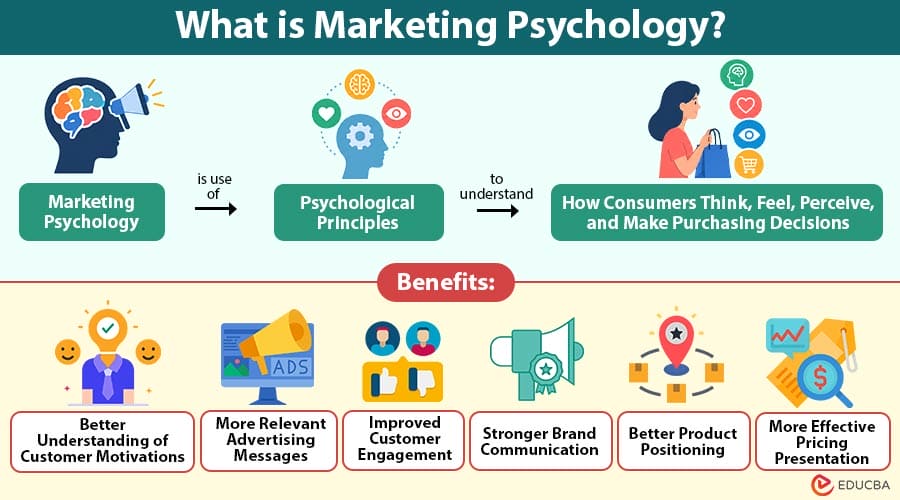
Marketing psychology is use of psychological principles to understand how consumers think, feel, perceive, and make purchasing decisions. It helps marketers understand what influences customer attention, preferences, emotions, trust, and buying behavior. Businesses use these insights to create relevant advertisements, product presentations, pricing strategies, content, and customer experiences.
For example, an online store may display a limited-time discount to create urgency and encourage customers to complete their purchases. Similarly, showing customer reviews can build trust and reduce uncertainty before buying.
Marketing psychology does not simply focus on selling products. It involves understanding customer needs and designing marketing experiences that align with how people naturally process information and make decisions.
Table of Contents:
- Meaning
- Importance
- Principles
- Types
- Working
- Examples
- Benefits
- Difference
- Factors Influencing Marketing Psychology
- Applications
Key Takeaways:
- Marketing psychology helps businesses understand customer emotions, motivations, preferences, perceptions, and purchasing behavior.
- Psychological principles help marketers create relevant messages, offers, experiences, and strategies that influence customer responses.
- Social proof, scarcity, reciprocity, authority, anchoring, and loss aversion are commonly used marketing psychology principles.
- Ethical application of marketing psychology can strengthen customer trust, engagement, communication, and overall marketing effectiveness.
Importance of Marketing Psychology
Below are the key reasons marketing psychology is important for understanding customers and improving marketing effectiveness.
1. Understands Consumer Behavior
Marketing psychology helps businesses understand customer motivations, preferences, emotions, and decision-making patterns, enabling them to develop products and campaigns that meet consumer needs.
2. Improves Marketing Messages
Psychological insights help marketers create compelling messages that align with customer interests, emotions, concerns, expectations, and purchasing motivations across different marketing channels.
3. Builds Customer Engagement
Marketing psychology helps businesses create relevant content and personalized experiences that capture attention, encourage interaction, strengthen relationships, and increase customer engagement.
4. Supports Better Pricing Strategies
Businesses can apply psychological principles to present prices, discounts, bundles, and promotional offers clearly, making customers perceive greater value and encouraging purchasing decisions.
5. Strengthens Brand Perception
Colors, imagery, language, design, and storytelling influence customer perceptions, helping businesses create recognizable brands that communicate desired emotions, values, and qualities effectively.
Principles of Marketing Psychology
Marketers commonly apply several psychological principles to understand consumer behavior and influence purchasing decisions.
1. Social Proof
Social proof refers to people’s tendency to consider others’ experiences and opinions when evaluating products or services. Reviews, ratings, testimonials, and customer numbers can increase confidence in a purchase. For example, a customer may feel more comfortable buying product with thousands of positive reviews.
2. Scarcity
Scarcity creates the perception that a product, service, or opportunity may become unavailable soon. Limited quantities, exclusive offers, or restricted availability can increase customer attention and urgency. For example, an e-commerce website may show that only a few units of a product remain in stock.
3. Reciprocity
Reciprocity is based on the tendency to respond positively after receiving something valuable from another party. Businesses may offer free guides, samples, consultations, trials, or useful content to add value before encouraging customers to buy.
4. Authority
Authority influences customers by presenting information through recognized experts, professionals, institutions, or credible organizations. Businesses may use expert opinions, certifications, research findings, awards, or professional endorsements to strengthen credibility and increase customer trust in their products or services.
5. Loss Aversion
Loss aversion describes the tendency to perceive a potential loss as more significant than a similar gain. Marketing messages may highlight benefits customers could miss, limited-time opportunities, or consequences of delaying a purchase to encourage action.
6. Anchoring
Anchoring occurs when people use an initial piece of information as a reference point when evaluating subsequent information. For example, displaying an original price of ₹5,000 next to a discounted price of ₹3,500 may make the discounted price appear more attractive.
Types of Marketing Psychology
Below are the major types of marketing psychology that help businesses understand and influence different aspects of consumer behavior.
1. Behavioral Psychology
Focuses on how customer actions, habits, and past experiences influence purchasing decisions and responses to marketing stimuli.
2. Emotional Psychology
Examines how emotions such as happiness, fear, trust, excitement, and nostalgia influence customer attitudes and buying decisions.
3. Cognitive Psychology
Studies how customers process information, form perceptions, remember messages, and make judgments when evaluating products or services.
4. Social Psychology
Explores how social interactions, group behavior, reviews, recommendations, and cultural influences affect consumer attitudes and purchasing decisions.
5. Sensory Psychology
Focuses on how colors, sounds, images, textures, scents, and other sensory elements influence customer perceptions and experiences.
6 Persuasive Psychology
Uses psychological principles to structure marketing messages, offers, and calls to action that encourage customers to consider or purchase products.
How Does Marketing Psychology Work?
Marketing psychology generally involves studying customer behavior and applying relevant psychological principles throughout the marketing process.
Step 1: Identify the Target Audience
Businesses first identify their customers and understand their needs, preferences, concerns, and purchasing situations.
Step 2: Study Customer Behavior
Marketers analyze how customers interact with websites, advertisements, products, emails, social media, and other marketing channels.
Step 3: Identify Psychological Factors
Businesses determine which factors influence customer decisions, such as trust, convenience, emotions, social influence, price perception, or urgency.
Step 4: Develop Marketing Content
Marketers create advertisements, product descriptions, landing pages, offers, and campaigns based on these insights.
Step 5: Measure Customer Responses
Businesses monitor metrics such as engagement, conversion rates, purchases, retention, and customer feedback.
Step 6: Improve Marketing Strategies
Businesses use the results to refine messages, offers, customer experiences, and campaigns.
Examples of Marketing Psychology
Below are practical examples showing how businesses apply marketing psychology to influence customer perceptions, decisions, and purchasing behavior.
1. Customer Reviews
An online furniture store displays verified customer reviews and product ratings on each product page. Potential buyers can use these experiences when deciding whether to purchase.
2. Limited-Time Offers
A travel website displays a discount that expires at midnight. The deadline creates urgency and encourages customers to decide sooner.
3. Free Trial
Software company provides a 14-day free trial before requesting payment. Customers can experience the product’s features and value before committing to a subscription.
4. Product Bundling
A retailer combines several related products into one package at a stated price. The bundle can make the purchasing process easier while highlighting the combined value.
Benefits of Marketing Psychology
Businesses can gain several benefits by applying psychological insights responsibly.
1. Better Understanding of Customer Motivations
Helps businesses identify the needs, emotions, preferences, and factors that influence customers’ purchasing decisions.
2. More Relevant Advertising Messages
Enables marketers to create advertising content that aligns with customer interests, expectations, emotions, and behavioral patterns.
3. Improved Customer Engagement
Aids companies in creating attention-grabbing experiences and content that entice consumers to engage with brand.
4. Stronger Brand Communication
Supports the use of appropriate language, visuals, storytelling, and emotional elements to communicate brand values effectively.
5. Better Product Positioning
Helps businesses position products according to customer needs, preferences, perceptions, and the benefits they value most.
6. More Effective Pricing Presentation
Allows businesses to present prices, discounts, bundles, and offers in ways that customers can easily understand and evaluate.
Difference Between Marketing Psychology and Consumer Psychology
The following table highlights the key differences between marketing psychology and consumer psychology:
| Basis | Marketing Psychology | Consumer Psychology |
| Focus | Application of psychology in marketing activities | Study of consumer thoughts and behavior |
| Purpose | Improve marketing communication and customer response | Understand why consumers behave in particular ways |
| Application | Advertising, pricing, branding, content, and campaigns | Purchasing, preferences, perceptions, attitudes, and decision-making |
| Business Use | Helps design marketing strategies | Helps explain consumer behavior |
| Scope | Primarily marketing-focused | Broader study of consumer behavior |
Factors Influencing Marketing Psychology
Several factors can affect how customers respond to marketing messages and purchasing opportunities.
1. Emotions
Emotional responses can influence customer attention, brand associations, product perceptions, and purchasing decisions during different stages of the buying process.
2. Personal Needs
Customers may respond differently to marketing depending on their individual goals, preferences, problems, expectations, and specific requirements.
3. Social Influence
Friends, family members, communities, influencers, reviews, and recommendations can shape customer opinions, perceptions of products, and purchasing decisions.
4. Previous Experience
Past interactions with a brand, product, or service can influence customer trust, expectations, satisfaction, and future purchasing behavior.
5. Perceived Value
Customers often compare a product’s expected benefits with its price, effort, convenience, quality, and perceived risks.
6. Context
The environment, timing, device, location, and circumstances in which customers encounter an offer can affect their attention, perception, and response.
Applications of Marketing Psychology
Below are the key applications of marketing psychology across different marketing activities and customer touchpoints:
1. Advertising and Promotional Campaigns
Helps marketers create persuasive advertisements and promotional campaigns that capture attention, communicate benefits, and encourage customer responses.
2. Social Media Marketing
Helps businesses develop engaging social media content that reflects audience interests, encourages interaction, and strengthens brand connections.
3. Content Marketing
Supports creation of relevant content that addresses customer needs, answers questions, builds trust, and guides purchasing decisions.
4. Email Marketing
Helps marketers personalize email messages, subject lines, offers, and calls to action according to customer interests and behaviors.
5. E-commerce
Supports website layouts, product recommendations, reviews, offers, and checkout experiences that influence customer perceptions and purchasing decisions.
6. Product Packaging
Uses colors, designs, images, shapes, and messaging to attract attention and influence how customers perceive products.
7. Website and User Experience Design
Helps businesses design intuitive websites, navigation, layouts, and interactions that improve usability and encourage desired customer actions.
Final Thoughts
Marketing psychology helps businesses understand the psychological factors that influence customer attention, perception, engagement, and purchasing behavior. Principles such as social proof, scarcity, reciprocity, authority, anchoring, and loss aversion can support effective marketing strategies when applied responsibly. By combining customer insights with ethical communication, businesses can create relevant experiences, strengthen trust, and improve marketing effectiveness.
Frequently Asked Questions (FAQs)
Q1. Who uses marketing psychology?
Answer: Marketing professionals, advertisers, brand managers, sales teams, business owners, and product designers commonly use marketing psychology in their work.
Q2. Is marketing psychology useful for small businesses?
Answer: Yes. Small businesses can use psychological insights to improve customer communication, product presentation, advertising, pricing, and overall customer experience.
Q3. What skills are useful for learning marketing psychology?
Answer: Observation, communication, research, analytical thinking, customer understanding, and knowledge of basic psychological concepts help you learn this field.
Q4. Where can marketing psychology be applied?
Answer: It can be applied in advertising, branding, sales, digital marketing, product development, customer service, e-commerce, and communication strategies.
Recommended Articles
We hope that this EDUCBA information on “Marketing Psychology” was beneficial to you. You can view EDUCBA’s recommended articles for more information.

