
What is a Sales Playbook?
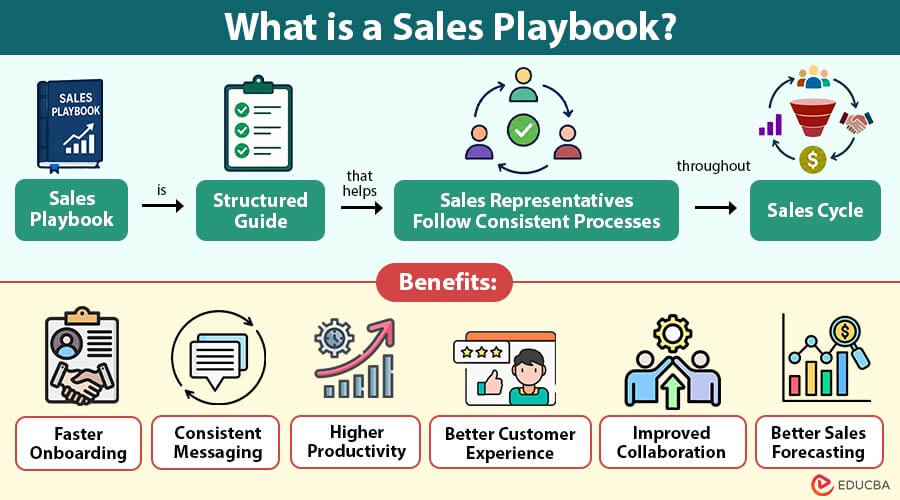
A sales playbook is structured guide that helps sales representatives follow consistent processes throughout the sales cycle. It contains information about target customers, sales processes, messaging, objection handling, qualification methods, communication templates, and strategies for closing deals.
Instead of allowing each salesperson to develop their own approach, a sales playbook provides the entire team with a common framework. It helps sales representatives understand what to do, what to say, and which resources to use at different stages of the customer journey.
In simple terms, a sales playbook works like a step-by-step guide for sales teams.
Table of Contents:
Key Takeaways:
- A sales playbook provides standardized guidance for managing sales processes, customer conversations, and closing activities.
- It improves sales productivity by giving representatives quick access to proven strategies, resources, and messaging.
- Regularly updated playbooks help sales teams adapt to changing customers, products, competitors, and market conditions.
- Customized sales playbooks support different industries, products, customer segments, and selling situations more effectively.
Why is a Sales Playbook Important?
A well-designed sales playbook can improve sales performance by giving representatives clear guidance and practical resources.
1. Creates a Consistent Sales Process
A sales playbook helps representatives follow the same sales process. This creates consistency in prospecting, qualification, presentations, negotiations, and closing.
2. Improves Sales Productivity
Salespeople don’t spend as much time looking for information, crafting communications, or making decisions. They have rapid access to information, templates, and tried-and-true procedures.
3. Helps New Salespeople Learn Faster
New employees can use the playbook to understand the company’s products, customers, sales process, and communication methods. This can reduce the time required for sales onboarding.
4. Improves Customer Conversations
The playbook provides useful information about customer needs, common challenges, product benefits, and relevant questions. Salespeople can therefore have more meaningful conversations with prospects.
5. Supports Better Sales Performance
A consistent sales process makes it easier to identify successful practices and improve weak areas. Teams can use performance data to update their sales strategies.
6. Reduces Sales Mistakes
Sales representatives can refer to approved messaging, processes, pricing guidelines, and objection-handling strategies. This reduces the sharing of inconsistent or incorrect information with customers.
Key Components of a Sales Playbook
A sales playbook can contain different components depending on the organization’s products, customers, and sales process.
1. Ideal Customer Profile
The playbook identifies target customers using company size, industry, location, needs, budget, and other important qualification criteria.
2. Buyer Personas
For sales teams, buyer personas explain decision-makers’ roles, goals, challenges, concerns, responsibilities, and priorities throughout the purchasing process.
3. Value Proposition
The value proposition explains why customers should choose the offering by connecting product features with their needs and expected outcomes.
4. Sales Process
The sales process outlines every stage, from prospecting and qualification through discovery, demonstration, proposal, negotiation, closing, and customer handoff.
5. Sales Scripts and Messaging
Sales scripts provide sample language for calls, emails, meetings, and follow-ups while helping representatives communicate naturally and confidently.
6. Discovery Questions
Discovery questions help salespeople understand customer challenges, requirements, current solutions, desired improvements, decision-makers, and important purchasing priorities.
7. Objection Handling
Objection handling provides recommended responses to common concerns about pricing, implementation, competition, security, features, timing, and product value.
8. Competitive Information
Competitive information explains competitor strengths, weaknesses, differences, and positioning strategies, helping salespeople respond confidently during customer comparisons and discussions.
9. Sales Collateral
Sales collateral provides useful resources, including case studies, brochures, presentations, testimonials, comparison sheets, and demonstration materials for customer conversations.
10. Closing Strategies
Closing strategies guide salespeople toward purchase decisions through effective closing questions, negotiation approaches, follow-ups, and deal completion steps.
How to Create a Sales Playbook?
Creating an effective sales playbook requires more than collecting sales documents. The content should reflect the actual sales process and customer journey.
Step 1: Define Your Target Customers
Start by identifying the customers your sales team wants to reach. Define industries, company sizes, buyer roles, common problems, and purchasing needs.
Step 2: Map the Sales Process
Document every stage of the sales cycle. Explain what representatives should accomplish at each stage and what actions they should take before moving forward.
Step 3: Identify Common Customer Problems
Work with salespeople, customer success teams, and marketing teams to identify the most common customer challenges. Connect each challenge with suitable products, features, and solutions.
Step 4: Create Sales Messaging
Develop clear messaging for different customer groups and sales situations. Include email templates, call scripts, presentation points, and follow-up messages.
Step 5: Add Objection-Handling Guidance
List common objections and provide practical responses. Include different approaches when customers raise concerns about price, competitors, implementation, security, or product capabilities.
Step 6: Add Sales Resources
Organize important sales materials in one place. This may include case studies, product information, presentations, FAQs, pricing information, and customer success stories.
Step 7: Connect the Playbook With Sales Tools
A digital sales playbook can be connected with CRM and sales enablement platforms. This allows representatives to access relevant information while working on opportunities.
Step 8: Test the Playbook
Ask sales representatives to use the playbook during real sales activities. Identify sections that are confusing, outdated, difficult to find, or not useful.
Step 9: Update It Regularly
Products, markets, competitors, pricing, customer expectations, and sales strategies change over time. The playbook should therefore be reviewed and updated regularly.
Types of Sales Playbooks
Sales playbooks can be designed for different sales goals, customer segments, industries, products, and competitive situations.
1. New Customer Acquisition Playbook
This playbook focuses on finding and converting new prospects. It may include prospecting methods, qualification questions, outreach templates, and follow-up strategies.
2. Account Expansion Playbook
This playbook helps representatives identify opportunities to upsell or cross-sell existing customers.
3. Industry-Specific Playbook
An industry-specific playbook provides messaging, customer challenges, use cases, and examples for a particular industry.
4. Product Launch Playbook
This playbook helps sales teams understand and sell a newly launched product. It can include product information, target customers, positioning, pricing, competitive information, and sales messaging.
5. Competitive Playbook
A competitive playbook helps representatives handle situations where customers are considering competing products or services.
Benefits of Using a Sales Playbook
Organizations can gain several benefits from implementing a sales playbook.
1. Faster Onboarding
Helps new representatives quickly learn sales processes, tools, resources, and effective selling methods.
2. Consistent Messaging
Ensures sales representatives deliver clear, accurate, and consistent messages across different customer interactions.
3. Higher Productivity
Reduces time spent searching for resources, preparing materials, and finding information during sales activities.
4. Better Customer Experience
Helps representatives provide relevant information and solutions based on specific customer needs and challenges.
5. Improved Collaboration
Allows teams in charge of sales, marketing, and customer success to exchange data, tactics, tools, and customer insights.
6. Better Sales Forecasting
Creates standardized sales stages and activities, making opportunities easier to track, measure, and forecast.
Common Challenges in Creating a Sales Playbook
Although sales playbooks provide significant value, organizations may face challenges while developing them.
1. Outdated Information
Outdated content diminishes the playbook’s usefulness and may lead salespeople to rely on incorrect information.
2. Too Much Information
Excessive content makes the playbook difficult to navigate and prevents salespeople from quickly finding important resources.
3. Low Sales Adoption
Sales representatives may avoid using the playbook when it lacks practical guidance and useful resources.
4. Poor Organization
Poor structure and navigation make it harder for salespeople to quickly find the information they need during customer interactions.
5. Lack of Customization
A single sales approach may not effectively meet different industries, customer segments, products, or customer requirements.
Final Thoughts
A sales playbook helps teams manage customer conversations, follow sales processes, handle objections, and close deals effectively. It combines strategies, messaging, customer information, resources, and best practices in one place. Regular updates keep it relevant, improve productivity, support onboarding, ensure consistent experiences, and create a scalable sales strategy.
Frequently Asked Questions (FAQs)
Q1. Who uses a sales playbook?
Answer: Sales representatives, sales managers, account executives, business development teams, and sales leaders can use a sales playbook.
Q2. Where should a sales playbook be stored?
Answer: A sales playbook is commonly stored in a centralized digital platform, knowledge base, sales enablement system, or shared company workspace.
Q3. How long should a sales playbook be?
Answer: There is no fixed length. A sales playbook should contain enough practical information to support sales activities without becoming difficult to navigate.
Q4. How often should a sales playbook be reviewed?
Answer: Organizations should review the playbook regularly and update it whenever significant changes occur in products, pricing, markets, competitors, or sales practices.
Recommended Articles
We hope that this EDUCBA information on “Sales Playbook” was beneficial to you. You can view EDUCBA’s recommended articles for more information.

