


What is Influencer Whitelisting?
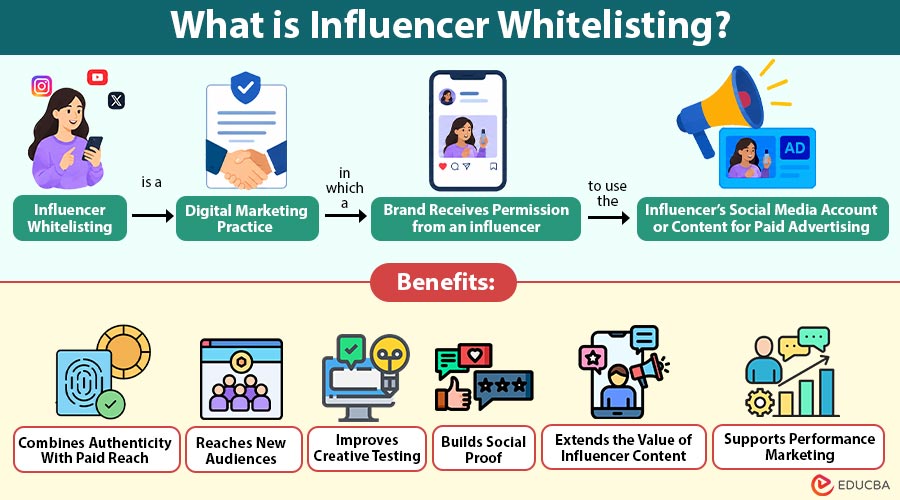
Influencer whitelisting is a digital marketing practice in which a brand receives permission from an influencer to use the influencer’s social media account or content for paid advertising.
Instead of publishing an advertisement only through the brand’s account, the brand can promote selected influencer-created content to wider and more targeted audience. Depending on the platform and ad setup, the ad may appear to users as content from the influencer.
Influencer whitelisting combines influencer marketing and paid social advertising. It allows brands to benefit from an influencer’s established audience, recognizable content style, and social credibility while using advertising tools to control targeting, budget, placements, and performance.
For example, a skincare brand may collaborate with a beauty creator who creates a video demonstrating its moisturizer. With the creator’s permission, the brand can use that content in a paid campaign and target audiences based on demographics, interests, behavior, or other advertising criteria.
Table of Contents:
- Meaning
- Working
- Difference
- Benefits
- Challenges
- Best Practices
- Examples
- How to Measure Influencer Whitelisting Success?
Key Takeaways:
- Influencer whitelisting combines creator authenticity with paid advertising to expand targeted audience reach effectively.
- Clear permissions and usage rights help brands manage influencer content safely across advertising platforms.
- Testing different creators, creatives, audiences, and messages helps identify stronger advertising performance and engagement.
- Measuring reach, clicks, conversions, acquisition costs, and ROAS helps evaluate overall campaign effectiveness.
How Does Influencer Whitelisting Work?
Influencer whitelisting generally involves several steps, from selecting a creator to measuring campaign performance. Influencer whitelisting typically involves these key steps:
1. Selecting an Influencer
The brand chooses a creator whose audience, content style, engagement, and values align with its target customers.
2. Establishing the Partnership
Both parties agree on content requirements, payment, campaign duration, platforms, advertising rights, approval, and reporting expectations.
3. Granting Advertising Permission
The influencer authorizes the brand to promote selected content through the relevant social media advertising system.
4. Creating the Content
The influencer creates content based on the campaign brief while maintaining their natural communication style and authenticity.
5. Launching Paid Advertising
The brand promotes the approved influencer content using paid advertising, controlling factors such as audience, budget, placements, and campaign duration.
6. Monitoring Performance
The brand tracks results and optimizes audiences, creatives, placements, and budgets to improve campaign performance.
Difference Between Influencer Whitelisting and Traditional Influencer Marketing
The table below highlights the key differences between the two:
| Influencer Whitelisting | Traditional Influencer Marketing |
| Content can be distributed to targeted audiences through paid ads | Content is primarily distributed to the creator’s audience |
| Brand gains greater advertising control | Influencer controls organic publication |
| Paid budget can increase reach | Reach depends heavily on organic performance |
| More opportunities for audience and creative testing | Limited advertising optimization |
| Can support awareness, consideration, or conversions | The campaign may focus on awareness |
Benefits of Influencer Whitelisting
Below are the key benefits of influencer whitelisting:
1. Combines Authenticity With Paid Reach
Influencer whitelisting combines authentic creator content with paid advertising, helping brands achieve broader reach while maintaining a natural and relatable communication style.
2. Reaches New Audiences
Brands can use paid campaigns to introduce influencer content to new audiences beyond existing followers, expanding visibility and attracting potential customers.
3. Improves Creative Testing
Brands can test different influencer videos, messages, formats, and hooks to identify creative approaches that drive stronger engagement and better ad performance.
4. Builds Social Proof
Influencer content demonstrates products through real experiences, helping build credibility and social proof while making advertisements feel more trustworthy to potential customers.
5. Extends the Value of Influencer Content
Brands can repurpose approved influencer content for paid campaigns, extending its usefulness and generating additional marketing value beyond the original organic post.
6. Supports Performance Marketing
Influencer content can support measurable advertising campaigns by tracking impressions, clicks, engagement, conversions, acquisition costs, and return on advertising spend.
Potential Challenges of Influencer Whitelisting
Although influencer whitelisting can be effective, it also involves several considerations.
1. Permission and Access
Brands need appropriate authorization before using an influencer’s identity or content for advertising. Permission should be clearly documented.
2. Brand Safety
The influencer’s reputation can affect how audiences perceive the advertisement. Brands should evaluate the creator’s previous content and audience behavior before establishing a partnership.
3. Creative Control
Too much brand control can make the content appear unnatural. At the same time, insufficient guidance can result in content that does not communicate the product or campaign message effectively. Finding the right balance is essential.
4. Cost
Whitelisting may involve additional creator fees, advertising costs, content production expenses, and usage-rights fees. Consider these costs when calculating campaign profitability.
5. Performance Is Not Guaranteed
Using influencer content does not automatically guarantee better advertising results. Creative quality, audience targeting, product-market fit, offer, landing page experience, and campaign setup all influence performance.
Best Practices for Influencer Whitelisting
Below are some key practices to help brands make the most of influencer whitelisting.
1. Choose Influencers Based on Audience Fit
Select influencers whose audience, interests, demographics, and engagement closely align with your brand’s target customers and marketing objectives.
2. Give Creators a Clear Brief
Provide creators with clear campaign goals, product benefits, key messages, disclosures, visual guidelines, restrictions, and calls to action while preserving creativity.
3. Define Usage Rights Clearly
Clearly establish where, how, and how long influencer content can be used, including platforms, locations, formats, modifications, and advertising duration.
4. Test Multiple Creatives
Test multiple influencers, videos, hooks, formats, and messaging approaches to identify creative combinations that deliver stronger engagement and advertising performance.
5. Track Meaningful Metrics
Measure performance using relevant metrics such as reach, impressions, engagement, clicks, conversions, acquisition costs, conversion rates, and return on advertising spend.
6. Maintain Authenticity
Let influencers communicate naturally and keep their unique voice while providing clear objectives, ensuring sponsored content stays relatable, credible, and engaging.
Examples of Influencer Whitelisting
Below are some practical examples of how brands can use influencer whitelisting across different industries and product categories.
1. Fashion Brand
A fashion brand partners with a lifestyle creator, then promotes the creator’s outfit video through targeted paid advertisements to attract potential customers.
2. Fitness Product
A fitness creator demonstrates a product during workouts, while the brand promotes the video to relevant audiences and tests multiple advertisements.
3. Food and Beverage Brand
A food creator demonstrates a recipe using the brand’s product, allowing the company to promote authentic content to targeted audiences.
How to Measure Influencer Whitelisting Success?
Evaluate a successful campaign using both advertising and influencer-marketing metrics. Common metrics include:
1. Reach
Reach measures the number of the unique users who see influencer content, helping brands understand the campaign’s overall audience exposure.
2. Impressions
Impressions measure how many times influencer content or advertisements are displayed, indicating the campaign’s total visibility across targeted audiences.
3. Engagement Rate
Engagement rate measures interactions such as likes, comments, shares, and saves, showing how effectively content captures audience interest.
4. Click-Through Rate
Click-through rate measures percentage of users clicking advertisements, helping brands evaluate how effectively influencer content encourages audience action.
5. Conversion Rate
Conversion rate measures percentage of users who complete desired actions, such as purchases, registrations, downloads, or form submissions, after clicking advertisements.
6. Cost Per Click
Cost per click measures the average amount spent per ad click, helping brands evaluate traffic-acquisition efficiency and campaign costs.
7. Cost Per Acquisition
Cost per acquisition measures the average advertising cost required to generate one customer or desired conversion, supporting efficient budget allocation decisions.
8. Return on Ad Spend
Return on ad spend measures revenue generated from advertising relative to spending, helping brands evaluate campaign profitability and overall financial performance.
Final Thoughts
Influencer whitelisting combines influencer credibility with paid advertising’s targeting, scalability, and measurable results. It helps brands reach new audiences, test creator content, build social proof, and maximize partnerships. Successful campaigns require suitable influencers, clear permissions, authentic content, defined usage rights, and continuous optimization to achieve stronger marketing performance.
Frequently Asked Questions (FAQs)
Q1. Is influencer whitelisting suitable for small businesses?
Answer: Yes. Small businesses can use influencer whitelisting to promote creator content to carefully selected audiences without requiring a large influencer following or a substantial advertising budget.
Q2. Does influencer whitelisting require the influencer to have a large following?
Answer: No. Follower count is not only factor that matters. Creators with smaller but highly relevant and engaged audiences can produce effective advertising content when their audience matches the brand’s target market.
Q3. Can brands edit influencer content before using it in advertisements?
Answer: It depends on the agreement with the influencer. Brands should specify whether they can crop, resize, add captions, modify the introduction, or make other creative changes before launching advertisements.
Q4. How long should influencer whitelisting rights last?
Answer: There is no universal duration. Usage periods can range from a few weeks to several months or longer, depending on the campaign. Document the agreed timeframe clearly before the campaign begins.
Recommended Articles
We hope that this EDUCBA information on “Influencer Whitelisting” was beneficial to you. You can view EDUCBA’s recommended articles for more information.


