


What is Digital Shelf?
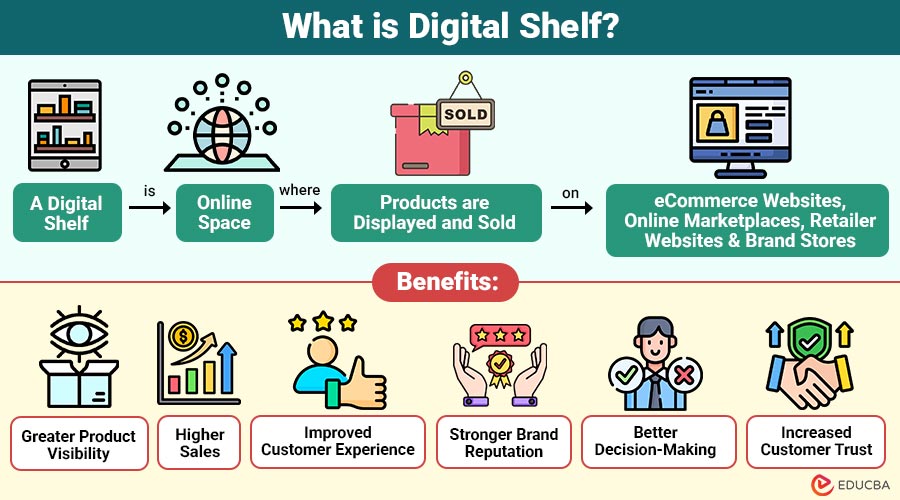
A digital shelf is online space where products are displayed and sold on eCommerce websites, online marketplaces, retailer websites, and brand stores. It includes product titles, images, descriptions, prices, reviews, ratings, and other information that helps customers make purchasing decisions.
In simple words, the digital shelf is the virtual version of a physical store shelf, allowing shoppers to discover, compare, and buy products online.
Table of Contents:
Key Takeaways:
- A digital shelf displays products online, using optimized content, pricing, images, reviews, and availability to improve visibility.
- High-quality product information effectively improves customer trust, search rankings, engagement, conversions, and overall online sales performance.
- Effective digital shelf management requires consistent updates, accurate data, inventory synchronization, and continuous content optimization efforts.
- Digital shelf analytics provide valuable customer insights, helping businesses improve their strategies, competitiveness, and long-term eCommerce growth.
Why is the Digital Shelf Important?
As online shopping continues to grow, consumers progressively rely on digital channels to research products before buying. A product’s online presentation directly affects customer trust and purchasing decisions.
The digital shelf is important because it:
1. Increases Product Visibility
Optimizes product listings for search engines and marketplaces, helping customers easily discover products when shopping online.
2. Improves Customer Engagement
Uses detailed descriptions, quality images, videos, and specifications to keep shoppers informed, engaged, and confident before purchasing.
3. Builds Trust Through Reviews
Positive customer reviews and ratings increase credibility, reassure buyers, and encourage confident purchasing decisions across digital platforms.
4. Enhances Brand Consistency
Maintains accurate branding, messaging, pricing, and product information across websites, marketplaces, and social commerce platforms consistently.
5. Increases Conversion Rates
Well-optimized product pages reduce purchase hesitation, improve customer confidence, and drive higher online sales and revenue growth.
6. Provides Customer Insights
Analyzes shopper behavior, search trends, and performance metrics to improve marketing strategies and product optimization decisions.
Key Components of a Digital Shelf
A successful digital shelf consists of several key components that influence purchasing decisions.
1. Product Titles
Clear, descriptive, and keyword-rich product titles help customers quickly identify products and improve search rankings.
2. Product Images
High-quality photos taken from various perspectives help consumers better understand the goods and reduce their concerns about making a purchase.
3. Product Descriptions
Detailed descriptions explain product features, specifications, benefits, and usage, helping customers make informed decisions.
4. Pricing
Accurate and competitive pricing significantly influences customer purchasing decisions and product competitiveness.
5. Product Availability
Displaying real-time inventory information prevents customer frustration and improves shopping experiences.
6. Customer Reviews and Ratings
Positive reviews build credibility, while authentic feedback helps customers evaluate products before buying.
7. Videos
Product demonstration videos improve customer understanding and increase purchase confidence.
8. Search Visibility
Products must appear prominently in marketplace and retailer search results to maximize discoverability.
How Does the Digital Shelf Work?
The digital shelf operates through a combination of product content management, search optimization, retailer algorithms, and customer interactions.
The typical process includes:
- A brand uploads product information to retailer platforms or marketplaces.
- The platform indexes product details for customer searches.
- Search algorithms rank products based on relevance, quality, popularity, and performance.
- Customers browse products, compare alternatives, and read reviews.
- Customers make purchasing decisions based on the information available to them.
- Sales, ratings, and customer interactions further influence future product rankings.
This creates a continuous cycle where better product content and customer satisfaction improve online visibility.
Benefits of the Digital Shelf
Managing the digital shelf effectively offers numerous benefits for brands and retailers.
1. Greater Product Visibility
Optimized product listings improve search rankings, making products easier for potential customers to discover across digital platforms.
2. Higher Sales
High-quality product content encourages confident purchasing decisions, significantly increasing conversion rates and overall online sales performance.
3. Improved Customer Experience
Clear product information, images, and specifications help customers make informed purchasing decisions with greater confidence and satisfaction.
4. Stronger Brand Reputation
Consistent branding and accurate product information strengthen credibility, customer trust, and long-term brand recognition across digital channels.
5. Better Decision-Making
Digital shelf analytics reveal customer behavior, market trends, and competitor insights for smarter business and marketing decisions.
6. Increased Customer Trust
Accurate descriptions, authentic reviews, and high-quality images build confidence while reducing uncertainty before purchasing products online.
Challenges of Managing the Digital Shelf
Despite its benefits, managing the digital shelf presents several challenges.
1. Maintaining Data Accuracy
Keeping product information accurate and consistent across multiple digital channels requires continuous updates, monitoring, and careful coordination.
2. Intense Competition
Thousands of competing products fight for customer attention, making visibility and differentiation increasingly difficult across online marketplaces.
3. Algorithm Changes
Frequent marketplace algorithm updates can affect product rankings, reducing visibility and requiring continuous optimization of digital listings.
4. Managing Customer Reviews
Negative reviews and delayed responses can significantly reduce customer trust, product credibility, and overall online sales performance.
5. Inventory Synchronization
Keeping inventory updated across all sales channels effectively prevents overselling, canceled orders, stock discrepancies, and customer dissatisfaction.
6. Content Management
It takes a lot of time and resources to update product descriptions, images, prices, and specifications across multiple platforms on a regular basis.
Applications of the Digital Shelf
Digital shelf management is widely used across various industries.
1. Retail
Retailers optimize product listings to improve online sales and customer experience.
2. Consumer Goods
Manufacturers manage product information consistently across multiple online marketplaces.
3. Electronics
Detailed specifications, comparison charts, and customer reviews help buyers evaluate products.
4. Fashion
Brands use high-quality visuals, size guides, and styling content to influence purchasing decisions.
5. Food and Beverage
Manufacturers display nutritional information, ingredients, certifications, and packaging details.
Example of a Digital Shelf
The following example demonstrates how a digital shelf helps businesses present products effectively and improve the online shopping experience.
Suppose a company sells wireless headphones on multiple e-commerce platforms.
Instead of only listing the product name, the company optimizes its digital shelf by including:
- Professional product images
- 360-degree product views
- Feature comparison charts
- Detailed technical specifications
- Product demonstration videos
- Customer reviews and ratings
- Frequently Asked Questions
- Competitive pricing
- Real-time stock availability
As a result, customers gain more confidence in the product, search visibility improves, and online sales increase.
Difference Between Digital Shelf and Physical Shelf
The table below highlights the key differences between a digital shelf and a physical shelf across various aspects.
| Feature | Digital Shelf | Physical Shelf |
| Location | Online platforms | Retail stores |
| Product Information | Extensive and interactive | Limited by packaging |
| Customer Reviews | Available instantly | Usually unavailable |
| Search Capability | Keyword-based | Manual browsing |
| Inventory Updates | Real-time | Manual replenishment |
| Analytics | Detailed customer insights | Limited tracking |
| Accessibility | 24/7 worldwide | Store operating hours |
| Content Updates | Instant | Requires physical replacement |
Final Thoughts
The digital shelf is essential for improving product visibility, customer trust, and online sales through optimized product content and consistent information. Effective digital shelf management enhances customer experiences, strengthens brand competitiveness, supports informed purchasing decisions, and drives sustainable long-term eCommerce growth.
Frequently Asked Questions (FAQs)
Q1. How is digital shelf performance measured?
Answer: Using metrics like search ranking, conversions, reviews, and product availability.
Q2. Who manages the digital shelf?
Answer: eCommerce, marketing, and product management teams.
Q3. How often should digital shelf content be updated?
Answer: Regularly or whenever product details, pricing, or inventory change.
Q4. Can small businesses benefit from a digital shelf?
Answer: Yes, it helps improve visibility, customer trust, and online sales.
Recommended Articles
We hope that this EDUCBA information on “Digital Shelf” was beneficial to you. You can view EDUCBA’s recommended articles for more information.


