


Introduction
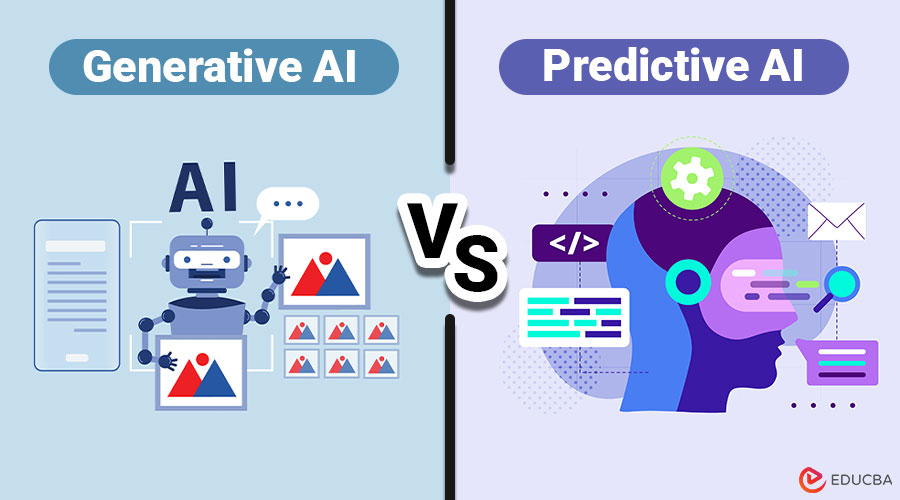
As artificial intelligence (AI) continues to revolutionize industries, two branches—Generative AI and Predictive AI—are making headlines. Although they both stem from machine learning and deep learning technologies, their goals, methodologies, and applications differ significantly. In the debate of Generative AI vs Predictive AI, understanding the unique strengths and roles of each is crucial. For businesses exploring how to apply generative AI in practical products, workflows, or customer-facing tools, Launchpadlab offers generative AI development services designed to turn AI capabilities into real business solutions.
This blog provides a comprehensive comparison between Generative AI and Predictive AI. We will explore what each entails, their core mechanisms, use cases across industries, key differences, and how both technologies are shaping the future of AI.
Table of Contents:
- Introduction
- What is Generative AI?
- What is Predictive AI?
- Key Differences
- Advantages and Disadvantages
- Use Cases
- Future Trends
What is Generative AI?
Generative AI refers to AI models that can create new content—be it text, images, code, or even 3D models—by learning patterns from existing data.
Key Features:
- Content Creation – Produces original content like text, images, audio, and code.
- Unstructured Data Learning – Learns from data such as language, images, and sound.
- Deep Learning Models – Uses GANs, VAEs, and Transformers (e.g., GPT, DALL·E) for generation.
Examples:
- ChatGPT – Writes human-like conversations or essays.
- DALL·E – Generates unique images from text prompts.
- GitHub Copilot – Assists in code generation.
How It Works:
Generative AI models are trained on big data sets. For example, a language model like GPT is fed with millions of documents. It learns the structure of language and context so that when given a prompt, it can predict and generate coherent and contextually appropriate text.
What is Predictive AI?
Predictive AI is designed to analyze historical data and make forecasts about future outcomes. Organizations widely use it in decision-making processes, risk assessment, and behavior prediction.
Key Features:
- Data-Driven Forecasting – Uses past data to predict trends, risks, or behaviors.
- Machine Learning Algorithms – Apply models like regression and neural networks for predictions.
- Structured Data Use – Relies on organized data (e.g., spreadsheets, logs) for training.
Examples:
- Credit Scoring Systems – Predict the likelihood of loan repayment.
- Sales Forecasting – Estimate future revenue.
- Predictive Maintenance – Anticipate equipment failures.
How It Works:
Predictive AI looks for trends and correlations in historical records using statistical and machine learning algorithms. In e-commerce, for example, it may examine a customer’s browsing and previous purchases to forecast what they are likely to purchase next.
Generative AI vs Predictive AI: Key Differences
Here are the core distinctions between Generative AI and Predictive AI across various features:
| Aspect | Generative AI | Predictive AI |
| Primary Goal | Generate new content or data | Forecast future outcomes |
| Input Type | Often unstructured (text, images) | Structured data (CSV, logs) |
| Output | New content (text, image, music, etc.) | Predictions (values, labels, probabilities) |
| Models Used | GANs, VAEs, Transformers | Regression, Decision Trees, SVMs |
| Key Use Cases | Content creation, design, and simulations | Forecasting, risk assessment, recommendations |
| Examples | ChatGPT, Midjourney, Bard | Salesforce Einstein, IBM Watson, SAP Predictive Analytics |
Advantages and Disadvantages
Here are the advantages and disadvantages of Generative AI and Predictive AI:
Advantages of Generative AI:
- Produces novel content at scale
- Enhances creativity and innovation
- Personalizes user experiences
Disadvantages of Generative AI:
- Risk of misinformation or deepfakes
- Content may lack accuracy or ethical grounding
- Data bias in training sets can lead to problematic outputs
Advantages of Predictive AI:
- Informs data-driven decisions
- Reduces operational risks
- Enhances user engagement
Disadvantages of Predictive AI:
- Accuracy depends heavily on data quality
- May not account for unprecedented scenarios
- Static models may become outdated quickly
Use Cases
Here are the real-world use cases where Generative and Predictive AI are making a significant impact across industries.
Use Cases of Generative AI:
- Marketing Content Creation: Blog writing, ad copies, product descriptions.
- Design & Art: AI-generated illustrations, graphics, fashion designs.
- Code Generation: Tools like Copilot assist developers by writing boilerplate code.
- Synthetic Data Creation: Used to augment datasets for training ML models.
- Healthcare: Generate medical images or simulate biological processes for research.
Use Cases of Predictive AI:
- Customer Churn Prediction: Helps retain customers by identifying churn signals.
- Demand Forecasting: Retailers predict inventory needs.
- Fraud Detection: Identifies anomalies in transactions.
- Healthcare Diagnosis: Predict diseases based on patient history and symptoms.
- Predictive Maintenance: Anticipates equipment failure to reduce downtime.
Future Trends and Opportunities
Here are the emerging advancements and growth areas shaping the future of Generative and Predictive AI:
Generative AI is Evolving Toward:
- Multimodal AI: Generating and understanding combined text, images, video, and sound.
- Enterprise content automation: Automating entire workflows for marketing, legal, and HR.
- Responsible AI frameworks: Building ethics into generative models to minimize harm.
Predictive AI is Moving Toward:
- Real-time Analytics: Making live decisions based on data streams (e.g., IoT devices).
- Hybrid AI Models: Combining generative and predictive capabilities for smarter insights.
- Autonomous Decision-making: Powering autonomous vehicles, robotics, and smart assistants.
Final Thoughts
Generative AI and Predictive AI are distinct yet powerful tools. While Generative AI focuses on creation and Predictive AI enables forecasting, the synergy between both is crucial. In the comparison of Generative AI vs Predictive AI, each serves unique purposes. Organizations that integrate both can drive innovation, enhance user experiences, and unlock transformative potential as AI technologies continue to evolve and converge across industries.
Frequently Asked Questions (FAQs)
Q1. Can Generative AI be used for predictions?
Answer: Not typically. Generative AI focuses on creating new data rather than forecasting. However, hybrid models may include both generative and predictive functions.
Q2. What industries use predictive AI the most?
Answer: Finance, retail, manufacturing, healthcare, and logistics are leading adopters of predictive AI.
Q3. What are the threats associated with Generative AI?
Answer: Threats include misinformation, plagiarism, data bias, and intellectual property violations. Ethical AI development is essential.
Recommended Articles
We hope that this EDUCBA information on “Generative AI vs Predictive AI” was beneficial to you. You can view EDUCBA’s recommended articles for more information.

