


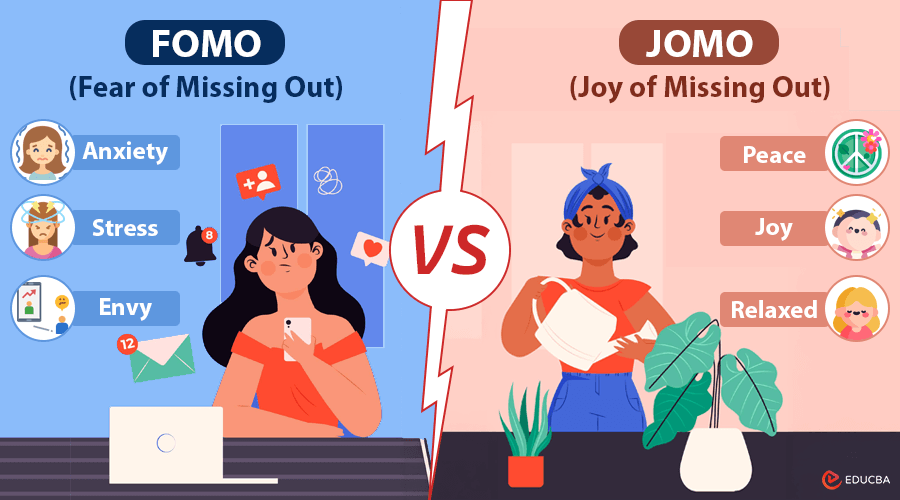
Introduction to FOMO vs. JOMO
In the fast-paced digital world, we often find ourselves caught between two emotions: FOMO (Fear of Missing Out) and JOMO (Joy of Missing Out). These two terms define how we experience social interactions, personal time, and digital connectivity.
For example, imagine you see your friends posting vacation pictures on social media while you are at home working. If you feel anxious and left out, that is FOMO. On the other hand, if you enjoy a peaceful evening at home without feeling bad about missing the trip, that is JOMO.
Studies show that 56% of social media users experience FOMO, while practicing JOMO can lead to a 23% reduction in stress and anxiety.
Both concepts significantly impact mental health, lifestyle choices, and overall well-being. Understanding them can help you make conscious decisions about engaging with social media and real-life experiences.
What is FOMO?
Fear of Missing Out (FOMO) is the feeling of anxiety or insecurity that arises when you believe others are having fun or gaining experiences without you. Social media often fuels it by showcasing people’s best moments, constantly exciting their lives.
Signs of FOMO:
- Constantly browsing social media to keep up with others.
- Feeling anxious or left out when missing an event.
- Saying yes to invitations out of fear rather than desire.
- Difficulty enjoying the present moment.
Causes of FOMO:
- Social media pressure: Seeing curated highlight reels of others’ lives.
- Comparison culture: Believing that others have better experiences.
- Peer influence: Feeling pressured to participate in activities.
- Lack of self-contentment: Struggling to find joy in your own life.
Effects of FOMO:
- Increased stress and anxiety.
- Reduced self-esteem due to constant comparisons.
- Poor decision-making, such as overspending or overcommitting.
- Inability to appreciate present experiences.
What is JOMO?
Joy of Missing Out (JOMO) is the opposite of FOMO. It refers to the sense of fulfillment and happiness that comes from being present and appreciating your own life, without worrying about what others are doing.
Signs of JOMO:
- Feeling happy and content with personal choices.
- Enjoying solitude without guilt.
- Limiting social media consumption.
- Prioritizing self-care and well-being.
Benefits of JOMO:
- Reduced stress and anxiety.
- Improved mental clarity and focus.
- Stronger sense of self-awareness.
- Enhanced relationships through meaningful connections.
FOMO vs. JOMO: Key Differences
| Aspect | FOMO (Fear of Missing Out) | JOMO (Joy of Missing Out) |
| Emotion | Anxiety, stress, envy | Contentment, peace, joy |
| Cause | Social media, comparison | Self-awareness, mindfulness |
| Effect | Distracted, overcommitted | Focused, relaxed, satisfied |
| Mindset | Scarcity (fear of missing something) | Abundance (happiness in the present) |
| Social Media Use | Constant checking, feeling left out | Limited use, mindful engagement |
How to Shift from FOMO to JOMO?
If you struggle with FOMO, making a conscious effort to embrace JOMO can significantly improve your well-being. Here are some ways to transition:
1. Limit Social Media Use
Excessive social media scrolling often triggers FOMO. Set time limits for social media or take breaks to enjoy real-life moments.
2. Practice Mindfulness
Mindfulness techniques like meditation, deep breathing, and journaling help you stay present and enjoy the moment.
3. Prioritize Self-Care
Do activities that refresh your body and mind, like reading, exercising, or enjoying a hobby. This helps you find joy in personal experiences rather than external validation.
4. Shift Perspective
Remind yourself that what people post online is a curated version of their lives. Everyone has ups and downs, even if they do not show it.
5. Learn to Say No
Saying no to invitations that do not match your priorities helps you maintain balance and fulfillment in life. Instead of saying yes out of obligation, say yes to things that bring genuine joy.
6. Focus on Meaningful Connections
Rather than seeking validation through online interactions, invest time in deep, authentic relationships with family and close friends.
Final Thoughts
FOMO and JOMO are opposite perspectives on the same experience. While FOMO can lead to anxiety and dissatisfaction, JOMO allows you to embrace life at your own pace without unnecessary pressure.
By understanding the triggers of FOMO and adopting habits that promote JOMO, you can cultivate a healthier, happier lifestyle. The key is to be mindful of your emotions, focus on what truly matters, and appreciate the moments you create for yourself.
Frequently Asked Questions (FAQs)
Q1. Can you experience both FOMO and JOMO at the same time?
Answer: Yes, it is possible to feel both emotions depending on different situations. You might enjoy solitude (JOMO) but still feel left out when seeing social events online (FOMO).
Q2. Is FOMO always related to social media?
Answer: No, FOMO can also stem from real-life situations, such as missing workplace events, social gatherings, or even trends and opportunities.
Q3. Is JOMO a sign of introversion?
Answer: Not necessarily. Even extroverts can embrace JOMO by choosing when to engage socially and when to enjoy personal time without guilt.
Q4. Does FOMO ever have positive effects?
Answer: Sometimes, FOMO encourages you to try new things, but it needs careful handling.
Recommended Articles
We hope this guide helped you understand FOMO vs. JOMO and its impact on your well-being. Check out these recommended articles for more insights on mindful living and digital wellness.

