
What is Digital Branding?
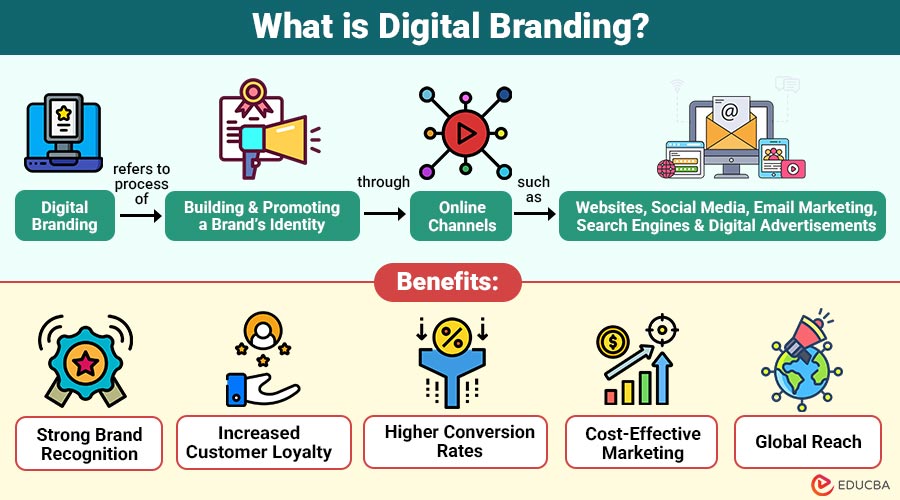
Digital branding refers to the process of building and promoting a brand’s identity through online channels such as websites, social media, email marketing, search engines, and digital advertisements.
It includes everything that shapes how your audience perceives your business online, such as:
- Brand name and logo
- Website design and user experience
- Social media presence and tone of communication
- Content marketing strategy
- Online reputation and reviews
- Visual identity (colors, fonts, graphics)
Unlike traditional branding, digital branding is dynamic and interactive. It allows businesses to engage directly with customers, gather feedback, and adapt quickly based on audience behavior.
Table of Contents:
Key Takeaways:
- Digital branding builds a strong online identity and enhances customer trust consistently worldwide across platforms.
- Consistent digital branding significantly improves engagement, visibility, SEO performance, and long-term business growth.
- Social media and content marketing strengthen brand awareness and customer relationships globally, consistently succeeding.
- It requires consistency, creativity, SEO analytics, and adaptability to succeed in the long term today.
Importance of Digital Branding
Digital branding is essential in today’s competitive environment. Here are some key reasons why it matters:
1. Builds Strong Online Presence
A well-developed digital brand ensures your business is easily recognizable across multiple platforms such as Google, Instagram, LinkedIn, and YouTube.
2. Increases Customer Trust
People trust brands that appear professional, consistent, and active online. A strong digital identity helps build credibility.
3. Improves Customer Engagement
Through social media, blogs, and email campaigns, it enables two-way communication with customers.
4. Supports Business Growth
A recognizable brand attracts more traffic, leads, and conversions, ultimately increasing revenue.
5. Enhances Competitive Advantage
A strong brand makes you stand out from rivals selling comparable goods or services in crowded markets.
Key Elements of Digital Branding
A successful strategy consists of several important key elements:
1. Brand Identity
This includes your logo, color scheme, typography, and overall visual style. It creates instant recognition among users.
2. Website Experience
Your website is the foundation of your digital brand. It should be user-friendly, mobile-responsive, and visually appealing.
3. Content Strategy
Brand perception is significantly shaped by content. Social media posts, videos, infographics, and blogs all aid in effectively communicating your message.
4. Social Media Presence
Platforms like Instagram, Facebook, LinkedIn, and X (Twitter) help you connect with your audience and build community engagement.
5. Search Engine Visibility
When customers search for relevant keywords, SEO (Search Engine Optimization) makes sure your brand shows up in search results.
6. Online Reputation
Customer reviews, ratings, and testimonials influence how others perceive your brand.
Difference Between Digital Branding and Traditional Branding
The table highlights the key differences between digital and traditional branding.
| Aspect | Digital Branding | Traditional Branding |
| Medium | Online platforms | Print, TV, radio |
| Interaction | Two-way communication | One-way communication |
| Cost | Generally lower | Often higher |
| Reach | Global audience | Limited geographic reach |
| Analytics | Real-time data tracking | Limited tracking |
Strategies for Effective Digital Branding
To build a strong digital brand, businesses must follow a well-planned strategy.
1. Define Your Brand Purpose
Understand what your brand represents, including mission, vision, and values, to attract the right audience effectively today.
2. Know Your Target Audience
Identify ideal customers using demographics, interests, and online behavior to tailor messaging and improve engagement effectively.
3. Maintain Consistency
Ensure consistent tone, visuals, and messaging across all digital platforms to strengthen brand identity and recognition strongly.
4. Focus on Quality Content
Produce valuable, high-quality content that engages readers, boosts SEO ranks, and establishes authority and trust.
5. Leverage Social Media Marketing
Use social media platforms to engage audiences, share updates, build relationships, and promote brand awareness effectively and widely.
6. Invest in SEO
Optimize website and content for search engines to improve visibility, organic traffic, and the success rate of long-term growth.
7. Monitor Brand Performance
Track analytics tools to measure engagement, traffic, and conversions to improve marketing strategies and performance over time.
Benefits of Digital Branding
A strong strategy offers multiple benefits:
1. Strong Brand Recognition
Customers consistently recognize and remember your brand across multiple digital platforms and online channels.
2. Increased Customer Loyalty
Engaging experiences and consistent communication build strong, long-term customer relationships and significantly improve overall retention.
3. Higher Conversion Rates
Trusted brands encourage users to take action quickly, such as making purchases, signing up, and subscribing.
4. Cost-Effective Marketing
Reduces the need for expensive traditional advertising while maximizing overall reach and marketing efficiency.
5. Global Reach
Businesses reach international audiences easily without geographical limits through strong global expansion strategies.
Challenges in Digital Branding
Despite its advantages, it also comes with challenges:
1. High Competition
Due to the congested nature of the digital environment, it is challenging for brands to effectively stand out and draw in customers.
2. Rapid Changes in Trends
Digital platforms evolve rapidly, forcing brands to continuously adapt their strategies, tools, content, and engagement approaches to achieve relevance.
3. Reputation Management
Online reputation management is crucial because negative reviews or comments can quickly damage brand trust and credibility.
4. Content Saturation
Content saturation makes it difficult for brands to capture attention since users are exposed to excessive information daily.
5. Consistency Maintenance
Maintaining consistent branding across all digital channels requires coordination, planning, discipline, and continuous monitoring of the brand identity efforts.
Real-World Examples
Mentioned below are some of the real-world examples:
1. Apple
Apple uses minimalistic design, premium positioning, and consistent messaging to create a powerful global digital brand identity.
2. Nike
Nike leverages storytelling and emotional marketing campaigns to deeply connect with audiences and inspire strong brand loyalty worldwide.
3. Coca-Cola
Coca-Cola maintains an emotional brand identity across digital platforms, focusing on happiness, sharing experiences, and universal human connections.
4. Amazon
Amazon emphasizes customer-centric branding with a seamless user experience, fast delivery, personalization, and a reliable digital service ecosystem worldwide.
Final Thoughts
Digital branding is essential for modern business success, helping companies build identity, connect with audiences, and achieve sustainable growth. Through consistency, creativity, SEO, content marketing, and social media, businesses create a strong online presence. In a competitive digital world, it effectively and consistently ensures visibility, relevance, engagement, and long-term success.
Frequently Asked Questions (FAQs)
Q1. Why is consistency important in digital branding?
Answer: Consistency helps customers easily recognize and trust your brand. When visuals, tone, and messaging remain uniform across platforms, it strengthens brand recall and credibility.
Q2. Which platforms are most important for digital branding?
Answer: Key platforms include websites, social media channels (Instagram, Facebook, LinkedIn, X), search engines (Google), and email marketing platforms. The choice depends on your target audience.
Q3. Can small businesses benefit from digital branding?
Answer: Yes, small businesses can significantly benefit. It helps them build visibility, compete with larger brands, and reach wider audience at a relatively low cost.
Q4. What role does social media play in digital branding?
Answer: Social media plays a major role by allowing brands to interact directly with audiences, share content, build communities, and increase brand visibility and engagement.
Recommended Articles
We hope that this EDUCBA information on “Digital Branding” was beneficial to you. You can view EDUCBA’s recommended articles for more information –


