


What is Dark Social?
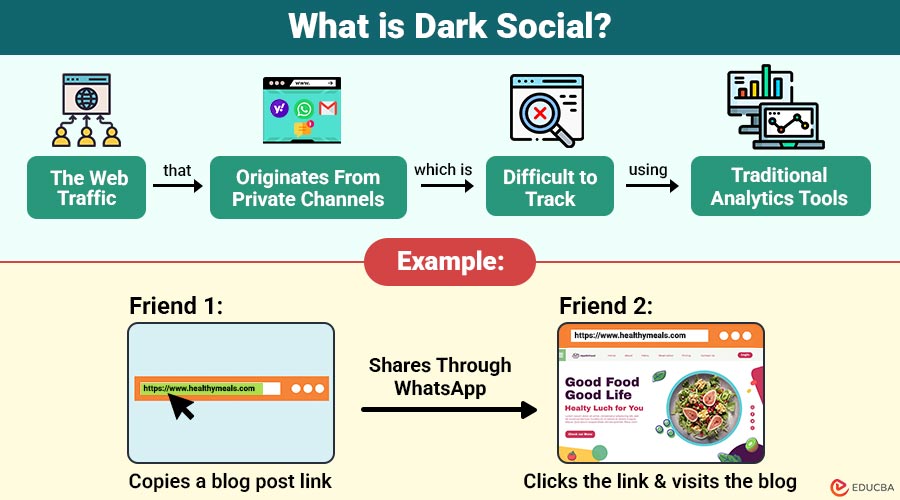
Have you ever looked at your website analytics and wondered, “Where is all this direct traffic coming from?” If the numbers do not make sense, you may be dealing with a powerful and invisible force in digital marketing—Dark Social. Coined by Alexis C. Madrigal in 2012 (The Atlantic), dark social refers to the web traffic that originates from private channels like messaging apps, email, and secure browsing, which is difficult to track using traditional analytics tools.
Imagine you find a helpful blog post about “healthy meal ideas.” Instead of posting it on Facebook or Twitter, you send the link directly to your friend on WhatsApp. Your friend clicks the link and visits the blog. As a result, Google Analytics or any tracking tool marks it as “Direct traffic,” even though it was not someone typing your URL. In an era where 70% of content sharing happens privately, marketers must understand and address dark social or risk flying blind in critical areas like attribution, engagement, and ROI.
Table of Contents
- What is Dark Social?
- How to Identify Dark Social Traffic?
- Industries Mostly Affected
- Why Marketers Should Be Concerned?
- How to Measure and Track Dark Social?
Why is it called “Dark”?
The term “dark” does not imply that something is bad or secretive in a harmful way. It simply means that for most marketers, these shares are invisible or “in the dark” because they do not appear clearly in traffic reports.
How to Identify Dark Social Traffic?
If you notice a sudden spike in direct traffic in your analytics dashboard, particularly on content that is performing well on social media, it could be due to dark social.
Key Indicators:
- High direct traffic with low branded searches
- Traffic spikes without corresponding paid or organic campaigns
- Increased engagement on blog posts or landing pages shared privately
Industries Mostly Affected
Some industries experience a higher share of dark social traffic, especially those with:
- Emotionally engaging or personal content
- High-value items or services that require research or discussion
| Industry | Dark Social Impact |
| Health & Wellness | People privately share articles about symptoms or treatments |
| Finance & Banking | Users often share investment tips via email or chat |
| B2B Marketing | People often share whitepapers and case studies via email or Slack. |
| News & Media | Sensitive or niche news is shared in private groups |
Why Marketers Should Be Concerned?
Ignoring dark social can lead to flawed data, poor attribution, and misinformed strategy decisions.
- Broken Attribution Models: Marketers rely heavily on attribution to optimize campaigns. If 60% of your traffic is labeled “Direct,” you would not know what content or channels are truly driving results.
- Underreported ROI: Your best-performing content might be driving conversions via private channels, but you are not seeing the full picture, leading you to devalue high-performing assets.
- Ineffective Targeting: Dark social hides intent signals. This means you lose valuable behavioral insights that you could use for personalization, retargeting, and funnel optimization.
How to Measure and Track Dark Social?
Dark social is tricky because the usual tools can not track it well. But there are smart ways you can understand and make the most of this hidden traffic. Here is how:
1. Use UTM Parameters on Your Links
UTM parameters are small tags added to the end of URLs. These tags tell your analytics tool where the traffic is coming from.
- If you share a link on WhatsApp, add ?utm_source=whatsapp&utm_medium=dark_social to the URL.
- When someone clicks this link, Google Analytics will know it came from WhatsApp, not “direct traffic.”
- This helps you see which private channels are driving visitors.
Many marketing tools let you easily create these tagged links so that you can track shares even on private messaging apps.
2. Shorten and Track Links with URL Shorteners
Using services like Bitly or Rebrandly helps you shorten long URLs and track how many people clicked them.
- When you share these short links, the tool records every click.
- This data can show you which dark social platforms are popular with your audience.
- For example, if a Bitly link gets many clicks but shows up as “direct” in Google Analytics, you will know the clicks came from private shares.
3. Analyze Direct Traffic More Carefully
“Direct traffic” usually means visitors who typed your website address directly or came from untrackable sources.
- However, a large spike in direct traffic to a specific page can signal dark social sharing.
- Watch for sudden spikes in direct traffic on pages recently shared through private messages.
- This can give clues about your dark social impact, even without perfect tracking.
4. Add Share Buttons with Tracking
Make it easy for visitors to share your content by adding WhatsApp, Facebook Messenger, Email, and SMS share buttons to your website or blog.
- Configure these buttons to include UTM parameters automatically.
- This way, when people click the share buttons, the links they send are already tagged for tracking.
- You will get a clearer view of how often and where people are privately sharing your content.
5. Use Surveys and Feedback Tools
Sometimes the best way to understand how people find you is to ask them directly.
- Add simple surveys or pop-ups asking visitors, “How did you hear about us?”
- Include options like WhatsApp, email, or private message.
- Collecting this data helps confirm the role of dark social in your traffic.
6. Leverage Social Listening and Monitoring Tools
Tools like Brandwatch or Mention can monitor social conversations beyond public posts.
- They help track mentions of your brand or content in private groups or chats.
- While they can not track all private messages, these tools can provide valuable hints about dark social sharing trends.
7. Create Highly Shareable Content
Since dark social thrives on private sharing, people are more likely to pass along your content when it is highly shareable.
- Use compelling headlines, emotional stories, and helpful tips.
- Content that sparks conversation or is useful tends to be shared privately.
- The better your content, the more traffic you will get through dark social, even if you can not track it perfectly.
Final Thoughts
Dark Social represents one of the largest and most elusive sources of online traffic today. While it poses challenges in tracking and attribution, understanding and adapting to it is crucial for modern marketers. By embracing smart tracking strategies and recognizing the power of private sharing, businesses can unlock hidden engagement, improve campaign accuracy, and build stronger connections with their audience.
Recommended Articles
We hope this detailed article on dark social helps you uncover the hidden channels driving your website traffic. Check out these recommended articles for more tips and strategies to boost your digital marketing success.


