


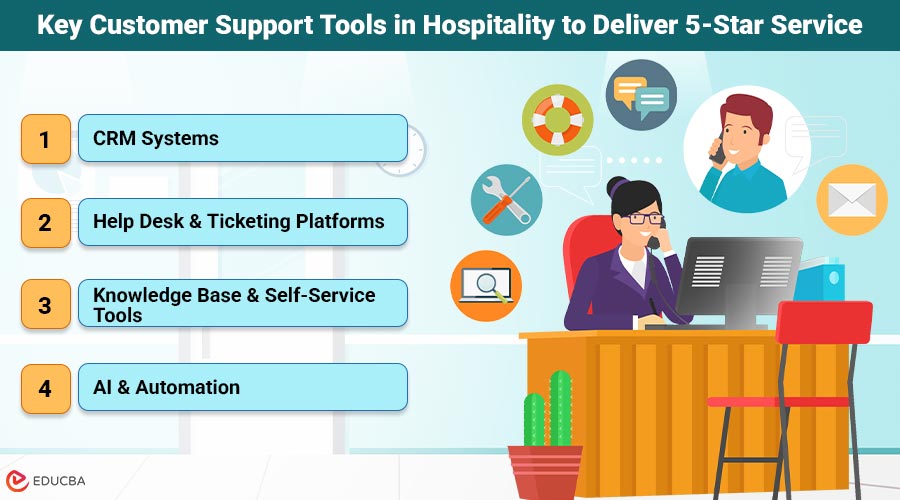
Customer Support Tools in Hospitality: Overview
Modern technology offers a variety of ways companies across all industries can optimize their operations, and the hospitality sector is no exception. Guests now expect quick responses, personalized experiences, and seamless service from the moment they book to the time they leave. To meet these rising expectations, simply having friendly staff is not enough. Businesses must leverage the right customer support tools in hospitality to build stronger teams, streamline communication, and deliver a true 5-star customer support that keeps guests coming back.
Why Guest Support Matters More Than Ever?
Recent statistics show that 81% of customers are more likely to return to a brand after a positive customer service experience. While people often cite this figure in the context of e-commerce, the principle applies just as strongly across other industries. So it comes as no surprise that in hospitality, where every interaction shapes the guest’s overall impression, exceptional customer support is the backbone of a thriving business.
Think about it: happy guests do not just come back on their own. As satisfied clients are more likely to leave a positive review about your business, they will likely influence future travelers and drive new bookings. This positive cycle directly impacts revenue and long-term ROI, thus turning such a simple (at first glance) operation as customer support into one of the most powerful growth drivers in hospitality.
The challenge, however, is that the guests are not so easy to impress. They expect fast, seamless, and highly personalized service at every interaction. In an industry where competition is fierce, the difference between a stay that is merely good and one that truly deserves those 5 stars on Google often comes down to how efficiently and thoughtfully a hospitality team can anticipate and respond to guest needs. Sometimes, to ensure high-quality service, businesses can opt for customer service outsourcing (especially during peak seasons, when extra help is always needed). However, on a more regular basis, simply having the right technology for workflow optimization is enough.
Key Customer Support Tools in Hospitality to Deliver 5-Star Service
While every company has its own unique goals, there is a clear consensus on the core set of technologies that give any hospitality venture a solid foundation for success. Let us explore the must-have tools your hotel can work with to stay efficient, competitive, and ready to deliver outstanding guest experiences.
1. CRM Systems
Customer Relationship Management solutions are something that any hospitality business should invest in. The whole shtick of these systems is that they allow for centralizing data, providing a complete view of each guest’s journey. Consider details such as booking history, room and service preferences, and past support communications. These insights make it easier for businesses to personalize experiences, run targeted marketing campaigns, and strengthen programs that encourage repeat visits and direct bookings. This data can also help predict periods of higher and lower demand, allowing for adjustments in resource allocation accordingly.
CRMs can also automate such support tasks as sending confirmations, pre-arrival messages, or feedback requests, ensuring guests receive timely and relevant communication without adding extra strain on your customer service team.
Some of the most useful CRMs for hotels include Dailypoint, ideal for creating detailed guest profiles and delivering personalized experiences, and Revinate, which combines email marketing with guest surveys and reputation management to build stronger relationships. Popular customer service CRMs like HubSpot and Zendesk are also widely used to help centralize guest information and organize smoother communication between staff and guests.
2. Help Desk & Ticketing Platforms
Help desks and ticketing platforms are designed to efficiently manage, organize, and track guest support requests, making them essential for hotel businesses. These systems convert inquiries from various communication channels (email, chat, phone, or social media) into “tickets” that can be monitored from creation to resolution. These platforms primarily centralize communication, prioritize issues, and enable team collaboration. They also offer a range of automation features, including ticket routing, follow-ups, and knowledge base integration, which help streamline workflows and free staff to focus on more complex or time-sensitive guest needs.
As these tools foster faster, more personalized responses, support multilingual communication, and provide insights through analytics, they continually improve service quality and help improve guest satisfaction. Some of the most popular software of this kind nowadays include Jira, Salesforce, and Zoho Desk, all of which provide a combination of analytics and organizational features to help businesses build a robust support system for their guests.
3. Knowledge Base & Self-Service Tools
Even though human support is important, more people nowadays are opting to solve their issues on their own. That is why self-service solutions are gaining popularity, and support teams across industries are now building detailed guides and FAQ sections to help their audiences quickly solve the most popular issues. Tools like online portals, knowledge bases, AI chatbots, and interactive voice response (IVR) systems enable customers to access solutions on their own, anytime, and from any device.
As such, self-service increases satisfaction by offering fast, consistent, and personalized answers while reducing wait times and easing the load on support teams. As these tools are often cheaper than hiring new team members, they also give businesses a chance to cut on operational costs, ensure 24/7 availability, and have a scalable platform as it grows. These tools not only resolve issues but also educate customers, helping them make the out of their experience with your brand.
4. AI & Automation
AI and automation are the new trends among modern ventures. So, if you want to stay on top of your game, it is time to start adopting these new technological advancements. Especially considering how these tools can help hotels, resorts, and restaurants deliver exceptional guest experiences and streamline internal operations. What exactly do AI-powered solutions bring to the table? Well, first and foremost, it is automation. Automation can handle tasks like booking management, inventory tracking, and routine guest inquiries, freeing your team to focus on the personal touches that make guests feel valued.
On top of that, AI tools improve internal communication, support onboarding and training, and provide real-time insights that make decision-making faster and smarter. For example, AI-driven messaging platforms allow for automatic prioritization of important messages and provide instant translations. Companies use AI-powered training platforms (e.g., Axonify) to deliver personalized learning paths for new hires. And predictive analytics tools, like Betterworks for instance, give managers actionable insights on team performance.
Final Thoughts
Modern hospitality businesses cannot rely solely on staff friendliness to deliver exceptional service. Implementing the right customer support tools in hospitality—from CRMs and helpdesks to AI and self-service platforms—ensures guests receive fast, personalized, and seamless experiences. Start with a CRM and helpdesk system to organize guest data and streamline workflows. Then, gradually adopt AI and automation tools to further enhance service. With the right tools, your hotel, resort, or hospitality business can strengthen guest relationships, improve operational efficiency, and achieve long-term success.
Recommended Articles
We hope this guide on customer support tools in hospitality helps you enhance guest experiences. Explore these recommended articles for more tips and strategies to optimize your hospitality operations.

