


Updated September 11, 2026
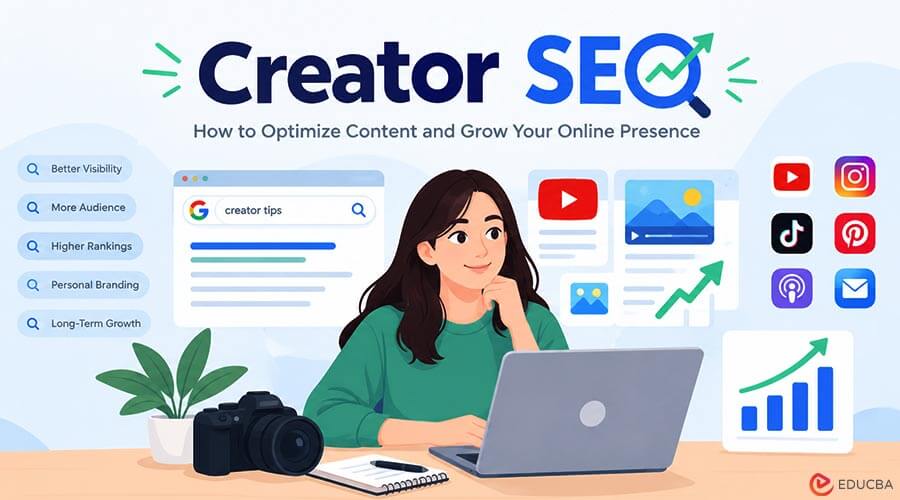
Creators no longer depend only on social media algorithms to reach an audience. People increasingly discover creators through Google, YouTube, Instagram, TikTok, Pinterest, podcasts, newsletters, and other digital platforms. This shift creates an important opportunity for creators who know how to make their content easier to discover.
Creator SEO helps creators optimize their content, profiles, videos, websites, and digital presence so that search engines and platform algorithms can understand and surface their work to the right audience.
Traditional SEO often focuses on websites, keywords, backlinks, and search rankings. Creator SEO takes a broader approach. It connects search optimization with personal branding, social content, audience intent, topical authority, and platform discovery.
Whether you are a YouTuber, blogger, podcaster, influencer, photographer, educator, freelancer, or business creator, Creator SEO can help you attract consistent organic traffic and build a stronger audience.
Table of Contents
- Meaning
- Importance
- Creator SEO vs Traditional SEO
- How Does It Work?
- Common Mistakes
- Best Practices
- Futures
- Examples
- Checklist
Key Takeaways
- Creator SEO helps creators improve visibility across search engines and digital platforms.
- Keyword research helps creators understand what their audiences want to find.
- Search intent should guide content creation and optimization.
- Creators can use blogs, videos, social posts, podcasts, newsletters, and websites as part of one SEO strategy.
- Topical authority can help creators establish expertise within a specific niche.
- Repurposing content can extend the reach of valuable ideas across multiple platforms.
- Personal branding plays an important role in creator visibility.
- Quality, originality, and first-hand experience remain essential for building audience trust.
- Creators should measure meaningful outcomes instead of focusing only on views and likes.
- A sustainable Creator SEO strategy combines search optimization, useful content, personal expertise, and consistent publishing.
What Is Creator SEO?
Creator SEO is the practice of optimizing a creator’s digital content and online presence to improve visibility in search engines and content discovery platforms.
It combines traditional search engine optimization with creator-focused strategies such as:
- Optimizing social media profiles
- Researching audience search behavior
- Creating searchable videos and posts
- Using relevant keywords naturally
- Optimizing YouTube titles and descriptions
- Building topical authority
- Improving content structure
- Creating content around audience questions
- Strengthening personal branding
- Repurposing content across platforms
- Building links and digital mentions
For example, suppose a fitness creator regularly publishes videos about home workouts. Instead of using a generic title such as “My Morning Workout,” the creator can target a specific search query such as “20-minute home workout for beginners.” The optimized version gives search engines and users a clearer understanding of the content.
Creator SEO does not mean stuffing keywords into every post. It means understanding what your audience wants to find and creating content that directly satisfies that intent.
Why Is Creator SEO Important?
Creators compete for attention across thousands of websites and social platforms. Great content alone does not guarantee visibility.
Creator SEO helps solve this problem by making content easier to discover.
1. It Builds Long-Term Visibility
Social posts often receive most of their engagement shortly after publication. Search-optimized content can continue attracting users weeks, months, or even years later.
A YouTube tutorial, blog post, or educational resource can continue generating traffic as long as people search for the topic.
2. It Helps You Connect With the Right Audience
More views aren’t enough for creators; reaching people who genuinely care about their content matters more. By studying keywords and understanding search intent, creators can identify what their audience wants. They can then create focused content that addresses specific needs, answers relevant questions, and provides practical solutions.
3. It Reduces Dependence on Social Algorithms
Platform algorithms constantly change. A creator who depends entirely on recommendations or viral posts can experience sudden traffic drops.
SEO provides another discovery channel.
By optimizing websites, videos, profiles, and evergreen content, creators can build traffic sources that do not depend entirely on short-term social performance.
4. It Strengthens Personal Branding
Search results often introduce people to creators before they visit their social profiles.
A consistent name, profile description, website, author page, social presence, and content portfolio can help establish credibility.
Over time, consistent optimization can help a creator become associated with a specific subject or niche.
5. It Creates Business Opportunities
Strong organic visibility can attract:
- Brand partnerships
- Sponsorships
- Consulting opportunities
- Affiliate revenue
- Course sales
- Freelance clients
- Speaking opportunities
- Newsletter subscribers
- Product sales
Therefore its supports both audience growth and monetization.
Creator SEO vs Traditional SEO
Creator SEO shares many principles with traditional SEO, but the objectives and content formats differ.
| Creator SEO | Traditional SEO |
| Focuses heavily on websites | Covers websites and creator platforms |
| Targets search engine rankings | Targets search and platform discovery |
| Often focuses on business keywords | Often focuses on topics, questions, and personal expertise |
| Uses website content extensively | Uses videos, posts, blogs, podcasts, profiles, and newsletters |
| Builds brand authority | Builds personal and topical authority |
| Measures website traffic | Measures visibility across multiple platforms |
Traditional SEO might help an ecommerce company rank for “running shoes.”
Creator SEO might help a running coach become visible for searches such as “how to choose running shoes,” “running shoes for beginners,” or “how to start running.”
The two approaches can work together.
How Does Creator SEO Work?
Creator SEO follows the same basic principle as effective SEO: understand what people want, create useful content, and make that content easy for search systems to understand.
A simple Creator SEO process looks like this:
Research → Create → Optimize → Publish → Distribute → Measure → Improve
Each stage plays an important role.
1. Define Your Creator Niche
Start by identifying the subject you want to own.
A broad niche can make it harder to establish strong expertise and credibility. A focused niche gives your content a clearer direction.
For example, instead of creating content about “fitness,” you could focus on:
- Fitness for beginners
- Home workouts
- Strength training for women
- Running for busy professionals
- Healthy meals for students
You do not need to restrict yourself permanently to one narrow subject. However, you should create enough related content to demonstrate consistent expertise.
Ask yourself:
- What do I know well?
- What do I enjoy creating?
- What problems can I solve?
- What does my audience search for?
- What subjects can I cover consistently?
Your answers can help you establish a sustainable content niche.
2. Understand Your Audience’s Search Intent
Search intent describes what a user aims to accomplish when entering a search query.
Someone searching for “best cameras for YouTube beginners” has a different intent from someone searching for “how to start a YouTube channel.”
Common search intents include:
Informational Intent
Users want information or an answer.
Examples:
- What is Creator SEO?
- How does YouTube SEO work?
- How do I grow a newsletter?
Commercial Intent
Users want to research products, services, or solutions before deciding.
Examples:
- Best camera for YouTube
- Best SEO tools for creators
- Best email marketing platform for bloggers
Transactional Intent
Users are ready to take an action.
Examples:
- Buy a YouTube microphone
- Download a content calendar
- Sign up for an SEO course
Navigational Intent
Users want to find a specific website, creator, or platform.
Examples:
- Creator’s Instagram profile
- Creator’s YouTube channel
- Creator’s website
Understanding what users want helps you create content that meets their specific needs and expectations.
3. Perform Keyword Research
Keyword research remains an important part of Creator SEO.
Begin by focusing on subjects that interest and matter to your target audience. Then identify the phrases people use to search for those topics.
For example, a travel creator might start with the broad topic “Goa travel.”
Related searches could include:
- Goa travel itinerary
- Goa places to visit
- Goa trip budget
- Goa travel tips
- Goa itinerary for 3 days
- Best beaches in Goa
These keywords can become individual content ideas.
However, creators should avoid focusing only on high-volume keywords. Highly competitive keywords can take significant time to rank for.
Long-tail keywords often provide a better starting point because they target specific needs.
Instead of targeting “fitness,” a creator could target “20-minute strength workout at home for beginners.”
4. Optimize Your Creator Profile
Your profile often serves as your digital introduction.
Optimize your profiles across platforms by clearly explaining:
- Who you are
- What you create
- Who you help
- What subjects you cover
- What makes your content different
Use relevant keywords naturally in your:
- Bio
- Profile description
- About section
- Website title
- Channel description
- Category
- Creator name, when appropriate
Avoid forcing keywords into your username or personal name. Keep your brand natural and memorable.
5. Create Searchable Content
Create content that answers questions people already ask.
Searchable content can include:
- Tutorials
- How-to guides
- Reviews
- Comparisons
- Checklists
- Case studies
- Explanations
- Frequently asked questions
- Step-by-step videos
- Educational posts
For example, instead of creating a generic video titled “My SEO Tips,” create a focused video such as “7 SEO Tips for Small Creators.”
The second title communicates the topic, audience, and value more clearly.
6. Optimize YouTube Content
YouTube combines social networking features with search capabilities, making it an effective channel for Creator SEO.
Creators should optimize:
- Video Titles: Create titles that explain the topic and encourage clicks.
- Descriptions: Use the description to summarize the video and provide useful context. Include relevant keywords naturally.
- Chapters: Add chapters when they improve navigation and help viewers understand a long video’s structure.
- Thumbnails: Create thumbnails that quickly communicate the video’s subject. Avoid misleading designs that promise something the video does not deliver.
- Captions and Transcripts: Accurate captions can improve accessibility and help provide additional textual context around your content.
- Playlists: Organize related videos into playlists to create clear topical groups.
A creator who consistently publishes related videos can establish stronger topical coverage around a subject.
7. Optimize Blog Content
A personal website gives creators greater control over their content and brand.
When publishing articles, optimize:
- Page titles
- Headings
- Meta descriptions
- URLs
- Internal links
- Images
- Image alt text
- Content structure
- Author information
Use one clear primary topic for each article.
For example, a food creator could publish:
- Easy dinner recipes for beginners
- High-protein breakfast ideas
- 30-minute vegetarian meals
- Meal-prep recipes for busy professionals
These articles can support the creator’s broader authority in food and cooking.
8. Build Topical Authority
Topical authority means demonstrating consistent knowledge across related subjects.
Suppose a creator wants to become known for digital marketing.
Publishing one article about SEO may not establish strong topical coverage.
Instead, the creator could create a content cluster covering:
- SEO basics
- Keyword research
- Technical SEO
- Content SEO
- Local SEO
- Ecommerce SEO
- Link building
- SEO analytics
- SEO tools
- SEO strategy
Connect these related pieces with internal links.
This approach creates a stronger knowledge ecosystem and gives audiences more reasons to explore the creator’s content.
9. Repurpose Content Across Platforms
Creators often produce one strong piece of content and then move on to the next idea.
Creator SEO encourages smarter content distribution.
For example, one long YouTube video can become:
- A blog article
- Several short videos
- Instagram posts
- LinkedIn posts
- Pinterest content
- A newsletter
- Frequently asked questions
- A podcast segment
Each format can target a different discovery channel.
However, do not copy and paste the same content everywhere without adapting it. Adjust the format, tone, length, and presentation for each platform.
10. Create Content Around Questions
Questions provide excellent opportunities for Creator SEO.
Find questions your audience asks in:
- Google search results
- YouTube search
- Reddit discussions
- Social media comments
- Community forums
- Customer conversations
- Comments on your own content
Then create content that provides a direct and useful answer.
For example, a photography creator may notice repeated questions such as:
- What camera should beginners buy?
- How do I take better photos at night?
- What camera settings should I use for portraits?
Each question can become a content opportunity.
11. Optimize for Personal Search
Creators should also think about what happens when someone searches their name.
Make sure your online presence consistently communicates your identity.
Use the same or closely related:
- Creator name
- Profile image
- Brand description
- Website
- Social profiles
- Professional information
Build a creator website that includes an About page, content portfolio, contact information, and links to major platforms.
This strategy helps users find accurate information about you instead of relying on unrelated or incomplete results.
12. Build Quality Backlinks and Mentions
Backlinks can strengthen a creator’s website authority.
Creators can earn relevant links through:
- Guest articles
- Interviews
- Podcasts
- Expert quotes
- Collaborations
- Original research
- Digital PR
- Industry contributions
- Resource pages
Focus on relevance and quality instead of collecting as many links as possible.
A mention from a respected website in your niche can provide more value than many irrelevant links.
13. Use Internal Linking
If you run a creator website, connect related articles with internal links.
For example, a creator who writes about content marketing could link:
Keyword Research → Content Strategy → Blog Writing → Content Promotion → SEO Analytics
Internal linking helps users discover more content and creates a logical structure for search engines.
14. Optimize Visual Content
Creators who publish photography, design, illustrations, infographics, or other visual content should also optimize their images.
Use:
- Descriptive filenames
- Relevant alt text
- Appropriate image dimensions
- Compressed image files
- Contextual captions where useful
For example, avoid a filename such as:
IMG_4587.jpg
Use a descriptive filename such as:
creator-seo-content-strategy.jpg
Do not use alt text as a place to insert keywords unnaturally. Describe the image accurately.
15. Focus on Content Quality
SEO cannot compensate for poor content.
Creators should prioritize:
- Original insights
- Accurate information
- Clear explanations
- Practical examples
- Strong storytelling
- Useful visuals
- First-hand experience
- Actionable advice
Your content should give people a reason to remember, follow, share, or return to your work.
Search visibility may bring someone to your content, but value determines whether they stay.
16. Establish a Consistent Publishing System
Consistency matters more than publishing excessively.
You do not need to publish every day.
Instead, establish a realistic system.
For example:
Weekly:
- 1 long-form video
- 2 short-form videos
- 1 blog article
- 2 social posts
- 1 newsletter
Your actual schedule should depend on your resources and audience.
Consistency also helps you learn what works. When you publish regularly, you generate more data about topics, formats, headlines, and audience behavior.
17. Track Creator SEO Performance
Measure the results of your optimization efforts.
Important metrics include:
- Organic traffic
- Search impressions
- Search rankings
- Click-through rate
- Video views
- Watch time
- Audience retention
- Profile visits
- Engagement
- Subscribers
- Newsletter sign-ups
- Leads
- Conversions
Do not focus only on vanity metrics.
A post with 100,000 views may generate less business value than a targeted article that attracts 1,000 highly relevant visitors.
Connect your SEO metrics with your actual creator goals.
Common Creator SEO Mistakes
Creators often make several SEO mistakes that limit their visibility.
- Keyword Stuffing: Do not repeat the same keyword unnaturally. Write for humans first.
- Chasing Every Trend: Trends can generate short-term visibility, but they may not support your long-term niche.
- Ignoring Search Intent: A keyword alone does not tell you what users want. Study the intent behind the query.
- Publishing Without a Strategy: Random content can make it difficult to establish topical authority.
- Depending on One Platform: Build a presence across multiple relevant channels instead of relying entirely on one algorithm.
- Using Clickbait: A misleading title may generate clicks but can damage trust when the content fails to deliver.
- Ignoring Older Content: Review and update valuable content instead of always creating something new.
- Neglecting Your Website: A creator-owned website can provide a stable home for your content, portfolio, and business information.
Creator SEO Best Practices
Follow these practices to build a sustainable Creator SEO strategy:
- Choose a clear niche.
- Understand your audience.
- Research keywords and questions.
- Match content with search intent.
- Optimize creator profiles.
- Create original and useful content.
- Use descriptive titles.
- Build topical content clusters.
- Optimize videos and images.
- Repurpose strong content intelligently.
- Build relevant backlinks and mentions.
- Connect related content through internal links.
- Maintain consistent branding.
- Update valuable older content.
- Track performance and improve your strategy.
Future of Creator SEO
Creator SEO will continue to evolve as search behavior changes.
People no longer discover information only through traditional search engines. They also search directly on YouTube, TikTok, Instagram, Reddit, Pinterest, marketplaces, and other platforms.
AI-powered search experiences also change how people discover information. This development makes clear, useful, authoritative, and well-structured content increasingly important.
Creators can prepare by building a recognizable brand and publishing information that demonstrates genuine expertise.
Instead of creating content solely to satisfy algorithms, creators should create content that deserves to be discovered.
First-hand experience can become particularly valuable. A creator who shares original testing, personal observations, case studies, experiments, examples, and unique perspectives can provide information that generic content cannot easily replicate.
The strongest Creator SEO strategies will therefore combine technical optimization with authenticity, expertise, consistency, and audience understanding.
Real-World Examples of a Creator SEO Strategy
Several successful creators use search-focused content to help audiences discover their work beyond social media feeds. Their strategies show how creators can combine expertise, searchable topics, and multiple content formats to build long-term visibility.
Marques Brownlee (MKBHD)
Marques Brownlee has built a strong online presence around consumer technology, smartphones, laptops, and other electronics. His content often targets topics that people actively search for, such as product reviews, comparisons, and technology launches.
For example, a technology creator can create content around searches such as:
- iPhone vs Samsung comparison
- Best smartphone for photography
- New laptop review
- Smartphone camera comparison
The creator can then expand these topics into YouTube videos, website articles, short-form videos, and social media posts. This approach creates multiple opportunities for audiences to discover the same expertise across different platforms.
Ali Abdaal
Ali Abdaal focuses on productivity, studying, entrepreneurship, and personal development. His content addresses practical questions that people frequently search for, including how to study effectively, manage time, and build productive habits.
A creator following a similar strategy could organize content into topic clusters such as:
- Study techniques
- Productivity systems
- Time management
- Note-taking methods
- Career development
Each topic can support several related videos, articles, newsletters, and social posts. Linking these topics together can help establish stronger authority within the creator’s niche.
MrBeast
MrBeast demonstrates another aspect of creator visibility: strong personal branding. His name, content style, and brand appear consistently across YouTube, social media, websites, and other digital channels.
Creators can apply a similar principle on a smaller scale by maintaining consistent branding across their website and social profiles. Using the same creator name, description, visual identity, and links can make it easier for audiences to identify and find their content.
HubSpot Creators and Educational Content
HubSpot provides another useful example of how educational content can target search-driven topics. Its content covers subjects such as marketing, sales, social media, content creation, and business growth.
A creator can use a similar educational approach by identifying questions within their niche and creating detailed resources around them. For example, a digital marketing creator could cover keyword research, content strategy, social media marketing, email marketing, and SEO through videos, blog posts, guides, and newsletters.
These examples show that Creator SEO does not require creators to follow one fixed content format. A creator can combine searchable topics, personal expertise, consistent branding, and multiple content platforms to create a connected digital presence. Over time, this approach can help audiences discover the creator through search while strengthening their authority within a specific niche.
Creator SEO Checklist
Use this checklist when optimizing your content:
Before Creating Content
- Identify your audience.
- Choose a specific topic.
- Research relevant keywords.
- Study search intent.
- Review competing content.
- Identify unanswered questions.
While Creating Content
- Provide original value.
- Use clear headings.
- Answer the main question early.
- Add useful examples.
- Use natural keywords.
- Include relevant visuals.
- Demonstrate your expertise.
Before Publishing
- Optimize the title.
- Write a useful description.
- Create a clear URL.
- Add internal links.
- Optimize images.
- Check mobile usability.
- Add appropriate metadata.
- Review the content for accuracy.
After Publishing
- Share the content across relevant platforms.
- Monitor performance.
- Respond to audience questions.
- Update outdated information.
- Identify opportunities for related content.
- Repurpose successful ideas.
Frequently Asked Questions (FAQ’s)
Q1. What role does audience engagement play in Creator SEO?
Answer: Audience engagement can help creators understand whether their content meets audience needs. Comments, shares, saves, and repeat visits can also reveal topics that creators can explore in future content.
Q2. Can Creator SEO help with brand collaborations?
Answer: Yes. Strong search visibility can make creators easier for brands to discover. An optimized website, professional profile, and consistent content can also demonstrate expertise and audience relevance.
Q3. How can creators optimize content for voice search?
Answer: Creators can target conversational, question-based searches that reflect how people naturally speak. Using clear questions, direct answers, and natural language can make content better suited to voice searches.
Q4. How does video length affect Creator SEO?
Answer: Video length does not automatically determine search performance. Creators should focus on providing useful information, keeping viewers engaged, and answering the target query effectively rather than aiming for a specific video length.
Q5. Can creators monetize traffic generated through SEO?
Answer: Yes. Creators can monetize organic traffic through affiliate marketing, digital products, courses, memberships, sponsorships, consulting, advertising, and other services that match their audience and niche.
Final Thoughts
Creator SEO gives creators a way to build visibility beyond follower counts and short-lived viral content. By understanding what audiences search for, creating useful content, optimizing digital profiles, and building authority around a clear niche, creators can build a stronger, more sustainable online presence.
The most effective approach does not treat SEO as a separate activity. Instead, creators should integrate SEO into their entire content process, from choosing a topic to publishing, distributing, measuring, and updating content.
The goal is simple: create content that people genuinely want, make it easy to discover, and give audiences a reason to come back.
When creators combine search optimization with expertise, originality, consistency, and a strong personal brand, Creator SEO can become a powerful long-term growth strategy.
Recommended Articles
We hope this guide helps you understand how Creator SEO can improve content visibility, audience discovery, and long-term organic growth. Explore the following recommended articles to learn more about SEO techniques, content optimization, keyword research, personal branding, content marketing, and effective search strategies.

