


Updated July 28, 2026

A control system is a system that controls the output and provides the requested response. In this topic, we are going to learn about Control System Interview Questions. A basic block scheme for a control system is shown in the figure below.

A single block represents the control system here. Because different inputs control the output, this name has been given to the control system. We will use some mechanism to vary this data. We will look at the blocks inside the control system and adjust this feedback to get the desired response in the next segment of open-loop and closed-loop control systems.
Control systems play an important role in engineering applications by managing and regulating system behavior to achieve the desired output. These systems are widely used in industries such as automation, robotics, electrical engineering, manufacturing, and aerospace. Understanding control system concepts is essential for students and professionals preparing for technical interviews.
A control system is designed to control the output and provide the desired response by processing different input signals. It mainly operates through open-loop and closed-loop mechanisms, where feedback helps improve system accuracy and stability.
Part 1 – Control System Interview Questions (Basics)
This first part covers the basic Interview Questions.
Q1. What does the System mean?
Answer:
A system is a combination of interconnected elements or components designed to perform a specific function. Different parts work together to achieve a desired output.
Q2. What is a Time-Invariant System?
Answer:
The time required to switch from one state to another is called transient time. During that time, the value of current and voltage is called a temporary response and the system in which the system’s input and output characteristics are not modified by time is called a time-invariable system.
Q3. What is Gain Margin?
Answer:
The gain margin is the gain that varies until the system is stable, since if we continually raise the gain to a certain amount, the system is slightly stable, which leads to instability as the gain varies more. The magnitude of the G(j(j)H(j)(j) at the phase convergence frequency is mathematically reciprocal.
Q4. Where is Servomechanism used?
Answer:
The servo mechanism is used to adjust the mechanical location of the unit using the output. In the governor value control system, the servomechanism is commonly used to control the turbine’s location at power stations and process it using the transducer, and the final value is called a mechanical movement of the value. Today, however, the governor controls the position of the value using Thyristor electronic controls. In the robotic hand movement, this device is also used.
Q5. What are the Applications of Sampled Data Systems?
Answer:
The following applications are given for the sampled data framework.
- Quantized data is used for high-speed rolling mills regulation.
- For numerically managed machine tool operations.
- Digital signal processing systems
- Computer-based process control
Q6. What is the cut-off Rate?
Answer:
The cut-off rate is called the pitch near the cut-off frequency of the log magnitude curve. The reduction rate indicates the system’s ability to distinguish between signal and noise.
Part 2 – Control System Interview Questions (Advanced)
Let us now have a look at the advanced Interview Questions.
Q7. What is Servomechanism?
Answer:
A certain motor type called a servo motor forms a servo-mechanism in combination with a rotary encoder or potentiometer. A potentiometer provides a position indicator in this system with an analog signal, and an encoder provides input to the location and RPM.
It generally consists of:
- Servo motor
- Rotary encoder or potentiometer
- Controller
- Feedback mechanism
The potentiometer provides analog position feedback, while the encoder provides information about speed and position.
Q8. What are the Signal Flow Graphs’ critical characteristics?
Answer:
SFG is a diagram containing a set of equations. It comprises nodes and branches that represent the flow of the signal in each branch of SFG. The network is represented by nodes in which the machine variable that is connected by direct branches is represented.
Characteristics:
- Consists of nodes and branches
- Nodes represent system variables
- Branches represent signal flow
- Used to determine transfer functions
- Simplifies complex system analysis
Q9. What is Close Loop & open Loop?
Answer:
CLOSE LOOP: It tests the operator response method signals. This Means Tx knows the process and moves it to the control room. Where the PID controls and is provided to the final control item as needed by the process
Open Loop: This is simply to relay the process signals from the field sensibly and only for operator monitoring to the control room.
Example:
- Open-loop: Electric toaster
- Closed-loop: Air conditioner temperature control
Q10. What’s Control Machine Feedback? What are its features?
Answer:
Feedback is that a closed-loop control system, which enables the system to be contrasted with the system input, should have the output or some other managed system variable, such that an acceptable control action can be created as an output and input function.
Features of Feedback:
- Improves accuracy
- Increases bandwidth
- Reduces distortion
- Reduces sensitivity to parameter changes
- May introduce instability if not designed properly
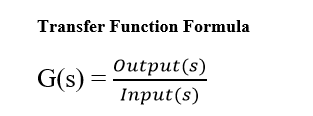
Q11. What Is Transfer Function?
Answer:
The mathematical term refers to the machine output information, thus defining a system’s behaviour. The Laplace transformation from the output to the lap lace transformation of the input variable is expressed in accordance with the assumption that all initial conditions are zero.
It is defined as the ratio of the Laplace transform of the output to the Laplace transform of the input when all initial conditions are zero.
Q12. What Is Analogous System?
Answer:
Analog systems are called systems governed by the same types of equations. Analog systems can be physically completely different. For example, an electrical circuit made up of a mechanical system comprised of the proper combination of dashpots, weights, and springs, inductance, and power, or an acoustic system consisting of the proper arrangement of fine mesh screens, tubes, and cavities may be comparable.
Examples:
- Mechanical systems
- Electrical circuits
- Hydraulic systems
- Acoustic systems
These systems behave similarly mathematically even though their physical structures differ.
Tips to Crack Control System Interviews
Preparing for a control system interview requires a strong understanding of theoretical concepts along with practical problem-solving skills. The following tips will help you improve your preparation and perform confidently during interviews.
1. Understand Basic Concepts Clearly
Focus on understanding the core fundamentals of control systems instead of memorizing definitions.
Important Concepts:
- Open-loop and closed-loop systems
- Feedback systems
- Stability
- Transfer functions
- Time response analysis
- Frequency response
2. Practice Numerical Problems
Many interviews include numerical and analytical questions to test problem-solving ability.
Practice Topics:
- Gain calculations
- Root locus problems
- Bode plot analysis
- Routh stability criterion
- Laplace transforms
- Transfer function derivations
Regular numerical practice improves speed and accuracy.
3. Learn Important Formulas
Control system interviews often involve direct formula-based questions.
Important Areas:
- Transfer functions
- Steady-state error
- Damping ratio
- Natural frequency
- Gain margin and phase margin
- Time domain specifications
4. Study Block Diagrams and Transfer Functions
Block diagram reduction and signal flow graph analysis are frequently asked in interviews.
Focus On:
- Series and parallel block reduction
- Feedback loop reduction
- Mason’s Gain Formula
- Signal flow graph analysis
5. Revise Stability Criteria Methods
Stability analysis is one of the most important interview topics in control systems.
Important Methods:
- Routh-Hurwitz Criterion
- Root Locus Technique
- Nyquist Plot
- Bode Plot
Interviewers often ask practical questions related to system stability and performance.
6. Prepare Practical Industrial Applications
Interviewers may ask how control systems are used in real-world applications.
Common Applications:
- Robotics
- Industrial automation
- Aircraft control systems
- Power plants
- CNC machines
- Servo motor systems
Understanding practical applications helps demonstrate industry knowledge
7. Practice Previous Interview Questions Regularly
Solving previous interview questions helps you understand the pattern and difficulty level of technical interviews.
Benefits:
- Improves confidence
- Identifies weak areas
- Enhances technical communication
- Increases problem-solving speed
Create short notes for quick revision before interviews.
Recommended Articles
This has been a guide to the list of Control System Interview Questions so that the candidate can crackdown these Interview Questions easily. You may also look at the following articles to learn more –

