



Every investor dreams of discovering a promising company before its share price takes off. However, identifying these opportunities requires more than following market trends or buying stocks that have recently declined in value.
The key is understanding how to find undervalued stocks companies whose market prices may be lower than their estimated intrinsic value. These opportunities can arise when investors overlook strong businesses, react excessively to temporary setbacks, or misunderstand a company’s long-term growth potential.
Successful value investing involves evaluating financial performance, comparing valuations, studying industry trends, and identifying factors that could eventually change market perceptions.
This guide explains how to find undervalued stocks, which financial indicators matter most, how to avoid value traps, and how to build a disciplined stock research process.
What Are Undervalued Stocks?
Undervalued stocks are shares of companies trading below their estimated intrinsic value. Intrinsic value represents an assessment of what a business is worth based on factors such as earnings, cash flow, assets, financial stability, and future growth potential.
For example, imagine a company whose estimated intrinsic value is $100 per share, but whose stock currently trades at $75. The difference suggests a potential 25% discount to estimated fair value.
However, this does not automatically make the stock a good investment. The valuation estimate may be inaccurate, or the market may be pricing in risks that are not immediately obvious.
A stock is potentially undervalued when there is credible evidence that its business value exceeds its market price.
Why Do Stocks Become Undervalued?
Several factors can create valuation gaps:
- Temporary business setbacks: Short-term earnings declines or operational challenges may push share prices lower.
- Market overreactions: Negative news or economic uncertainty can trigger selling that exceeds the actual impact on business fundamentals.
- Limited investor attention: Smaller or less-followed companies may receive less analyst coverage.
- Industry downturns: Strong companies can see their valuations decline when their entire sector falls out of favor.
- Misunderstood growth potential: Investors may underestimate future earnings improvements, new products, or business expansion.
Understanding why a stock appears undervalued is just as important as recognizing the valuation discount itself.
Why Finding Undervalued Stocks Matters?
Finding undervalued stocks can create opportunities to purchase ownership in quality businesses at prices below their estimated economic worth.
One potential advantage is the margin of safety, a central principle of value investing. It refers to the difference between an investment’s estimated intrinsic value and its purchase price.
For example:
| Metric | Example Value |
| Estimated intrinsic value | $120 |
| Current market price | $90 |
| Estimated discount | 25% |
| Potential gain if price reaches $120 | 33.30% |
The estimated discount is calculated as:

A larger discount may offer greater protection against valuation errors, but it does not eliminate investment risk. The intrinsic value can change, and the market price may never converge with the estimate.
The objective is not simply to buy cheap stocks. It is to identify businesses with sustainable financial strength that appear attractively priced relative to their fundamentals.
How to Find Undervalued Stocks Using Fundamental Analysis?
Fundamental analysis is one of the most useful approaches for determining whether a stock trades below its estimated fair value.
It involves examining a company’s financial statements, business model, competitive position, and future earning potential.
1. Examine the Price-to-Earnings Ratio
The price-to-earnings (P/E) ratio measures how much investors pay for each dollar of company earnings.
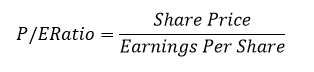
Suppose two companies operate in the same industry:
| Metric | Company A | Company B |
| Share price | $80 | $120 |
| Earnings per share | $8 | $8 |
| P/E ratio | 10 | 15 |
Company A trades at a lower earnings multiple than Company B.
This could indicate that Company A is undervalued, but additional analysis is necessary. Company B might deserve a higher valuation because of stronger growth, lower debt, or better profitability.
When evaluating P/E ratios, compare companies with similar business models and consider their historical valuation ranges.
2. Analyze the Price-to-Book Ratio
The price-to-book (P/B) ratio compares a company’s market valuation with its accounting book value.
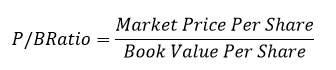
A P/B ratio below 1 means the company trades below its reported book value.
This may indicate an undervalued investment, particularly in asset-intensive sectors such as banking or manufacturing.
However, book value does not always reflect the economic worth of assets. A low P/B ratio may also signal poor profitability, impaired assets, or declining business prospects.
The ratio is generally less informative for asset-light businesses whose value depends heavily on intellectual property, software, or other intangible assets.
3. Evaluate the Price-to-Earnings Growth Ratio
The price-to-earnings growth (PEG) ratio considers both valuation and expected earnings growth.

For example, a company with a P/E ratio of 15 and an expected annual earnings growth rate of 20% has a PEG ratio of 0.75.
A PEG ratio below 1 is sometimes interpreted as a sign of attractive valuation relative to expected growth.
However, PEG ratios depend heavily on growth forecasts. An overly optimistic earnings projection can make an expensive company appear cheap.
4. Study Free Cash Flow
Free cash flow (FCF) represents cash remaining after a company pays for capital expenditures necessary to support its operations.
A simplified formula is:

Companies that consistently generate positive free cash flow may have greater flexibility to repay debt, reinvest in operations, repurchase shares, or distribute dividends.
Investors can also examine free cash flow yield:

A relatively high FCF yield may indicate an attractive valuation, provided the cash flow is sustainable.
Review several years of cash flow rather than relying on one reporting period.
5. Check Debt and Financial Stability
A low stock valuation becomes less attractive when a company faces excessive debt or liquidity problems.
Useful financial indicators include the debt-to-equity ratio, interest coverage ratio, and current ratio.
Companies with manageable debt obligations and reliable cash generation are generally better positioned to navigate economic downturns.
Debt levels should always be interpreted within the context of the industry. Utilities and infrastructure businesses, for example, often operate with different capital structures than technology companies.
How to Find Undervalued Stocks Using Screening Tools?
Analyzing hundreds of companies individually can be time-consuming. Screening tools help investors narrow a large universe of stocks into a manageable shortlist based on financial characteristics.
A stock screener can help investors filter companies using valuation ratios, market capitalization, profitability, revenue growth, and financial performance. TradingView’s screening platform also provides technical indicators and customizable data columns, allowing investors to combine fundamental and market-based criteria.
Step-by-Step Stock Screening Process
Step 1: Select the Market and Industry
Begin by choosing the stock market or geographical region you want to analyze. Consider focusing on industries you understand, such as technology, consumer goods, healthcare, or financial services.
Step 2: Apply Valuation Filters
Identify companies trading at relatively low valuation multiples compared with their sector peers. Common filters include P/E, P/B, and enterprise value to EBITDA (EV/EBITDA).
Step 3: Add Profitability Criteria
Use return on equity (ROE), return on invested capital (ROIC), and operating margins to distinguish financially healthy companies from businesses experiencing structural problems.
Step 4: Evaluate Growth and Financial Stability
Look for companies with sustainable revenue growth, manageable debt, and consistent operating cash flow.
Step 5: Investigate Shortlisted Companies
Review annual reports, earnings presentations, management commentary, and competitive positioning before making any investment decision.
How to Find Undervalued Stocks Before the Market Recognizes Them?
Identifying an undervalued company is only part of the investment process. Investors must also consider what could cause the market to reassess its valuation.
These potential developments are commonly called catalysts.
1. Look for Improving Earnings
Companies experiencing temporary earnings weakness may attract renewed investor interest when profitability begins to recover.
Watch for improving operating margins, stronger sales growth, cost reductions, and positive earnings revisions.
A recovery should be supported by actual business performance rather than management projections alone.
2. Identify Industry Recovery Opportunities
Some companies become undervalued during broader industry downturns.
For example, a financially stable manufacturing company may experience lower demand during an economic slowdown. If demand recovers while the company maintains a competitive cost structure, profitability could improve.
However, cyclical businesses require careful analysis. Earnings can look unusually attractive near the top of a business cycle, while P/E ratios may become misleadingly high when profits temporarily collapse.
3. Monitor Corporate Developments
Certain business developments can influence how investors value a company.
Potential catalysts include new product launches, improved capital allocation, restructuring programs, debt reduction, or the sale of underperforming business units.
These events may improve financial performance, but their impact depends on execution and market expectations.
4. Watch Institutional Interest
Changes in institutional ownership, analyst coverage, and trading activity may provide additional information about investor sentiment.
However, institutional buying does not establish that a stock is undervalued. Large investors can make mistakes, and reported holdings may reflect transactions completed weeks or months earlier.
Use ownership trends as supporting evidence rather than the primary reason to invest.
5. Examine Long-Term Competitive Advantages
Businesses with durable competitive advantages may sustain profitability over extended periods.
Potential advantages include established brands, cost leadership, distribution networks, switching costs, patents, and network effects.
An undervalued company with a sustainable competitive position may be more attractive than a statistically cheap company facing permanent competitive decline.
How to Avoid Value Traps When Finding Undervalued Stocks?
One of the greatest risks in value investing is confusing a low valuation with a genuine investment opportunity.
A value trap is a stock that looks inexpensive based on financial ratios but remains cheap or falls further because its business fundamentals are deteriorating.
Common Warning Signs
| Warning Sign | Why It Matters |
| Declining revenue | May indicate weakening demand or lost market share |
| Falling profit margins | Could signal rising costs or competitive pressure |
| Excessive debt | Increases financial and refinancing risk |
| Negative free cash flow | May indicate insufficient cash generation |
| Weak corporate governance | Creates risks around disclosures and capital allocation |
| Repeated earnings disappointments | May undermine confidence in future projections |
| Disruptive industry changes | Could permanently weaken the business model |
A stock trading at five times earnings may appear attractive, but that valuation could be justified if its earnings are expected to decline sharply.
To avoid value traps, examine multiple years of financial statements and evaluate whether the company’s difficulties are temporary or structural.
Financial statement analysis should include the income statement, balance sheet, cash flow statement, and accompanying disclosures. The CFA Institute emphasizes assessing profitability, capital returns, and the ability to generate sufficient cash to meet obligations.
Technical Indicators That Can Support Undervalued Stock Research
Fundamental analysis helps investors estimate business value, while technical analysis examines historical price and trading-volume behavior.
Although technical indicators cannot establish whether a stock is intrinsically undervalued, they may help investors assess market sentiment and plan their entries.
Relative Strength Index
The Relative Strength Index (RSI) measures the speed and magnitude of recent price movements.
An RSI below 30 is commonly interpreted as an oversold reading. However, oversold stocks can continue declining, especially during strong downtrends.
Moving Averages
The 50-day and 200-day moving averages are frequently used to evaluate intermediate and long-term price trends.
A stock recovering above a moving average may indicate improving momentum, but it does not confirm that the company is fundamentally attractive.
Trading Volume
Increasing trading volume during a sustained price recovery can suggest greater market participation.
Investors should combine volume observations with earnings developments, company announcements, and valuation analysis.
Technical indicators are best treated as supplementary tools rather than reliable predictors of future stock prices.
Common Mistakes When Trying to Find Undervalued Stocks
Even experienced investors can misjudge a company’s valuation.
Some common mistakes include:
- Buying solely because a stock has fallen: A 50% price decline does not automatically mean a stock is undervalued.
- Ignoring future earnings: Historical profits may not accurately represent future business performance.
- Comparing unrelated industries: Valuation multiples differ significantly across sectors.
- Overestimating growth: Unrealistic assumptions can inflate intrinsic value estimates.
- Ignoring financial risks: High debt, weak cash flow, and governance concerns can outweigh an apparent valuation discount.
- Expecting immediate returns: A stock may remain undervalued for years, even when the investment thesis is reasonable.
- Concentrating excessively: Investing too much in one company exposes a portfolio to company-specific risks.
Diversification, appropriate asset allocation, and regular portfolio reviews can help investors manage some of these risks, although they cannot prevent market losses.
Final Thoughts
Learning how to find undervalued stocks requires a combination of financial analysis, business understanding, and disciplined valuation.
Rather than searching for companies with the lowest share prices or earnings multiples, investors should focus on businesses with sustainable cash flow, manageable debt, credible growth prospects, and valuations that appear reasonable relative to their intrinsic worth.
The most promising opportunities often require patience. Market sentiment can change quickly, but the underlying economic value of a business generally depends on its ability to generate profits and cash over time.
Ultimately, finding undervalued stocks is not about predicting the next market rally. It is about making informed investment decisions based on evidence, realistic expectations, and a clear understanding of risk.
Disclaimer: This article is for educational and informational purposes only and does not constitute investment advice. Stock investments involve market risk, including the possible loss of principal. Consult a qualified financial professional where appropriate before making investment decisions.
Recommended Articles
Explore our recommended articles to learn more about stock market analysis, value investing strategies, and identifying profitable investment opportunities. Discover practical insights to make informed investment decisions and build a stronger investment portfolio.

