


What is Prestige Pricing?
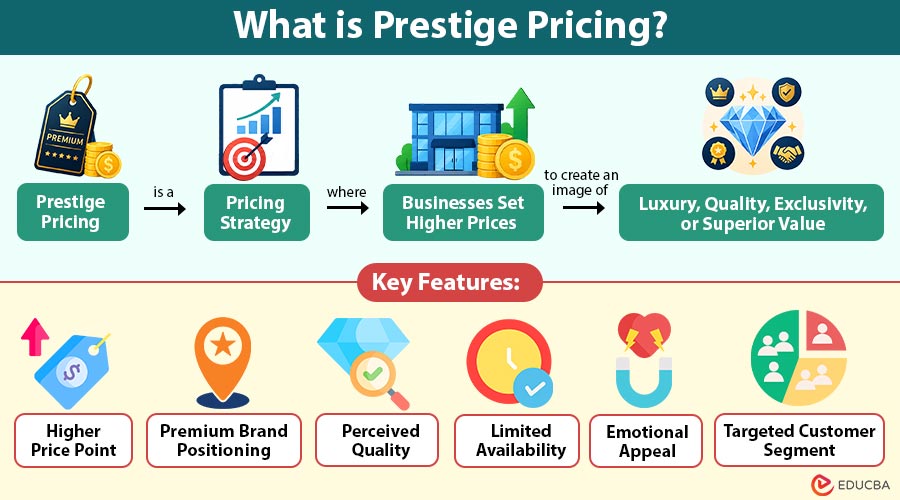
Prestige pricing is a pricing strategy where businesses set the higher prices to create an image of luxury, quality, exclusivity, or superior value. It encourages customers to associate a premium price with a premium product or experience.
For example, a luxury watch brand may charge significantly more than competing watches because customers value its brand reputation, craftsmanship, exclusivity, and status.
Table of Contents:
- Meaning
- Importance
- Working
- Key Features
- Examples
- Benefits
- Limitations
- Difference
- How to Implement Prestige Pricing?
- When Should a Business Use Prestige Pricing?
Key Takeaways:
- Prestige pricing uses premium prices to create perceptions of quality, exclusivity, status, and superior product value.
- Strong branding, consistent quality, exclusivity, and exceptional experiences are essential for successful prestige pricing strategies.
- Prestige pricing can increase profit margins, strengthen brand perception, and reduce direct competition based solely on price.
- Businesses must balance premium prices with customer expectations, perceived value, market demand, and economic conditions.
Importance of Prestige Pricing
Prestige pricing can play an important role in positioning a product in competitive markets. Below are some key reasons businesses use this approach.
1. Builds a Premium Image
A high price can communicate that a product belongs to a premium category. When supported by quality and branding, it can strengthen the company’s market position.
2. Supports Brand Differentiation
Instead of competing solely on the price, businesses can set themselves apart from the rivals by providing distinctive goods, experiences, designs, or services.
3. Increases Perceived Value
Customers sometimes use price as one signal when judging product quality. A premium price can make an offering seem more valuable or exclusive.
4. Attracts Status-Conscious Customers
Some customers purchase premium products because they want products that reflect their lifestyle, social position, or personal achievements.
5. Creates Stronger Brand Loyalty
When customers connect emotionally with a premium brand, they may become less sensitive to competitors’ prices and remain loyal to the brand.
How Does Prestige Pricing Work?
Prestige pricing uses price as part of a product’s perceived value. Instead of competing mainly on affordability, a business positions its offering as premium and desirable.
The strategy usually combines several factors:
1. Premium Product Quality
Businesses use superior materials, advanced technology, skilled craftsmanship, and exceptional performance to justify higher prices and strengthen premium product perceptions.
2. Strong Brand Image
A recognizable, trusted, and respected brand encourages customers to associate products with quality, status, reliability, and greater perceived value.
3. Exclusivity
Limited availability, special editions, personalized offerings, and selective distribution create scarcity, making products appear more desirable, distinctive, and prestigious.
4. Premium Customer Experience
Luxury packaging, personalized assistance, elegant environments, exclusive services, and excellent after-sales support enhance customer satisfaction and reinforce premium positioning.
5. Emotional Value
Customers may purchase premium products for status, confidence, identity, recognition, personal satisfaction, or emotional connections beyond functional benefits.
The price therefore becomes more than a financial figure. It becomes part of the product’s positioning.
Key Features of Prestige Pricing
Below are the major features that distinguish prestige pricing from ordinary pricing strategies.
1. Higher Price Point
Prestige-priced products are intentionally priced higher than many competing alternatives. The price supports the product’s premium positioning.
2. Premium Brand Positioning
Businesses using this strategy generally focus on building a strong brand identity. Customers should recognize the product as distinctive and valuable.
3. Perceived Quality
The strategy depends heavily on customers believing that the product provides superior quality, design, performance, craftsmanship, or service.
4. Limited Availability
Some premium brands deliberately control distribution or production. Scarcity can increase desirability among customers who want something uncommon.
5. Emotional Appeal
Prestige purchases often satisfy emotional or social needs. Customers may buy them to express their lifestyle, achievements, taste, or personal identity.
6. Targeted Customer Segment
Prestige pricing generally targets customers with sufficient purchasing power who are willing to pay more for premium value.
Examples of Prestige Pricing
Below are some common examples of prestige pricing across different industries and premium product categories.
1. Luxury Fashion
Luxury fashion brands may charge premium prices for clothing, handbags, shoes, and accessories. Customers may value brand heritage, design, craftsmanship, and exclusivity in addition to the physical product.
2. Luxury Automobiles
Premium automobile manufacturers can use higher prices to position vehicles around performance, technology, comfort, design, and status.
3. High-End Hotels
Luxury hotels may charge significantly higher room rates because of their location, facilities, service quality, personalized experiences, and brand reputation.
4. Premium Technology Products
Some technology brands price select products at a premium by emphasizing design, innovation, performance, ecosystem benefits, and brand experience.
Benefits of Prestige Pricing
Below are the key benefits of prestige pricing:
1. Higher Profit Margins
A premium price can generate a larger margin per unit when customers are willing to pay more, and the product’s value supports the additional price.
2. Strong Brand Perception
Prestige pricing can help establish an image of quality, exclusivity, and sophistication when the overall customer experience supports the positioning.
3. Greater Customer Differentiation
The strategy lets businesses target customers who prioritize premium features and experiences rather than focusing entirely on price.
4. Protection From Price Competition
Premium brands may avoid direct competition with low-cost providers because they compete through quality, reputation, design, service, and emotional value.
5. Supports Exclusive Experiences
Higher prices can help businesses provide personalized services, premium facilities, specialized support, or limited-edition offerings.
6. Encourages Brand Aspirations
A premium brand can create an aspirational image that attracts customers who want to associate themselves with the brand’s identity and lifestyle.
Limitations of Prestige Pricing
Despite its advantages, prestige pricing does not work for every product or customer segment.
1. High Customer Expectations
Customers paying premium prices usually expect excellent quality, service, design, and performance. Poor experiences can quickly damage the brand’s reputation.
2. Smaller Target Market
Higher prices naturally reduce the number of customers who can or want to purchase the product.
3. Strong Brand Requirement
A business without a credible brand reputation may struggle to convince customers that a high price represents genuine value.
4. Economic Sensitivity
During economic downturns, customers may reduce spending on luxury and discretionary products, affecting demand.
5. Risk of Overpricing
If the price rises far above the value customers perceive, they may choose competing products instead.
6. High Marketing Investment
Premium positioning often requires substantial investment in branding, product development, customer experience, packaging, retail presentation, and marketing.
Difference Between Prestige Pricing and Penetration Pricing
The table below highlights the key differences between the two:
| Factor | Prestige Pricing | Penetration Pricing |
| Price Level | High | Low initially |
| Main Goal | Build premium positioning | Gain market share quickly |
| Target Customers | Premium or affluent segments | Price-sensitive customers |
| Brand Image | Luxury or exclusive | Affordable or accessible |
| Competition | Quality and differentiation | Price and market expansion |
| Availability | May be limited | Usually widely available |
| Customer Motivation | Status, quality, experience | Affordability and value |
How to Implement Prestige Pricing?
Businesses should carefully plan their positioning before setting a premium price. Below are important steps.
1. Identify the Target Market
Understand customers who are willing to pay more for quality, exclusivity, convenience, design, performance, or status.
2. Define the Premium Value
Clearly identify what makes the product worth more. This could include superior materials, unique technology, craftsmanship, service, or brand heritage.
3. Build a Strong Brand
Develop consistent branding across product design, packaging, advertising, website, stores, customer service, and communication.
4. Set the Right Price
The price should be high enough to support premium positioning but reasonable enough to match the perceived value of the offering.
5. Create a Premium Experience
Every customer interaction should support the brand’s positioning. Packaging, delivery, customer support, and after-sales service should feel consistent with the price.
6. Maintain Product Quality
A premium price must be supported by reliable quality. Businesses should continuously improve products and monitor customer expectations.
7. Communicate Exclusivity
Limited editions, personalized options, invitation-only experiences, or selective distribution can strengthen the feeling of exclusivity.
8. Monitor Customer Response
Businesses should track sales, customer feedback, repeat purchases, brand perception, and competitor activity to determine whether the pricing strategy remains effective.
When Should a Business Use Prestige Pricing?
Prestige pricing works best when a business has a differentiated product, a strong brand, and customers who value more than basic functionality.
It can work particularly well when:
- The product has distinctive features or design.
- Customers associate the brand with quality.
- The target market has strong purchasing power.
- The product provides emotional or status-related value.
- The company can deliver a premium customer experience.
- Competitors cannot easily copy the complete offering.
However, simply increasing the price does not automatically create prestige. The business must provide meaningful value that supports the premium position.
Final Thoughts
Prestige pricing uses premium prices to create perceptions of quality, exclusivity, status, and brand value. However, high prices alone cannot establish prestige. Businesses need strong branding, consistent quality, exclusivity, customer trust, and superior experiences. When these elements align, prestige pricing helps create a distinctive market position, strengthen customer loyalty, and improve profitability.
Frequently Asked Questions (FAQs)
Q1. Can prestige pricing increase product demand?
Answer: Yes, it can increase demand among customers who associate premium prices with exclusivity, status, craftsmanship, or superior product value.
Q2. Does prestige pricing work for new brands?
Answer: It can work for new brands if they establish credibility through distinctive products, strong storytelling, quality, and a compelling premium customer experience.
Q3. Can prestige pricing be used for services?
Answer: Yes. Professional consulting, luxury travel, private memberships, specialized education, and exclusive wellness services can use prestige pricing.
Q4. How does consumer psychology influence prestige pricing?
Answer: Consumer psychology influences how customers interpret premium prices, particularly when price reinforces perceptions of rarity, social status, quality, or personal achievement.
Recommended Articles
We hope that this EDUCBA information on “Prestige Pricing” was beneficial to you. You can view EDUCBA’s recommended articles for more information.

