


What is Sales Cadence?
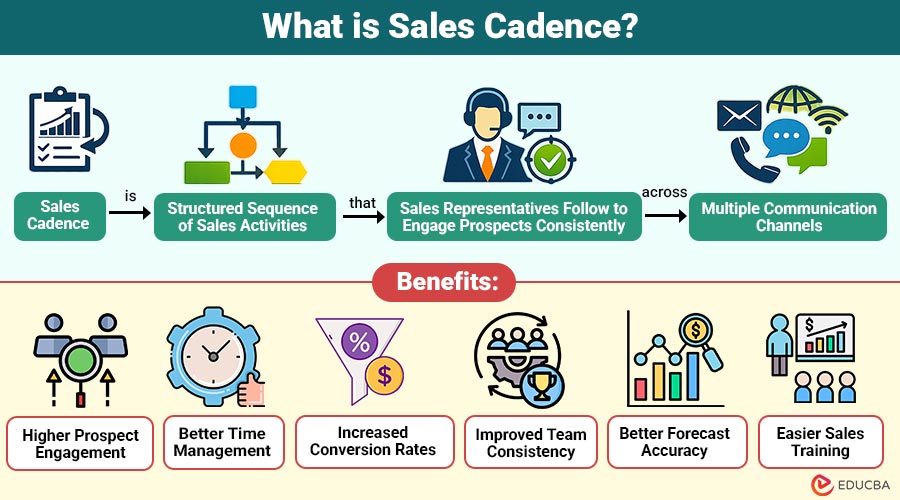
A sales cadence is structured sequence of sales activities that sales representatives follow to engage prospects consistently across multiple communication channels. These activities may include emails, phone calls, social media messages, text messages, voicemails, and follow-ups scheduled over a specific period.
Rather than contacting prospects at random, a sales cadence provides a systematic approach that ensures every lead receives timely, personalized communication. This organized strategy helps sales teams build stronger relationships, increase response rates, shorten sales cycles, and improve conversion rates.
Whether used for cold outreach, lead nurturing, or customer retention, a well-designed sales cadence creates a predictable framework for successful sales engagement.
Table of Contents:
- Meaning
- Importance
- Working
- Types
- Common Channels
- Benefits
- Challenges
- Popular Tools
- Real-World Example
- Difference
- Key Metrics
Key Takeaways:
- Sales cadence ensures consistent, personalized outreach across multiple channels, improving prospect engagement and relationship building.
- Structured communication schedules help sales teams increase productivity, shorten sales cycles, and boost conversion rates effectively.
- Combining personalization with timely follow-ups consistently enhances response rates and strengthens long-term customer relationships.
- Regularly tracking performance metrics and optimizing cadence strategies drives continuous improvement and sustainable sales growth.
Why is Sales Cadence Important?
An effective sales cadence helps businesses communicate with prospects consistently while maximizing sales efficiency.
1. Improves Response Rates
Multiple well-timed communication touchpoints increase the likelihood of reaching prospects when they are available, interested, and ready to engage positively.
2. Creates Consistent Customer Experiences
A structured cadence ensures every prospect receives personalized, timely, and consistent communication regardless of the assigned sales representative or team.
3. Increases Sales Productivity
Sales representatives follow predefined outreach schedules, reducing planning time and allowing greater focus on meaningful customer conversations and closing deals.
4. Reduces Missed Opportunities
Scheduled follow-ups prevent qualified leads from being forgotten, ensuring every potential sales opportunity receives timely attention and consistent engagement throughout.
5. Shortens the Sales Cycle
Regular, relevant interactions keep prospects engaged, address concerns promptly, and accelerate decision-making throughout the purchasing process.
6. Supports Lead Nurturing
Consistent communication builds trust with prospects, keeping them engaged until they are ready to purchase and become loyal customers.
7. Enables Performance Tracking
Tracking every outreach activity helps businesses measure effectiveness, optimize communication strategies, improve conversions, and achieve better overall sales performance.
How Does a Sales Cadence Work?
A sales cadence follows a predefined communication schedule designed to engage prospects effectively.
Step 1: Identify Target Prospects
Sales teams segment prospects based on industry, company size, role, interests, or buying intent.
Step 2: Choose Communication Channels
Organizations decide which channels to use, including email, phone, LinkedIn, SMS, or video messages.
Step 3: Create Outreach Schedule
A sequence of touchpoints is planned over several days or weeks with specific timing.
Step 4: Personalize Messages
Each interaction includes relevant information based on the prospect’s needs, industry, or previous engagement.
Step 5: Monitor Engagement
Sales teams track opens, clicks, replies, calls answered, and meeting bookings.
Step 6: Adjust the Cadence
Based on prospect behavior, outreach frequency, messaging, or channels are optimized for better performance.
Types of Sales Cadence
Different business goals require different outreach strategies.
1. Cold Outreach Cadence
A structured sequence of outreach activities targeting new prospects with no prior interactions to generate interest and qualified sales opportunities.
2. Lead Nurturing Cadence
A planned communication schedule that educates interested prospects, builds trust, and gradually guides them toward making informed purchasing decisions.
3. Follow-Up Cadence
A systematic series of timely follow-ups after meetings, demonstrations, or proposals to maintain engagement and encourage faster purchasing decisions.
4. Account-Based Sales Cadence
A personalized outreach strategy targeting multiple decision-makers within specific organizations to strengthen relationships and accelerate enterprise sales success.
5. Customer Retention Cadence
A consistent communication plan that keeps existing customers engaged, improves satisfaction, encourages loyalty, and creates additional revenue opportunities regularly.
6. Re-Engagement Cadence
A targeted communication sequence designed to reconnect inactive prospects or previous customers, revive interest, and recover valuable business opportunities.
Common Sales Cadence Channels
Modern sales cadences combine multiple communication channels for better engagement.
1. Email
Email delivers personalized messages, product information, follow-ups, and promotions while maintaining consistent communication throughout the sales journey.
2. Phone Calls
Phone calls enable direct conversations, build trust, address objections, and create stronger personal connections with prospective customers.
3. LinkedIn Messages
LinkedIn messages help sales professionals connect professionally, share valuable insights, and engage decision-makers through personalized networking conversations.
4. SMS/Text Messages
SMS or text messages provide quick reminders, appointment confirmations, follow-ups, and time-sensitive updates with high open rates.
5. Video Messages
Video messages add personalization, visually demonstrate products, increase engagement, and help prospects connect with sales representatives more effectively.
6. Voicemail
Voicemail allows sales representatives to leave concise messages, encourage callbacks, and maintain communication when prospects are unavailable.
To make this touchpoint even more effective, modern sales teams often incorporate ringless voicemail into their sequences. This allows reps to deliver concise, pre-recorded audio messages straight to a prospect’s inbox without their phone ever ringing.
It serves as a non-intrusive way to share quick updates or follow up on previous emails without disrupting their workday, making leads much more likely to listen and respond on their own schedule.
7. WhatsApp (where appropriate)
WhatsApp enables instant, conversational communication, quick document sharing, and personalized customer interactions where professionally appropriate and permitted.
8. Webinars
Webinars educate prospects, showcase expertise, demonstrate solutions, answer questions live, and nurture multiple leads simultaneously through presentations.
9. Personalized Landing Pages
Personalized landing pages deliver customized content, improve user experiences, reinforce messaging, and increase conversion opportunities for prospects.
Benefits of Sales Cadence
A structured sales cadence offers significant advantages for businesses of all sizes.
1. Higher Prospect Engagement
Regular, personalized communication keeps prospects engaged, strengthens relationships, and encourages meaningful interactions throughout the entire buying journey.
2. Better Time Management
Predefined workflows eliminate guesswork, helping sales representatives prioritize tasks, streamline outreach, and maximize daily productivity efficiently.
3. Increased Conversion Rates
Consistent follow-ups and timely interactions improve response rates, effectively nurture prospects, and significantly increase customer conversions.
4. Improved Team Consistency
Standardized outreach processes ensure every salesperson delivers consistent messaging, maintains brand quality, and follows proven sales practices.
5. Better Forecast Accuracy
Monitoring engagement patterns and prospect activities provides valuable insights, enabling more accurate sales forecasting and revenue planning.
6. Easier Sales Training
Standardized cadences simplify onboarding, helping new sales representatives learn effective communication strategies and achieve productivity faster.
Challenges of Sales Cadence
Despite its advantages, implementing an effective sales cadence comes with certain challenges.
1. Over-Automation
Excessive automation makes outreach feel impersonal, reducing authenticity, engagement, and the likelihood of meaningful conversations with prospects.
2. Poor Personalization
Generic messages fail to address individual needs, significantly reducing engagement, response rates, and overall sales effectiveness.
3. Incorrect Timing
Poorly timed outreach may overwhelm prospects or miss opportunities, reducing engagement and conversion potential throughout the sales process.
4. Inaccurate Prospect Data
Outdated or incorrect contact information consistently results in failed outreach, wasted effort, and missed sales opportunities.
5. Lack of Continuous Optimization
Failing to analyze performance regularly prevents improvements, reducing cadence effectiveness and limiting long-term sales success.
6. Channel Overload
Using multiple communication channels simultaneously may overwhelm prospects, leading to message fatigue, disengagement, and lower response rates.
Popular Sales Cadence Tools
Several platforms help businesses automate, manage, and optimize sales cadences.
1. Salesforce Sales Cloud
Salesforce Sales Cloud automates outreach, manages customer relationships, tracks activities, and streamlines the execution of sales cadence.
2. HubSpot Sales Hub
HubSpot Sales Hub simplifies prospect engagement through email automation, meeting scheduling, tracking, and personalized sales workflows effectively.
3. Outreach
Outreach enables multi-channel sales engagement, automated follow-ups, performance tracking, and AI-powered workflow optimization for sales teams.
4. Salesloft
Salesloft helps sales teams automate communication, prioritize prospects, monitor engagement, and improve productivity through structured sales cadences.
5. Apollo.io
Apollo.io combines access to prospect databases, email sequencing, lead generation, and sales automation to accelerate customer acquisition efforts.
6. Zoho CRM
Zoho CRM offers lead management, workflow automation, sales tracking, and communication tools for effective customer relationship management.
7. Freshsales
Freshsales provides AI-powered lead scoring, email tracking, sales automation, and pipeline management to consistently improve sales performance.
Real-World Example of Sales Cadence
A SaaS company wants to generate meetings with HR managers.
Their seven-touch sales cadence may look like this:
- Day 1: Personalized introductory email.
- Day 2: Follow-up phone call.
- Day 4: LinkedIn connection request with a customized note.
- Day 6: Share a relevant case study by email.
- Day 8: Leave a voicemail after another call attempt.
- Day 11: Send a product demonstration invitation.
- Day 14: Final follow-up email with a clear call to action.
This structured approach increases the chances of connecting with busy decision-makers while maintaining consistent engagement.
Difference Between Sales Cadence and Sales Sequence
The table below shows the key differences between the two:
| Features | Sales Cadence | Sales Sequence |
| Definition | Complete schedule of outreach activities | Ordered list of sales steps |
| Focus | Timing, channels, and communication | Sequence of tasks |
| Channels | Multi-channel | Often email-focused |
| Personalization | High | Moderate to High |
| Automation | Extensive | Moderate |
| Goal | Maximize engagement and conversions | Guide sales representatives through outreach |
Key Metrics to Measure Sales Cadence Success
To assess and enhance your sales cadence, monitor these key metrics:
1. Email Open Rate
Measures percentage of recipients who open emails, indicating subject line effectiveness and overall audience engagement.
2. Email Reply Rate
Tracks how many prospects respond to emails, reflecting message relevance, personalization, and communication effectiveness across campaigns.
3. Call Connection Rate
Measures the percentage of successful conversations with prospects, helping to evaluate calling strategies and the accuracy of contact information.
4. Meeting Booking Rate
Tracks the number of scheduled meetings, indicating how effectively sales outreach converts interested prospects into meaningful discussions.
5. Click-Through Rate
Measures how often prospects click links within emails, demonstrating content relevance and engagement with shared resources.
6. Conversion Rate
Measures the percentage of prospects becoming customers, indicating the overall effectiveness of the sales cadence strategy.
7. Lead Response Time
Tracks how quickly sales representatives respond to new leads, thereby improving engagement and significantly increasing conversion opportunities.
8. Sales Cycle Length
Measures the average time required to convert prospects into customers, identifying opportunities to accelerate the sales process.
Final Thoughts
A sales cadence is a structured outreach strategy that helps sales teams engage prospects through timely, personalized, and multi-channel communication. By optimizing touchpoints, businesses improve engagement, increase conversions, strengthen customer relationships, enhance productivity, and drive consistent, sustainable sales growth.
Frequently Asked Questions (FAQs)
Q1. How many touchpoints should an ideal sales cadence include?
Answer: There is no universal number, but most successful sales cadences include 6–12 touchpoints spread over two to four weeks. The ideal length depends on your industry, sales cycle, and prospect engagement.
Q2. How often should a sales cadence be updated?
Answer: Sales cadences should be reviewed regularly using performance data such as reply rates, meeting bookings, and conversions. Many organizations optimize their cadence on a monthly or quarterly basis to reflect changing customer behavior.
Q3. Can small businesses benefit from using a sales cadence?
Answer: Yes. Even small businesses can improve consistency, save time, and increase lead conversions by following a structured outreach plan. CRM and sales automation tools also make it easier to manage cadences with limited resources.
Q4. Which industries use sales cadences the most?
Answer: Sales cadences are widely used across industries, including SaaS, technology, finance, healthcare, manufacturing, real estate, recruitment, consulting, and professional services, where consistent prospect engagement is essential for closing deals.
Recommended Articles
We hope that this EDUCBA information on “Sales Cadence” was beneficial to you. You can view EDUCBA’s recommended articles for more information.

