


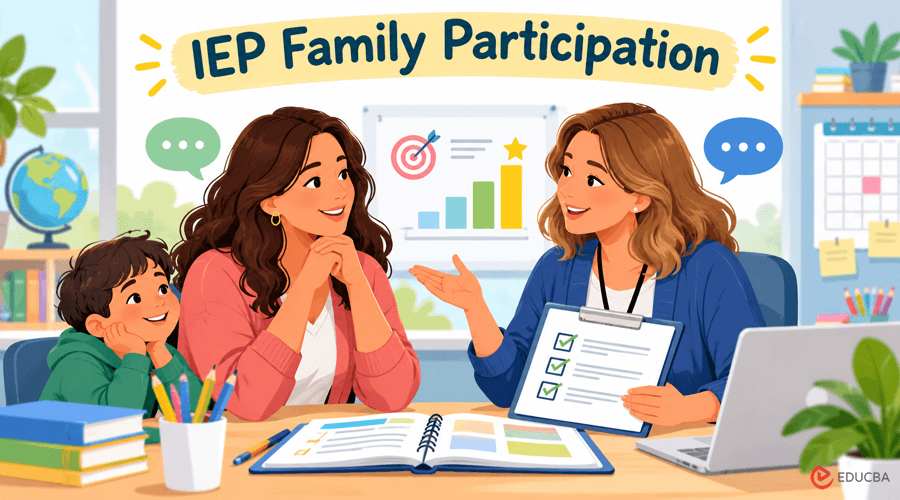
Families can bring an important perspective to conversations about a student’s education. Parents and guardians see their child in settings that educators do not, know aspects of the student’s history, and may recognize strengths, frustrations, interests, or challenges that are less visible during the school day. Meaningful IEP family participation gives families opportunities to share that information while also understanding what the school team is observing.
Yet educational meetings and documentation can sometimes feel overwhelming, especially for families encountering the process for the first time. Schools can make IEP family participation easier by communicating early, using understandable language, organizing information carefully, and creating genuine opportunities for questions and discussion.
Preparation Can Make IEP Family Participation More Productive
Families should not have to arrive at an important educational meeting without knowing what will be discussed.
Advance communication can help parents and guardians understand the meeting’s purpose and what information may be reviewed. Depending on the situation and applicable requirements, schools may also provide relevant materials beforehand, so families have time to read them.
Organization matters for educators too. When team members prepare information in advance, meetings can focus more on discussion and decision-making rather than searching for records.
Systems such as IEP software may help authorized staff organize documentation, goals, service information, progress records, and other workflow elements, depending on the platform and how the school uses it.
Technology, however, should support preparation rather than dominate the conversation. Families should not feel that the primary purpose of a meeting is watching staff complete forms on a screen.
The student and the educational discussion remain central.
Use Language Families Can Understand
Education professionals use specialized terminology every day. Parents and guardians may not.
Acronyms, assessment terminology, instructional language, and procedural phrases can make conversations hard to follow when presented without explanation.
Teams can communicate more clearly by using plain language whenever possible and defining technical terms when they are necessary. Clear communication is an important part of effective IEP family participation because families need to understand the information being discussed before they can contribute meaningfully.
Families should feel comfortable asking someone to repeat or explain information. A meeting is less meaningful if participants are hesitant to admit they do not understand the vocabulary being used.
Written communication deserves the same consideration. Documents may need to meet formal requirements, but educators can still explain what important sections mean and how they relate to the student’s education.
Language access is another important component. Schools should follow applicable requirements for supporting parents and guardians who need interpretation or translated information.
Communication is successful when families understand the information, not merely when schools deliver it.
Make Room for the Family Perspective
Meetings can easily become dominated by reports, assessment results, and professional updates.
Those materials are important, but families should also have space to describe what they are seeing. This is one of the most important parts of IEP family participation.
Parents might share that homework is taking unusually long, that a child has developed a strong interest in a particular subject, or that home strategies have been helpful. They may also have questions about changes they have noticed outside school.
Educators do not need to agree automatically with every interpretation for the information to be valuable. Different environments can reveal different aspects of a student’s abilities and needs.
Asking open-ended questions can encourage participation. Rather than simply asking whether a parent has questions at the end, team members can invite input throughout the discussion.
Older students may also participate in appropriate ways, depending on their age, circumstances, and applicable requirements. Student involvement can help teams understand the learner’s goals, preferences, and experiences directly.
Explain Goals in Practical Terms
Educational goals become more meaningful when families understand what progress would look like in everyday situations.
Technical measurements may be necessary for documentation, but teams can also explain the skill being developed and why it matters. This approach can make IEP family participation more informed and productive.
For example, rather than discussing a goal solely through percentages or assessment language, an educator can describe what the student can do now and what the team hopes the student will accomplish with additional instruction and support.
Families can then connect school goals with what they observe outside the classroom.
Clear explanations also make progress updates easier to understand. Parents can see whether a skill is developing rather than receiving numbers without context.
Educators should avoid promising outcomes they cannot guarantee. Students develop at different rates, and educational plans may need to change when information shows that a particular approach is not working as expected.
Goals provide direction while ongoing observation helps determine whether adjustments are needed.
Communication Should Continue Between Meetings
Family participation should not depend entirely on formal meetings. Ongoing communication can strengthen IEP family participation and help everyone stay informed about the student’s progress.
Regular communication can help parents understand how things are going and give educators useful information about changes outside school.
The appropriate frequency and method will vary. Some situations may require frequent updates, while others can be handled through periodic progress information and ordinary school communication.
The key is setting reasonable expectations.
Families should know whom to contact with questions and how to share information that could affect the student’s school experience.
Educators also need sustainable communication methods. Requiring teachers to provide extensive individual updates every day may not be realistic. A predictable process can help balance family access with staff workload.
When concerns arise, addressing them early can sometimes prevent misunderstandings from growing into larger conflicts.
Organized Records Support IEP Family Participation
Students may work with different teachers, specialists, and service providers over time. Organized records can help new team members understand previous decisions and current priorities.
Continuity becomes especially important when a student changes schools, advances to another grade, or begins working with different staff.
Accurate documentation allows authorized educators to see relevant information without depending entirely on informal conversations or individual memory.
Families can also benefit from keeping their own organized records. Meeting documents, progress information, evaluations, correspondence, and personal notes can provide useful context over time and support effective IEP participation by families.
Organization does not mean collecting paperwork for its own sake. The purpose is to make important information easier to locate when questions arise or decisions need to be reviewed.
Schools should handle student information according to applicable privacy requirements and established procedures.
IEP Family Participation Works Best as an Ongoing Partnership
Productive family involvement does not come from a single meeting.
It develops when schools communicate consistently, listen carefully, explain decisions clearly, and make it possible for parents and guardians to participate meaningfully. These practices create a stronger foundation for IEP family participation over time.
Families also contribute by sharing relevant information, asking questions when something is unclear, and communicating concerns constructively.
There may still be disagreements. Parents and educators can look at the same information and reach different conclusions about what a student needs. Respectful discussion becomes particularly important in those situations.
Technology and organized documentation can make the process easier to manage, but they cannot replace the human relationships at its center.
When families understand what is happening and educators understand the family’s perspective, everyone brings more useful information to the conversation. That shared understanding can help teams stay focused on the process’s central purpose: developing appropriate educational support around the individual student.
Recommended Articles
We hope this guide helps you understand IEP family participation and how families can contribute to effective educational planning, communication, and student support. Explore our recommended articles for more insights on IEPs, special education, parent involvement, student goals, and educational support.

