
What is Lead Pipeline?
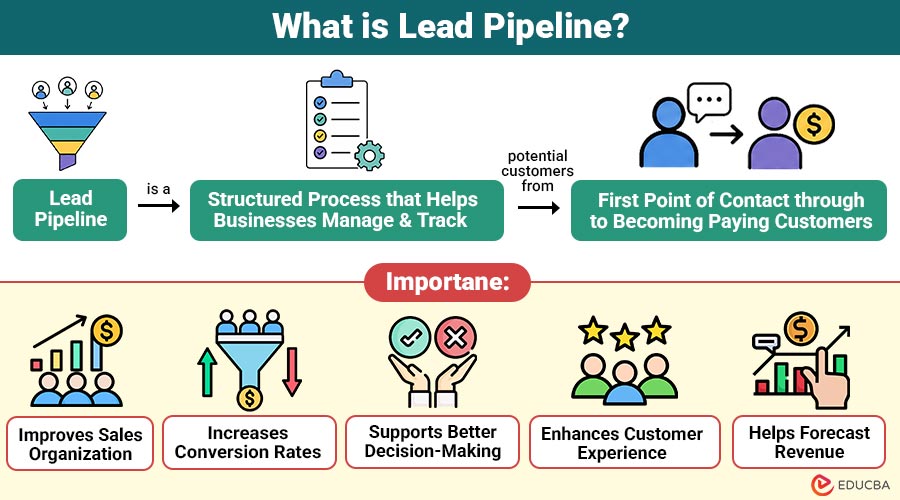
A lead pipeline is a structured process that helps businesses manage and track potential customers from the first point of contact through to becoming paying customers. It provides a clear view of where each lead stands in the sales journey and helps sales teams focus on right opportunities at the right time.
A well-managed lead pipeline enables organizations to organize prospects, improve follow-up, increase conversion rates, and achieve consistent revenue growth. It connects marketing and sales teams by ensuring that qualified leads move smoothly through different stages before becoming customers.
Table of Contents:
Key Takeaways:
- A lead pipeline organizes prospects, improving sales visibility, follow-ups, conversions, and overall business growth through structured processes.
- Clear pipeline stages help businesses track lead progress, prioritize opportunities, and enhance customer engagement throughout the process.
- Technology, automation, and analytics consistently improve lead management, streamline sales activities, and support informed business decision-making.
- Regular pipeline monitoring, quality lead qualification, and timely follow-ups maximize conversions, revenue growth, and customer relationships successfully.
Importance of Lead Pipeline
The following points highlight the reasons why a lead pipeline is important for improving sales efficiency, customer engagement, and business growth.
1. Improves Sales Organization
A lead pipeline consistently organizes prospects, tracks every interaction, and ensures timely follow-ups throughout the sales process.
2. Increases Conversion Rates
It helps sales teams use appropriate strategies, improving lead engagement and increasing the chances of successful customer conversions.
3. Supports Better Decision-Making
Pipeline insights reveal sales trends, lead quality, and opportunities, enabling informed decisions and stronger sales planning processes.
4. Enhances Customer Experience
Structured lead management enables consistently personalized communication, stronger customer relationships, and improved satisfaction throughout the buying journey.
5. Helps Forecast Revenue
Tracking pipeline opportunities and expected closures helps businesses predict future revenue and improve the accuracy of financial planning.
Stages of a Lead Pipeline
A lead pipeline generally consists of multiple stages that represent the progress of prospects through the sales process.
1. Lead Generation
Businesses attract potential customers through marketing channels, collecting prospect information and creating opportunities for future sales conversations successfully.
2. Lead Qualification
Businesses evaluate leads based on needs, budget, authority, and timeline to accurately identify prospects with higher conversion potential.
3. Lead Nurturing
Businesses build relationships through personalized communication, educational content, demonstrations, and consistent engagement until prospects become purchase-ready.
4. Sales Engagement
Sales representatives interact with qualified leads, explain solutions, answer questions, and address customer requirements to build purchase confidence.
5. Proposal and Negotiation
Businesses present proposals and discuss pricing, contracts, and terms while negotiating mutually beneficial agreements before final purchase decisions effectively.
6. Conversion
Qualified leads convert into purchases, becoming customers, while businesses provide ongoing support, retention strategies, and future upselling opportunities.
How Does a Lead Pipeline Work?
A lead pipeline organizes prospects into stages based on their current status. Sales teams regularly update lead information and monitor progress to identify opportunities and challenges.
The process generally includes:
1. Collecting Leads
Businesses collect prospect information through websites, advertisements, referrals, social media, events, and marketing campaigns to build opportunities.
2. Tracking Lead Activity
Sales teams monitor emails, calls, meetings, website visits, and other interactions to accurately understand prospect engagement and buying interest.
3. Assigning Lead Scores
Businesses evaluate leads using predefined criteria, prioritizing prospects based on interest, engagement, qualification, and purchase readiness.
4. Following Up
Sales teams consistently communicate with prospects, answer questions, provide information, and maintain engagement throughout the buying process.
5. Moving Leads Through Stages
Qualified prospects advance through pipeline stages until they complete purchases, become customers, and successfully create long-term business relationships.
Key Components of Lead Pipeline
The following components form the foundation of an effective lead pipeline, enabling businesses to manage, prioritize, and convert prospects efficiently.
1. Lead Sources
Lead sources identify prospect origins, helping businesses evaluate marketing channels and focus investments on high-performing customer acquisition strategies.
2. Lead Information
Customer details, preferences, and communication history enable personalized interactions, improving engagement and strengthening relationships throughout the sales journey.
3. Lead Scoring
Lead scoring prioritizes prospects by evaluating engagement, qualification, and purchase potential, helping sales teams focus on valuable opportunities.
4. Sales Stages
Clearly defined sales stages track customer progress, improve visibility, and ensure timely actions throughout the complete sales pipeline.
5. Analytics and Reporting
Pipeline analytics measure performance, conversion rates, revenue forecasts, and bottlenecks, supporting informed decisions and continuous improvements to the sales process.
Benefits of Managing a Lead Pipeline
The following benefits demonstrate how effective lead pipeline management improves sales performance, team collaboration, customer relationships, and business growth.
1. Better Sales Efficiency
Sales teams may concentrate on worthwhile possibilities when a lead pipeline is effectively handled, which minimizes the need for human tracking.
2. Higher Revenue Growth
By improving lead movement and conversion rates, businesses can generate more revenue from existing opportunities.
3. Improved Team Collaboration
A shared pipeline enables marketing and sales teams to work together effectively and maintain better communication.
4. Reduced Sales Delays
Pipeline tracking helps identify inactive leads and delays, allowing businesses to take corrective actions quickly.
5. Improved Customer Relationships
Personalized communication based on pipeline insights helps businesses create stronger customer relationships.
Strategies to Improve Lead Pipeline Performance
The following strategies help businesses optimize lead pipeline performance, improve conversions, and achieve more efficient and consistent sales outcomes.
1. Define Clear Sales Stages
Businesses should create clear pipeline stages that represent the actual customer journey. This improves tracking accuracy and team understanding.
2. Focus on Lead Quality
Generating a large number of leads does not guarantee success. Businesses should prioritize high-quality leads that have strong conversion potential.
3. Automate Follow-Up Processes
Automation tools can send reminders, emails, and updates to ensure consistent communication with prospects.
4. Analyze Pipeline Data Regularly
Regular analysis helps identify weak areas, improve sales strategies, and increase overall pipeline performance.
5. Align Marketing and Sales Teams
Strong cooperation between the sales and marketing departments guarantees improved lead generation, qualification, and conversion.
Role of Technology in Lead Pipeline Management
The following technologies help businesses streamline lead pipeline management, enhance sales productivity, and improve decision-making throughout the customer journey.
1. Customer Relationship Management
CRM systems store lead information, track interactions, and help sales teams manage opportunities from initial contact to conversion.
2. Marketing Automation
Automation tools capture leads, send personalized emails, and nurture prospects through targeted campaigns without manual effort.
3. Lead Scoring Tools
AI-powered lead scoring ranks prospects based on behavior, demographics, and engagement, helping prioritize high-potential leads.
4. Sales Analytics and Reporting
Dashboards and reports provide insights into pipeline performance, conversion rates, bottlenecks, and sales team productivity.
5. Artificial Intelligence
AI predicts customer behavior, recommends next actions, and identifies the best opportunities to improve sales outcomes.
6. Communication and Collaboration Tools
Integrated email, chat, video conferencing, and messaging platforms improve communication between sales teams and prospects.
Challenges in Lead Pipeline Management
The following challenges can affect lead pipeline efficiency, making it important for businesses to identify and address them proactively.
1. Poor Lead Quality
Low-quality leads waste sales resources and reduce conversion efficiency. Businesses need effective qualification methods to identify valuable prospects.
2. Lack of Follow-Up
Delayed communication can cause prospects to lose interest. Consistent follow-up is essential for maintaining customer engagement.
3. Inaccurate Data
Incomplete or outdated lead information can affect decision-making and reduce sales effectiveness.
4. Limited Visibility
Without proper tracking systems, businesses may struggle to understand pipeline performance and identify issues.
5. Inefficient Processes
Complex sales processes can slow down lead movement and create unnecessary delays.
Final Thoughts
A lead pipeline helps businesses organize, track, and manage potential customers throughout the sales process. It improves lead management, enhances communication, increases conversion rates, and supports accurate sales forecasting. By leveraging technology, monitoring performance, and optimizing each pipeline stage, organizations can drive sustainable business growth, improve efficiency, and build stronger customer relationships.
Frequently Asked Questions (FAQs)
Q1. How often should a lead pipeline be reviewed?
Answer: Businesses should review their lead pipeline weekly or even daily to identify bottlenecks, update lead statuses, and ensure timely follow-ups.
Q2. Can small businesses use a lead pipeline?
Answer: Yes. Small businesses can use simple spreadsheets or affordable CRM software to organize leads, improve follow-ups, and increase conversions.
Q3. What metrics should businesses monitor in a lead pipeline?
Answer: Common metrics include lead response time, conversion rate, pipeline value, average deal size, sales cycle length, and lead source performance.
Q4. How can businesses reduce lead leakage?
Answer: Businesses can reduce lead leakage by responding quickly, assigning lead owners, automating reminders, maintaining accurate data, and following up consistently.
Recommended Articles
We hope that this EDUCBA information on “Lead Pipeline” was beneficial to you. You can view EDUCBA’s recommended articles for more information.

