
What is Lead Routing?
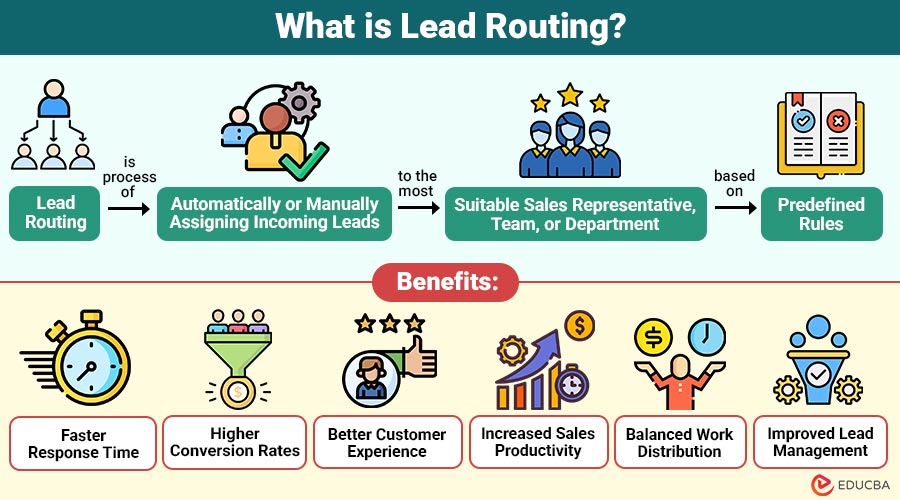
Lead routing is the process of automatically or manually assigning incoming leads to the most suitable sales representative, team, or department based on predefined rules. These rules may include location, industry, company size, product interest, lead score, language, or territory.
The primary objective of lead routing is to ensure every lead reaches the right salesperson as quickly as possible. In addition to improving customer satisfaction and response times, proper routing raises the likelihood that prospects will become paying customers.
For example, if a software company receives a lead from Mumbai interested in enterprise solutions, the CRM can automatically assign that lead to the enterprise sales representative responsible for the western region.
Table of Contents:
Key Takeaways:
- Lead routing automatically assigns prospects to suitable representatives, consistently improving response speed and sales efficiency.
- Intelligent routing rules enhance customer experiences by accurately matching leads with the appropriate sales expertise.
- Automated lead distribution reduces manual workload, prevents lead leakage, and increases conversion opportunities significantly overall.
- Regularly reviewing routing rules ensures accurate assignments, balanced workloads, and scalable sales operations as businesses grow.
Why is Lead Routing Important?
The following are the key reasons why lead routing is important for improving sales efficiency, customer experience, and overall business growth.
1. Improve Response Times
Automatically assigning leads immediately reduces response delays, increasing customer engagement and improving opportunities for successful sales conversions.
2. Increase Sales Productivity
Salespeople can concentrate more on closing and selling qualified prospects because they don’t have to spend as much time manually distributing leads.
3. Deliver Personalized Customer Experiences
Routing leads based on preferences, location, or interests enables tailored communication that strengthens customer relationships and satisfaction.
4. Balance Workloads Among Sales Representatives
Evenly distributing leads prevents salesperson overload, improves efficiency, maintains fairness, and consistently maximizes overall team performance.
5. Reduce Lead Leakage
Proper lead assignment prevents qualified prospects from being overlooked, ensuring every opportunity receives timely sales follow-up consistently.
6. Improve Conversion Rates
Connecting prospects with the most suitable sales representatives increases trust, engagement, and the likelihood of successful conversions.
How Does Lead Routing Work?
Lead routing typically follows a structured workflow:
1. Lead Capture
Leads are collected from multiple sources, including websites, landing pages, contact forms, social media campaigns, paid advertisements, webinars, live chat, and referrals.
2. Lead Qualification
The system evaluates whether the lead matches predefined qualification criteria such as budget, industry, company size, location, or purchase intent.
3. Rule Evaluation
Routing rules determine the most appropriate sales representative based on business requirements.
Common routing criteria include:
- Geographic territory
- Product interest
- Lead score
- Industry
- Company size
- Revenue
- Language preference
- Existing customer status
4. Lead Assignment
The lead is instantly assigned to the right salesperson or sales team by the CRM.
5. Sales Notification
The assigned representative receives an instant notification through email, CRM alerts, or mobile applications.
6. Follow-Up
The salesperson contacts the lead promptly, improving engagement and conversion opportunities.
Types of Lead Routing
The following are the most common types of lead routing used by businesses to assign leads efficiently based on predefined rules and sales objectives.
1. Round Robin Routing
Round-robin routing distributes incoming leads sequentially among sales representatives, ensuring balanced workloads and fair allocation of opportunities.
2. Territory-Based Routing
Territory-Based Routing assigns leads based on predefined geographic locations, enabling localized customer engagement and faster sales responses.
3. Skill-Based Routing
Skill-based routing assigns leads to sales representatives with specialized product knowledge, industry expertise, or technical experience to drive success.
4. Lead Score Routing
Lead Score Routing prioritizes and assigns leads based on qualification scores, maximizing conversions through targeted sales engagement strategies.
5. Account-Based Routing
Account-Based Routing directs leads from existing customer organizations to dedicated account managers, strengthening relationships and ensuring consistent communication.
6. Availability-Based Routing
Availability-Based Routing assigns incoming leads to currently available sales representatives, reducing response times and improving customer engagement efficiency.
Benefits of Lead Routing
The following are the key benefits of implementing lead routing to improve sales efficiency, customer satisfaction, and conversion performance.
1. Faster Response Time
Automatically assigning leads enables sales representatives to respond quickly, increasing engagement and improving conversion opportunities with potential customers.
2. Higher Conversion Rates
Qualified leads reach the appropriate sales representatives, improving the quality of communication and significantly increasing overall conversion rates.
3. Better Customer Experience
Customers receive personalized assistance from knowledgeable representatives, resulting in satisfying interactions and stronger long-term business relationships.
4. Increased Sales Productivity
Automated lead assignment reduces administrative tasks, allowing sales teams to dedicate more time to selling successfully.
5. Balanced Work Distribution
Lead routing evenly distributes opportunities among representatives, preventing overload while maintaining fair workloads across the entire team.
6. Improved Lead Management
Every lead remains tracked, assigned, monitored, and managed efficiently throughout the complete sales lifecycle without omissions.
Challenges of Lead Routing
Despite its advantages, businesses may face several challenges:
1. Poor Lead Data Quality
Incomplete or inaccurate lead information results in incorrect assignments, reducing sales efficiency and significantly reducing conversion opportunities overall.
2. Incorrect Routing Rules
Poorly configured routing rules assign leads incorrectly, consistently causing delays, missed opportunities, and inefficient sales team performance.
3. CRM Integration Issues
Integration problems between systems disrupt lead assignments, creating delays, data inconsistencies, and reduced operational efficiency across teams.
4. Uneven Lead Distribution
Improper routing creates workload imbalances, overloading some representatives while leaving others with fewer sales opportunities available.
5. Delayed Follow-Up
Slow lead assignments reduce response times, decreasing customer interest and lowering the likelihood of successful sales conversions.
6. Frequent Territory Changes
Changing sales territories requires constant routing updates, increasing administrative effort, and risking incorrect lead assignments frequently.
Popular Lead Routing Tools
The following are some of the most popular lead routing tools that help businesses automate lead distribution, improve response times, and enhance sales productivity.
1. Salesforce
Provides advanced lead routing, workflow automation, AI-powered lead assignment, sales forecasting, and comprehensive customer relationship management capabilities.
2. HubSpot CRM
Automates lead assignment, contact management, email tracking, sales pipelines, and marketing integration through an intuitive platform.
3. Zoho CRM
Offers intelligent lead routing, workflow automation, sales tracking, analytics, and multichannel customer engagement for growing businesses.
4. Microsoft Dynamics 365
Combines CRM, AI-driven lead routing, sales automation, customer insights, and enterprise business process management effectively.
5. Freshsales
Delivers automated lead assignment, AI-based lead scoring, contact management, sales pipelines, and communication tracking features seamlessly.
6. Pipedrive
Simplifies lead routing, sales pipeline management, activity tracking, workflow automation, and deal monitoring for sales teams.
7. LeadAngel
LeadAngel is a dedicated lead routing tool built for B2B teams, offering real-time lead-to-account matching, deduplication, and rule-based assignment. It integrates directly with leading CRMs to route leads instantly and eliminate manual handoffs.
Real-World Example
The following example illustrates how lead routing automatically assigns leads based on predefined criteria to improve sales efficiency and conversion rates.
A SaaS company receives leads from its website, webinars, and digital advertising campaigns. It configures its CRM with the following routing rules:
- The enterprise sales team is assigned to businesses with more than 500 workers.
- Small businesses are routed to inside sales representatives.
- Leads from North America go to the regional sales team.
- High-scoring leads (above 80 points) are assigned immediately to senior account executives.
- Existing customers requesting additional products are directed to their current account managers.
Response times drop drastically as a result; salespeople spend less time on administrative duties, and the business increases conversion rates through quicker, more pertinent client interactions.
Final Thoughts
Lead routing automatically assigns incoming leads to the most suitable sales representatives based on predefined rules, improving response times, customer experience, sales productivity, and conversion rates. It minimizes manual errors, streamlines lead management, and supports sustainable business growth through efficient sales operations.
Frequently Asked Questions (FAQs)
Q1. Can lead routing be automated?
Answer: Yes. Most modern CRM platforms automate lead routing using configurable rules and workflows, ensuring leads are assigned instantly without manual intervention.
Q2. Which departments benefit from lead routing besides sales?
Answer: Marketing, customer success, technical support, and account management teams also benefit from lead routing, as it ensures inquiries reach the appropriate department quickly.
Q3. How often should lead routing rules be reviewed?
Answer: Organizations should review routing rules regularly, especially after changes in sales territories, team structures, product offerings, or business objectives to maintain routing accuracy.
Q4. What information is required for effective lead routing?
Answer: Key information includes the lead’s location, industry, company size, product interest, language, lead source, purchase intent, and qualification score.
Recommended Articles
We hope that this EDUCBA information on “Lead Routing” was beneficial to you. You can view EDUCBA’s recommended articles for more information.

