


What is a Lead Magnet?
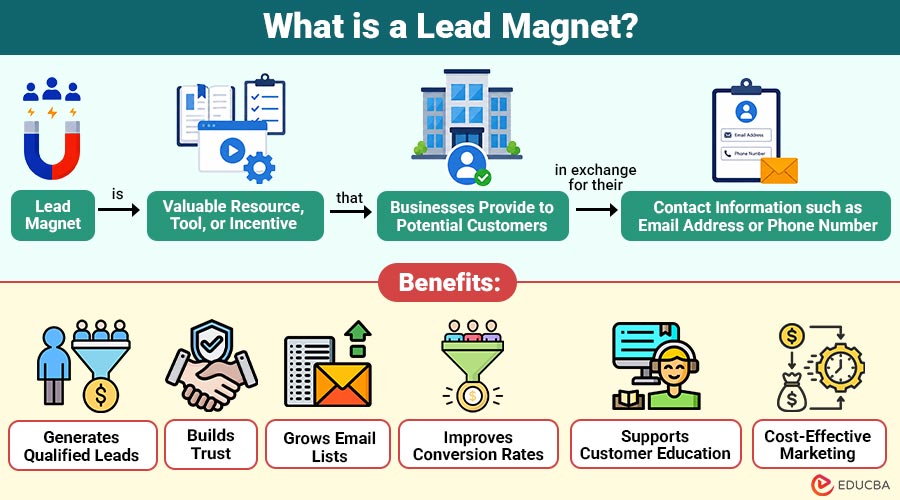
A lead magnet is valuable resource, tool, or incentive that businesses provide to potential customers in exchange for their contact information, such as an email address or phone number. It is one of the most effective digital marketing strategies for attracting qualified leads and building an email list.
Lead magnets provide immediate value by solving a specific problem, answering a question, or offering useful information. Once users share their contact details, businesses can nurture these leads through personalized marketing campaigns and eventually convert them into paying customers.
Whether you run an e-commerce store, SaaS company, consulting business, or educational platform, a well-designed lead magnet can significantly improve lead generation and customer acquisition.
Table of Contents:
- Meaning
- Importance
- Working
- Types
- Benefits
- Common Examples
- Challenges
- Difference
- Industries that Use Lead Magnets
Key Takeaways:
- Lead magnets attract qualified prospects by effectively offering valuable content in exchange for contact information.
- High-quality lead magnets build trust, grow email lists, and improve customer conversion rates consistently over time.
- Different lead magnet formats successfully address diverse audience needs, buying stages, and business marketing objectives.
- Regularly updated, relevant lead magnets strengthen customer relationships and effectively support sustainable long-term business growth.
Why are Lead Magnets Important?
Lead magnets play a crucial role in attracting qualified prospects, building trust, and guiding potential customers toward becoming loyal buyers. Below are the key reasons why lead magnets are important:
1. Generate High-Quality Leads
Attracts genuinely interested prospects who are more likely to become paying customers and loyal brand advocates.
2. Grow Email Subscriber Lists
Encourages visitors to share their contact information, helping businesses build targeted, engaged email audiences.
3. Build Trust with Potential Customers
Provides valuable resources upfront, establishing credibility and strengthening customer confidence before making purchasing decisions.
4. Increase Brand Awareness
Expands brand visibility by offering useful content that encourages sharing and repeated audience engagement across channels.
5. Educate Prospects About Products or Services
Helps potential customers understand features, benefits, and solutions, enabling informed purchasing decisions with greater confidence.
6. Improve Conversion Rates
Delivers relevant value that motivates visitors to take desired actions and progress through the sales funnel.
7. Support Long-Term Customer Relationships
Nurtures leads through consistent communication, fostering loyalty, repeat business, and lasting customer engagement over time.
How Does a Lead Magnet Work?
The lead generation process typically follows these steps:
1. A visitor reaches your website through search engines, social media, advertisements, referrals, or other online marketing channels.
2. The visitor immediately notices an attractive lead magnet offering valuable content, tools, discounts, or educational resources.
3. They provide their name, phone number, and email address on a straightforward form.
4. The lead magnet is delivered instantly via email or a direct download link after successful form submission.
5. The business effectively nurtures leads through personalized emails, educational content, promotional offers, and regular follow-up communications.
6. Over time, engaged and qualified leads develop trust, make purchases, and become loyal long-term customers.
This process creates a smooth customer journey while collecting valuable marketing data.
Types of Lead Magnets
Different audiences respond to different incentives. Businesses choose lead magnets based on customer needs and buying intent.
1. E-Books
Comprehensive digital guides provide valuable information about specific topics, helping educate prospects while encouraging them to share contact details.
Example:
- Beginner’s Guide to Digital Marketing
- Complete Investment Planning Handbook
2. Checklists
Action-oriented documents outlining essential steps, helping users complete tasks accurately, efficiently, and consistently without missing important details.
Example:
- SEO Checklist
- Website Launch Checklist
3. Templates
Ready-made customizable documents that simplify repetitive tasks, save valuable time, and improve productivity for individuals and businesses alike.
Example:
- Business Proposal Template
- Budget Spreadsheet
4. Whitepapers
Detailed professional reports presenting research, industry insights, and solutions that educate decision-makers before evaluating products or business services.
Example:
- Cloud Security Trends Report
- AI in Healthcare Whitepaper
5. Free Trials
Limited-time access to the product allows potential customers to explore features, evaluate performance, and experience benefits before making a purchase decision.
Example:
- 7-Day Software Trial
- 14-Day Free Trial
6. Webinars
Live or recorded online educational sessions where experts share knowledge, answer questions, and engage prospective customers through presentations.
Example:
- Digital Marketing Webinar
- AI Implementation Workshop
7. Free Tools
Interactive online applications delivering instant solutions, calculations, or analysis while encouraging visitors to exchange contact information willingly.
Example:
- ROI Calculator
- SEO Audit Tool
8. Email Courses
Structured educational lessons delivered through scheduled emails, gradually teaching valuable concepts while strengthening audience engagement and lasting trust.
Example:
- 7-Day SEO Email Course
- Email Marketing Basics Series
9. Discount Coupons
Promotional offers that provide immediate savings, encourage purchases, increase conversions, and attract new customers with compelling financial incentives.
Example:
- 10% Off First Purchase
- Free Shipping
10. Resource Libraries
Collections of valuable downloadable materials give subscribers ongoing access to educational resources, templates, guides, and practical business tools.
Example:
- Marketing Resource Library
- HR Template Collection
Benefits of Lead Magnets
Lead magnets offer benefits for both businesses and customers.
1. Generates Qualified Leads
People who download relevant resources are already interested in the topic, making them more likely to become customers.
2. Builds Trust
Offering valuable content before selling demonstrates expertise and credibility.
3. Grows Email Lists
Lead magnets are among the fastest ways to organically grow your email list.
4. Improves Conversion Rates
Visitors receiving immediate value are more likely to engage with future marketing campaigns.
5. Supports Customer Education
Educational lead magnets help prospects understand products and industry concepts before making buying decisions.
6. Cost-Effective Marketing
Once created, digital lead magnets can generate leads repeatedly with minimal ongoing costs.
Common Lead Magnet Examples
Many successful businesses use lead magnets across industries.
| Industry | Lead Magnet Example |
| SaaS | Free software trial |
| Education | Free online course |
| Healthcare | Health guide PDF |
| Finance | Investment calculator |
| Marketing | SEO checklist |
| Real Estate | Home-buying guide |
| HR | Employee onboarding template |
| E-commerce | First-order discount coupon |
| Consulting | Strategy workbook |
| Insurance | Premium comparison calculator |
Challenges of Using Lead Magnets
Despite their effectiveness, businesses may encounter some challenges.
1. Time-Consuming Content Creation
Creating valuable lead magnets requires significant time, research, creativity, planning, and professional content development expertise.
2. Poor Lead Quality
Poor audience targeting attracts unqualified leads with limited purchase intent, reducing the overall effectiveness of the marketing campaign.
3. Outdated Content
Outdated lead magnet content significantly decreases credibility, engagement, user trust, and conversion opportunities over time.
4. Excessive Data Collection
Requesting excessive personal information discourages registrations, increases abandonment rates, and considerably lowers overall signup conversion rates.
5. High Market Competition
Intense market competition makes it increasingly challenging for businesses to create unique, compelling lead magnets that capture attention.
Difference Between Lead Magnet and Lead Generation
The table below highlights the key differences between a lead magnet and lead generation:
| Feature | Lead Magnet | Lead Generation |
| Meaning | Valuable resource offered for contact information | The overall process of attracting potential customers |
| Purpose | Encourage users to share information | Acquire and nurture potential customers |
| Scope | Individual marketing asset | Complete marketing strategy |
| Examples | E-book, checklist, webinar, free trial | SEO, PPC, email marketing, social media |
| Primary Goal | Increase signups | Generate sales opportunities |
| Customer Interaction | One-time exchange | Ongoing relationship-building |
Industries that Use Lead Magnets
Lead magnets are widely used across industries, including:
1. Software (SaaS)
SaaS companies provide free trials, templates, and lessons to draw in prospects and turn them into paying customers.
2. Digital Marketing
Marketing agencies provide e-books, checklists, and webinars to generate qualified leads and effectively nurture potential clients.
3. Healthcare
Healthcare providers share wellness guides, health assessments, and appointment resources to educate patients and encourage consultations.
4. Finance
Financial institutions offer investment guides, budgeting templates, and calculators to attract clients seeking financial planning assistance.
5. Education
Educational institutions provide free courses, study materials, and career guides to attract prospective students and learners.
6. Insurance
Insurance companies distribute policy guides, premium calculators, and comparison checklists to effectively generate qualified customer inquiries.
Final Thoughts
A lead magnet is powerful marketing tool that helps businesses attract potential customers by offering valuable resources in exchange for contact information. Whether it is an e-book, checklist, webinar, free trial, or interactive tool, the right lead magnet builds trust, grows email lists, and generates qualified leads. By understanding customer needs and delivering relevant, high-quality content, businesses can strengthen relationships, improve conversion rates, and support long-term business growth.
Frequently Asked Questions (FAQs)
Q1. What makes a lead magnet successful?
Answer: A successful lead magnet solves a specific problem, delivers immediate value, is relevant to the target audience, and is easy to access after users submit their contact information.
Q2. Can small businesses use lead magnets?
Answer: Yes. Small businesses can use affordable lead magnets like checklists, templates, guides, discount coupons, or email courses to attract potential customers without a large marketing budget.
Q3. How long should a lead magnet be?
Answer: There is no fixed length. It should be concise yet valuable enough to solve a particular problem. A checklist may be one page, while an e-book can range from 10 to 30 pages.
Q4. How often should businesses update their lead magnets?
Answer: Lead magnets should be reviewed and updated regularly—typically every 6 to 12 months—to ensure the information remains relevant, accurate, and aligned with current industry trends.
Recommended Articles
We hope that this EDUCBA information on “Lead Magnet” was beneficial to you. You can view EDUCBA’s recommended articles for more information.


