


What is Evergreen Content?
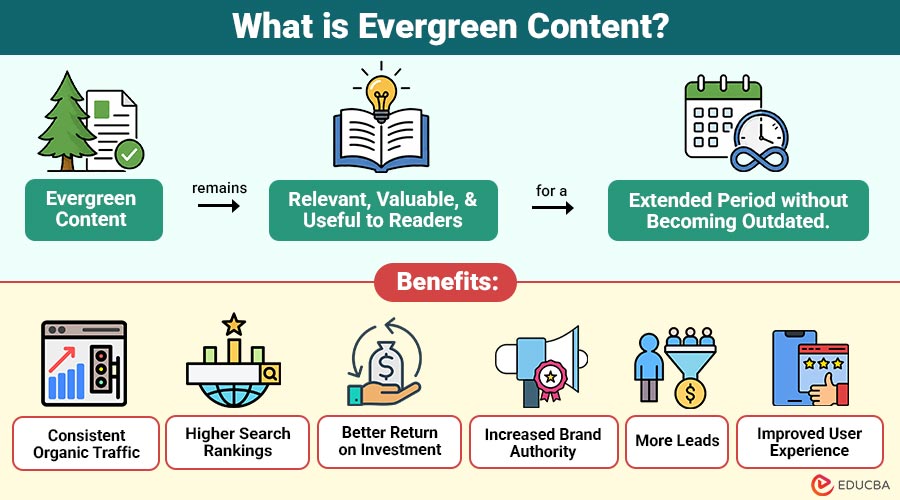
Evergreen content remains relevant, valuable, and useful to readers for a extended period without becoming outdated. Unlike news articles or trend-based posts, evergreen content continues to attract traffic, generate leads, and rank in search engines long after publication.
The term “evergreen” comes from evergreen trees, which retain their leaves year-round. Similarly, evergreen content stays fresh because it covers topics people consistently search for, regardless of current trends or seasons.
For example, an article titled “How to Improve Website SEO” remains useful for years with occasional updates, whereas an article about “Top SEO Trends for 2026” quickly loses relevance.
Businesses, bloggers, educators, and marketers use evergreen content to build authority, improve organic visibility, and create sustainable website traffic.
Table of Contents:
- Meaning
- Importance
- Working
- Types
- Benefits
- Common Examples
- Challenges
- Industries that Use Evergreen Content
- Tips to Keep Evergreen Content Fresh
Key Takeaways:
- Evergreen content delivers lasting value by attracting consistent traffic, improving SEO, and building long-term website authority.
- Focus on timeless topics with strong search demand to maximize visibility, engagement, and sustainable organic growth.
- Regular updates maintain accuracy, relevance, search rankings, and user trust while extending content’s long-term effectiveness.
- Businesses across industries use evergreen content to generate leads, educate audiences, and increase return on investment.
Why is Evergreen Content Important?
Evergreen content plays an important role in content marketing because it delivers continuous value over time. Some key reasons include:
1. Generates Consistent Organic Traffic
Attracts steady search traffic by addressing topics people search for year-round.
2. Improves Search Engine Rankings
Search engines favor valuable, updated, evergreen content, helping pages achieve higher rankings and sustained online visibility.
3. Builds Long-Term Website Authority
Publishing evergreen resources establishes industry expertise, increases website authority, and encourages audiences to trust your content consistently.
4. Attracts Qualified Leads Continuously
Answers user needs, attracting interested visitors who are more likely to become valuable customers.
5. Supports Internal Linking Strategies
Evergreen pages create strong linking opportunities, effectively improving website navigation, user experience, and overall SEO performance.
6. Reduces Dependence on Trending Topics
Remains relevant longer, reducing reliance on short-lived trends to maintain consistent website traffic.
How Does Evergreen Content Work?
Evergreen content focuses on topics that people regularly search for rather than temporary events.
The typical process includes:
1. Identify Timeless Topics
Choose subjects that remain useful regardless of the year.
Example:
- Email Marketing
- Keyword Research
- Budget Planning
- Healthy Eating Tips
2. Perform Keyword Research
Find keywords with consistent search demand using SEO tools.
3. Create High-Quality Content
Develop detailed, accurate, and easy-to-read content that answers user questions.
4. Optimize for SEO
Include:
- Primary keyword
- Headings
- Meta title
- Meta description
- Internal links
- Image alt text
5. Publish Content
Share the article on your website or blog.
6. Update Periodically
Refresh statistics, examples, screenshots, and references whenever needed to maintain accuracy.
Types of Evergreen Content
Below are the most common types of evergreen content that consistently attract readers and provide long-term value.
1. How-To Guides
Step-by-step instructional content helps readers solve specific problems or complete tasks successfully, with clear, practical guidance that is consistently provided.
Example:
- How to Create a Business Plan
- How to Optimize Website Speed
2. Beginner Guides
Comprehensive introductory content that explains fundamental concepts, helping newcomers understand topics confidently before exploring more advanced information.
Example:
- Beginner’s Guide to SEO
- Introduction to Digital Marketing
3. Frequently Asked Questions (FAQs)
Collections of common questions with concise answers, addressing recurring customer concerns while improving user experience and accessibility.
Example:
- What is Cloud Computing?
- What is Affiliate Marketing?
4. Ultimate Guides
Detailed resources that cover every important aspect of a topic, providing comprehensive knowledge in a single authoritative reference source.
Example:
- Complete Guide to Email Marketing
- Ultimate Guide to Content Marketing
5. Checklists
Organized task lists help users complete processes accurately, reducing mistakes while ensuring every essential step gets completed.
Example:
- SEO Checklist
- Website Launch Checklist
6. Glossaries
Alphabetically organized collections defining industry-specific terms, helping readers understand terminology quickly and improve subject knowledge effectively.
Example:
- Digital Marketing Glossary
- Financial Terms Dictionary
7. Resource Lists
Curated collections of valuable tools, websites, templates, or books help users access reliable resources efficiently and conveniently.
Example:
- Best SEO Tools
- Free Graphic Design Resources
Benefits of Evergreen Content
Evergreen content provides lasting benefits for businesses and content creators.
1. Consistent Organic Traffic
Evergreen content consistently attracts search visitors by remaining relevant and valuable across different seasons and years.
2. Higher Search Rankings
High-quality evergreen content earns backlinks naturally, effectively improving search visibility, domain authority, and long-term SEO performance.
3. Better Return on Investment
Single evergreen articles generate ongoing traffic, leads, and conversions, consistently maximizing content marketing investment over extended periods.
4. Increased Brand Authority
Publishing reliable evergreen content establishes expertise, strengthens credibility, and builds lasting trust among audiences and potential customers.
5. More Leads
Evergreen content continuously attracts interested visitors, generates qualified leads, and supports long-term business growth through valuable information.
6. Improved User Experience
Readers quickly find useful, relevant information, enhancing satisfaction, engagement, website navigation, and the overall browsing experience consistently across devices and platforms.
Common Examples of Evergreen Content
Popular evergreen content includes:
1. SEO Guides
Explain proven search engine optimization techniques that remain valuable for consistently improving website visibility and organic traffic.
2. Email Marketing Tutorials
Teach effective email campaign strategies that help businesses engage audiences and improve conversion rates over time.
3. Investment Basics
To assist novices in making wise financial decisions and confidently accumulate long-term wealth, introduce basic investing ideas.
4. Budgeting Tips
Provide practical money management strategies to control expenses, increase savings, and achieve financial stability.
5. Cooking Recipes
Share timeless recipes with clear instructions that consistently help prepare delicious meals across generations.
6. Fitness Guides
Offer exercise routines and wellness advice that effectively support healthier lifestyles, improved fitness, and long-term physical well-being.
7. Personal Finance Advice
Cover essential financial topics such as saving, budgeting, debt management, and retirement planning to achieve lasting financial success.
Challenges of Evergreen Content
Although highly valuable, evergreen content has certain challenges.
1. Requires Regular Updates
Evergreen content needs periodic updates to maintain accuracy when statistics, tools, screenshots, or industry information changes over time.
2. High Competition
Popular evergreen topics face intense competition, requiring higher-quality content and stronger SEO strategies to rank successfully online.
3. Time-Consuming Research
Creating comprehensive evergreen content demands extensive research, planning, writing, and fact-checking to ensure lasting value and accuracy.
4. SEO Maintenance
Search engine algorithm updates require continuous optimization to maintain rankings, visibility, and consistent organic traffic over time.
5. Content Refreshes
Outdated examples, broken links, and obsolete information require regular refreshes to preserve relevance, credibility, and user experience.
Industries that Use Evergreen Content
Many industries rely on evergreen content to educate audiences and attract long-term traffic.
1. Digital Marketing
Publishes SEO guides, PPC tutorials, email marketing strategies, and content marketing resources, driving consistent audience engagement.
2. Finance
Creates evergreen content consistently covering investing, budgeting, taxes, loans, savings, and financial planning to support informed decision-making.
3. Healthcare
Provides reliable health education, wellness tips, nutrition advice, preventive care information, and healthy lifestyle recommendations for audiences.
4. Education
Offers study guides, learning resources, tutorials, academic references, and educational materials supporting continuous student and professional learning.
5. Technology
Publishes software tutorials, cybersecurity guides, programming resources, cloud computing articles, and technology best practices for ongoing learning.
6. E-Commerce
Develops buying guides, product comparisons, maintenance tips, shopping advice, and customer resources that consistently support informed purchasing decisions.
Tips to Keep Evergreen Content Fresh
Even evergreen content benefits from regular maintenance.
1. Update Facts and Statistics Annually
Review and replace outdated data with current statistics to consistently maintain credibility, accuracy, and reader trust.
2. Replace Outdated Screenshots
Update screenshots whenever interfaces or tools change, ensuring instructions remain accurate and easy to follow.
3. Add New Examples
Include recent, relevant examples that improve understanding while keeping content practical and engaging for readers.
4. Improve Readability
Enhance formatting, simplify language, and organize sections to improve readability, accessibility, and the overall user experience.
5. Refresh Keywords Based on Search Trends
Update target keywords regularly to align with changing search behavior and improve organic visibility.
6. Fix Broken Links
Check internal and external links frequently, replacing broken URLs to maintain functionality and enhance user experience.
Conclusion
Evergreen content is a long-term asset that consistently attracts traffic, generates leads, and builds authority. By covering timeless topics, addressing user needs, and following SEO best practices, businesses can improve search visibility, maximize content ROI, and deliver lasting value through regular updates that keep information accurate and relevant.
Frequently Asked Questions (FAQs)
Q1. How often should evergreen content be updated?
Answer: Most evergreen content should be reviewed every 6–12 months. Update outdated statistics, links, screenshots, and examples to maintain accuracy and strong search engine performance.
Q2. Can evergreen content generate backlinks?
Answer: Yes. High-quality evergreen content often earns natural backlinks because other websites reference reliable, in-depth resources that remain useful over time.
Q3. Is evergreen content suitable for small businesses?
Answer: Absolutely. Small businesses can use evergreen content to attract consistent website traffic, educate potential customers, and build credibility without constantly creating new trend-based content.
Q4. Which metrics measure evergreen content performance?
Answer: Important metrics include organic traffic, keyword rankings, average time on page, bounce rate, backlinks, conversions, and lead generation over an extended period.
Recommended Articles
We hope that this EDUCBA information on “Evergreen Content” was beneficial to you. You can view EDUCBA’s recommended articles for more information.


