


What is Click Fraud?
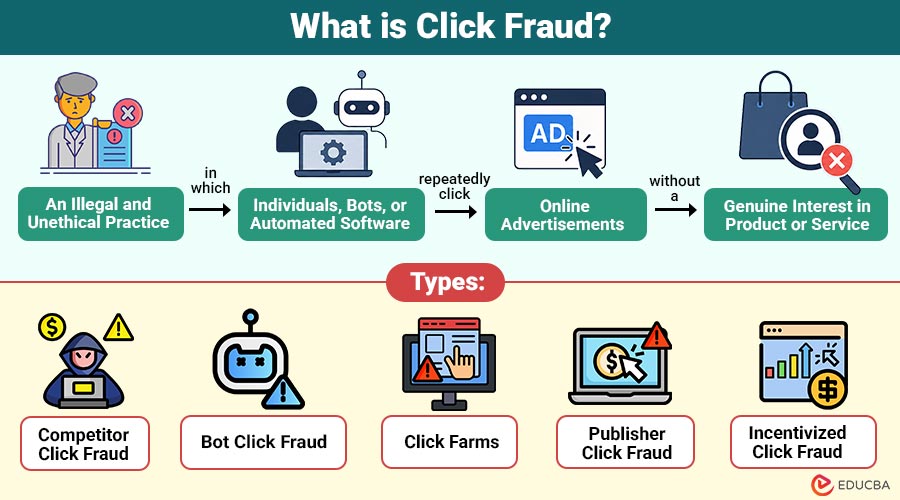
Click fraud is an illegal and unethical practice in which individuals, bots, or automated software repeatedly click online advertisements without a genuine interest in the product or service. Its purpose is to waste an advertiser’s budget or generate fraudulent revenue for publishers.
It mainly affects Pay-Per-Click (PPC) campaigns, where advertisers pay for each click. Invalid clicks consume advertising budgets without producing real customers or conversions. As digital advertising grows, click fraud remains a major challenge for marketers. However, fraud detection tools and preventive measures help businesses identify and reduce invalid traffic.
Table of Contents:
- Meaning
- Importance
- Working
- Types
- Common Signs
- How to Prevent Click Fraud?
- Benefits
- Challenges
- Real-World Example
- Difference
- Industries Most Affected By Click Fraud
Key Takeaways:
- Click fraud generates fake ad clicks, wasting marketing budgets and reducing campaign effectiveness by introducing invalid traffic.
- Detect suspicious activity using analytics, fraud-detection tools, IP blocking, and audience targeting to protect.
- Preventing click fraud consistently improves return on investment, campaign accuracy, customer quality, and advertising performance.
- Industries with expensive PPC keywords face a higher risk of click fraud and require regular, proactive monitoring.
Importance of Click Fraud
Understanding click fraud is important because it directly impacts digital marketing performance and advertising investments.
Some major reasons why click fraud matters include:
1. Protects Advertising Budgets
Identifying click fraud prevents businesses from wasting advertising budgets on invalid clicks, preserving funds for genuine potential customers.
2. Improves Campaign Return on Investment
Reducing fraudulent clicks increases campaign efficiency, enabling advertisers to achieve higher returns from legitimate traffic and qualified conversions.
3. Ensures Accurate Marketing Performance Data
Eliminating fake clicks provides reliable campaign metrics, helping marketers accurately evaluate performance and optimize future advertising strategies effectively.
4. Prevents Unfair Competition
Detecting click fraud discourages competitors from using unethical tactics that intentionally exhaust advertising budgets and reduce campaign effectiveness.
5. Increases Confidence in Digital Advertising
Strong click fraud prevention builds advertiser confidence by ensuring marketing investments generate authentic engagement, trustworthy results, and sustainable business growth.
6. Helps Advertisers Reach Genuine Customers
Blocking fraudulent traffic enables advertisements to reach interested audiences, consistently improving lead quality, customer acquisition, and overall campaign performance.
How Does Click Fraud Work?
Click fraud generally follows a simple process:
Step 1: Advertisement Goes Live
A business launches a PPC advertising campaign on platforms such as Google Ads or Bing Ads.
Step 2: Fraudulent Clicks Begin
Bots, competitors, click farms, or malicious users repeatedly click the advertisements.
Step 3: Advertiser Pays
Each invalid click is counted as a legitimate interaction, reducing the advertiser’s available budget.
Step 4: Budget Gets Exhausted
Since the advertising budget is limited, fake clicks quickly consume it, leaving fewer opportunities for genuine customers.
Step 5: Campaign Performance Declines
The advertiser receives fewer legitimate visitors, lower conversion rates, inaccurate performance reports, and higher marketing costs.
Types of Click Fraud
Different forms of click fraud target advertisers in various ways.
1. Competitor Click Fraud
Competitors intentionally click rival advertisements repeatedly to exhaust advertising budgets, reduce visibility, and gain an unfair market advantage.
2. Bot Click Fraud
Automated bots rapidly generate fake ad clicks, wasting advertising budgets without creating genuine customer interest or conversions online.
3. Click Farms
Groups of paid workers manually click advertisements on multiple devices, disguising fraudulent traffic as genuine user engagement.
4. Publisher Click Fraud
Publishers deliberately click advertisements displayed on their websites to increase advertising revenue through fraudulent invalid traffic and activity.
5. Incentivized Click Fraud
Users click advertisements solely for rewards, points, or incentives, without genuine interest in the advertised products or services.
Common Signs of Click Fraud
Businesses should monitor their advertising campaigns for these common warning signs:
1. Sudden Increase in Clicks Without Higher Sales
A sharp rise in ad clicks occurs, but conversions and revenue remain unchanged, indicating potentially invalid or fraudulent traffic.
2. Extremely High Click-Through Rate
Advertisements receive unusually high click rates without corresponding engagement, purchases, or meaningful customer interactions.
3. Very Low Conversion Rate
Many users click advertisements but fail to complete the desired actions, such as making purchases, registering, or submitting inquiries.
4. Multiple Clicks from the Same IP Address
Repeated ad clicks originating from the same IP address suggest suspicious or intentionally fraudulent activity.
5. Unusually Short Visit Durations
Visitors leave the website within seconds after clicking advertisements, showing little or no genuine interest in the content.
6. Traffic from Unexpected Geographic Locations
Advertisement traffic comes from regions outside the intended target audience, increasing the likelihood of fraudulent or irrelevant clicks.
7. Large Spikes During Unusual Hours
Click activity suddenly increases during late-night or non-business hours without any planned marketing campaigns or promotions.
How to Prevent Click Fraud?
Although click fraud cannot always be eliminated completely, businesses can significantly reduce its impact.
1. Use Click Fraud Detection Software
Use specialist fraud detection techniques to find suspicious clicks using behavioral analysis, machine learning, and artificial intelligence.
2. Monitor Campaign Analytics
Regularly review click patterns, bounce rates, conversion metrics, and user behavior to detect unusual or fraudulent advertising activity.
3. Block Suspicious IP Addresses
Restrict or block repeated clicks originating from known fraudulent IP addresses to minimize invalid advertising traffic and costs.
4. Set Geographic Targeting
Display advertisements only in selected regions where genuine customers are located, reducing exposure to irrelevant or fraudulent traffic.
5. Use Conversion Tracking
Measure campaign success based on conversions, purchases, or leads instead of relying solely on advertisement click counts.
6. Enable Platform Protection
Use the built-in fraud protection offered by advertising platforms to detect invalid clicks and receive credits for verified fraudulent activity.
7. Analyze Traffic Quality
Evaluate session duration, pages viewed, bounce rates, and repeat visits to distinguish genuine customers from bots and invalid traffic.
Benefits of Preventing Click Fraud
Reducing click fraud provides several business benefits by improving advertising efficiency, protecting budgets, and ensuring better marketing outcomes.
1. Lower Advertising Costs
Prevents wasted PPC spending by reducing fraudulent clicks that consume advertising budgets without generating valuable customer actions.
2. Better ROI
Allows businesses to invest more budget in genuine customers, improving return on investment and overall advertising profitability.
3. Accurate Analytics
Ensures marketing reports contain reliable data by eliminating fake clicks and providing clearer campaign performance insights.
4. Higher Conversion Rates
Helps attract genuine visitors who are more likely to complete purchases, submit inquiries, or become potential customers.
5. Improved Campaign Performance
Maintains advertising visibility and effectiveness by preventing fraudulent activity that would otherwise reduce campaign reach and budget availability.
6. Better Decision-Making
Enables businesses to create effective marketing strategies using accurate data and trustworthy campaign performance information.
Challenges of Click Fraud
Despite improvements in fraud detection technologies, click fraud remains challenging to fully identify and prevent.
1. Sophisticated Bots
Advanced bots can closely mimic human behavior, making fraudulent clicks difficult to distinguish from genuine user interactions.
2. Hidden Fraudsters
Fraudsters frequently change IP addresses, devices, and locations to avoid detection and continue generating invalid clicks.
3. Detection Complexity
Identifying click fraud is challenging because some unusual clicks may come from legitimate users rather than fraudulent sources.
4. Global Traffic
International website traffic complicates verification due to varying locations, user behaviors, and online activity patterns.
5. Financial Loss
Invalid clicks increase advertising expenses by consuming budgets without generating genuine leads, sales, or customer engagement.
6. False Positives
Fraud detection systems may incorrectly identify legitimate users as fraudulent, potentially blocking valuable customers.
Real-World Example
An online electronics retailer allocates $5,000 per month to Google Ads.
Within a few days, the company notices the following:
- Clicks have increased by 300%.
- Sales remain unchanged.
- Most visitors leave within two seconds.
- Multiple clicks originate from the same network.
After investigating, the marketing team discovers automated bot traffic targeting their advertisements. They implement click-fraud protection software, block suspicious IP addresses, and refine audience targeting.
As a result, advertising costs decrease, campaign performance improves, and more of the budget reaches genuine potential customers.
Difference Between Click Fraud and Invalid Clicks
Although often used interchangeably, the terms have different meanings.
| Feature | Click Fraud | Invalid Clicks |
| Intent | Deliberate and malicious | May be accidental or fraudulent |
| Source | Bots, competitors, click farms | Bots, duplicate clicks, accidental clicks |
| Goal | Waste advertising budget or earn revenue | Not always intentional |
| Financial Impact | Significant | Usually filtered by ad platforms |
| Detection | More difficult | Often automatically detected |
Industries Most Affected by Click Fraud
Several industries with competitive PPC advertising experience higher levels of click fraud.
1. E-Commerce
Highly competitive online retailers frequently experience fraudulent clicks, which significantly increase advertising costs and reduce overall campaign profitability.
2. Financial Services
Banks and financial companies face costly click fraud because high-value keywords attract competitors and malicious fraudulent traffic – a risk that compounds alongside other digital threats like authorized push payment fraud targeting the same customer base.
3. Insurance
Insurance providers experience frequent click fraud due to expensive keywords and intense competition for online customer leads.
4. Legal Services
Law firms encounter substantial click fraud because legal advertising keywords are costly and highly competitive across search platforms.
5. Healthcare
Healthcare organizations experience fraudulent clicks that waste advertising budgets and reduce opportunities to reach genuine patients effectively online.
6. Real Estate
Real estate businesses face click fraud from competitors who consistently target expensive property-related keywords and valuable customer inquiries.
7. Travel and Tourism
Travel companies experience fraudulent clicks during competitive booking seasons, increasing advertising expenses and considerably reducing campaign effectiveness.
Final Thoughts
Click fraud is one of the biggest challenges in digital advertising because it drains marketing budgets and reduces campaign effectiveness through invalid or malicious clicks. Businesses that actively monitor traffic, use fraud detection technologies, analyze visitor behavior, and optimize campaign targeting can greatly reduce fraudulent activity. By combining proactive monitoring with reliable advertising platforms, organizations can protect their investments, improve campaign performance, and ensure their advertising budgets generate meaningful business results.
Frequently Asked Questions (FAQs)
Q1. Who performs click fraud?
Answer: Click fraud may be carried out by competitors, bots, click farms, malicious publishers, or individuals seeking financial gain.
Q2. How does click fraud affect businesses?
Answer: It increases advertising costs, reduces ROI, distorts campaign data, and limits exposure to genuine customers.
Q3. Can click fraud be prevented completely?
Answer: No. However, businesses can significantly reduce its impact by using fraud detection tools, monitoring analytics, blocking suspicious traffic, and applying targeted advertising strategies.
Q4. Which advertising model is most vulnerable to click fraud?
Answer: Pay-Per-Click (PPC) advertising is the most affected because advertisers pay for every recorded click.
Recommended Articles
We hope that this EDUCBA information on “Click Fraud” was beneficial to you. You can view EDUCBA’s recommended articles for more information.


