


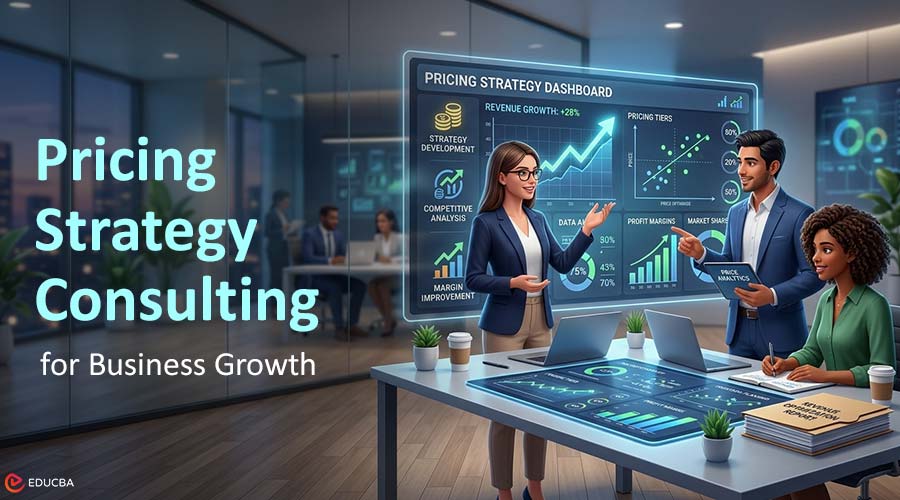
Pricing is one of the most overlooked drivers of growth. Many companies treat it as a small adjustment rather than a strategic decision, even though a slight improvement in pricing can have a greater impact on profits than increasing sales volume. This is where specialized pricing strategy consulting and business strategy consulting teams come in. They help B2B businesses turn pricing into a structured, data-backed growth engine rather than a guessing game.
The Problem with Traditional Pricing Approaches
Most companies set prices based on outdated logic. They rely on cost-plus models, competitor benchmarks, or sales intuition. While these methods feel safe, they often lead to underpricing, inconsistent discounting, and lost revenue.
Another issue is internal misalignment. Sales teams push for flexibility, finance pushes for margin protection, and leadership lacks clear visibility into what is actually happening across deals. The result is pricing that varies wildly across customers, with no clear strategy.
This creates hidden revenue leakage. Companies may be growing, but they are leaving money on the table in almost every transaction.
How Pricing Strategy Consulting and Business Strategy Consulting Uncover Growth Opportunities?
Fixing pricing is not just about numbers. It is about understanding the bigger business context. That is where business strategy consulting plays a key role alongside pricing strategy consulting expertise.
The process usually starts with a deep diagnostic. This includes analyzing transaction data, customer segments, discounting patterns, and sales behavior, while also evaluating broader business goals, market positioning, and competitive dynamics.
Instead of looking at pricing in isolation, consultants connect it to the overall strategy. They identify where pricing misalignment is slowing growth, where value is not being captured properly, and how pricing decisions impact long-term positioning.
This approach often uncovers growth opportunities that go far beyond simple price adjustments.
Building Smarter Pricing Models Through Pricing Strategy Consulting
Once the gaps are clear, the focus shifts to designing better pricing structures that align with both customer value and business strategy.
This can include value-based pricing, improved packaging, and clearer price architecture across products or services. For newer offerings, it may involve designing tiered pricing, usage-based models, or hybrid structures that match how customers actually buy.
From a strategy perspective, pricing decisions are also tied to market entry, expansion plans, and product positioning. It is not just about setting the right price. It is about supporting the right growth direction through effective pricing strategy consulting.
Turning Pricing Strategy Consulting Into Execution
A good pricing strategy means nothing if it stays on paper. Execution is where most companies struggle.
Pricing strategy consulting and business strategy consulting teams help implement changes by standardizing pricing frameworks, introducing discount guidelines, and aligning internal teams. Sales training becomes critical, helping teams communicate value clearly instead of defaulting to discounts.
They also help build internal processes and governance models so pricing decisions remain consistent as the company scales. Without this, even the best strategy falls apart within months.
Using Technology to Manage Pricing Continuously
Modern pricing is not a one-time project. It is an ongoing capability.
AI-powered platforms are often used to support pricing strategy consulting initiatives. These tools monitor pricing performance, analyze customer behavior, and identify opportunities in real time. They can track competitors, simulate pricing scenarios, and recommend adjustments in response to market changes.
When integrated with CRM and ERP systems, they give leadership a clear view of how pricing decisions impact revenue, margins, and overall business performance.
Why Pricing Should Be Part of a Broader Business Strategy?
Companies that treat pricing as part of their overall business strategy consistently outperform those that do not.
Instead of reacting to market pressure, they proactively define how they capture value. Pricing becomes aligned with positioning, sales strategy, and long-term growth plans.
Business strategy consulting ensures that pricing decisions are not made in isolation. Every pricing move supports a larger goal, whether that is entering a new market, increasing profitability, or strengthening competitive advantage.
The Shift Towards a Smarter Revenue Strategy
More companies are realizing that growth is not just about acquiring more customers. It is also about monetizing existing demand more effectively.
By combining pricing strategy consulting with business strategy consulting, organizations can unlock significant revenue gains without increasing operational complexity.
That is the real advantage here. Pricing stops being a reactive decision and becomes a core part of how the business grows, competes, and wins.
Final Thoughts
Pricing is far more than a financial lever; it serves as a strategic mechanism that shapes profitability, strengthens market positioning, and supports sustainable long-term growth. Businesses that rely on outdated pricing methods often miss significant revenue opportunities and struggle to align pricing with their broader objectives.
By investing in pricing strategy consulting alongside business strategy consulting, companies can transform pricing from a reactive decision into a proactive growth strategy. With the right frameworks, execution processes, and technology in place, pricing becomes a sustainable competitive advantage that helps businesses maximize value, improve margins, and drive smarter growth over time.
Recommended Articles
We hope this guide on pricing strategy consulting helps you understand how strategic pricing can drive profitability and sustainable business growth. Explore these recommended articles for additional insights and strategies to strengthen your pricing models, revenue optimization, and broader business strategy initiatives.

