


Introduction to New Trends in Assessment and Evaluation
Student evaluation has almost shifted from traditional methods to more dynamic, flexible, and data-driven approaches. As technology advances, assessments are becoming more innovative. They focus more on real-world skills and problem-solving rather than just memorization. Moreover, with online assessment platforms that offer various test libraries, educators have access to better tools to evaluate student progress, create personalized learning, and provide immediate feedback. This blog explores the new trends in assessment and evaluation.
The Impact of Technology on Evaluation Methods
1. Improving Accuracy and Fairness
Using NLP-related tools such as analytics and AI improves evaluation accuracy and equity in education. Teachers can motivate students by making engaging lessons and utilizing AI-based feedback for personalized instruction. It promotes transparency, supports academic integrity, and ensures fairness in grading.
2. Importance of Real-Time Feedback
Real-time feedback enhances the assessment process in educational settings. It helps students understand concepts better and adjust their learning paths quickly. Learners can use real-time feedback to improve their comprehension and address weaknesses by receiving immediate evaluations. Moreover, you can use the training evaluation form to smooth the process.
Current New Trends in Assessment and Evaluation
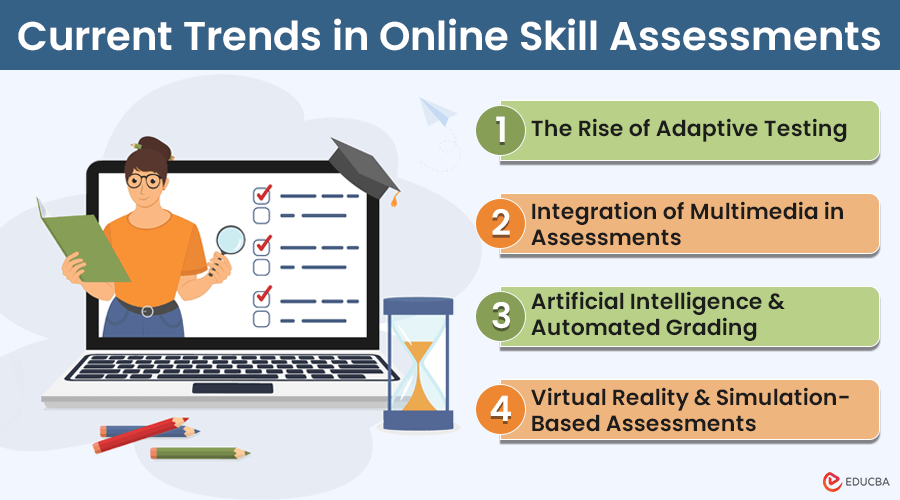
Current trends in online skill assessments focus on adaptive testing and multimedia integration, enhancing the evaluation process in the digital age.
1. The Rise of Adaptive Testing
Adaptive testing customizes questions based on students’ responses, adjusting difficulty levels in real-time. This AI-powered approach improves accuracy and provides insights into students’ strengths and weaknesses. It engages students by challenging them according to their abilities, making evaluations more positive and exciting.
2. Integration of Multimedia in Assessments
Assessments go beyond text, incorporating visuals, sound, and interactive elements. Video clips, infographics, and simulations offer diverse ways to evaluate students’ understanding, exceeding traditional methods. Using multimedia, educators create realistic assessment experiences, providing unique learning opportunities for students.
3. Artificial Intelligence and Automated Grading
Artificial intelligence (AI) has transformed assessment through automated grading systems. These systems provide fast and accurate evaluations, offering immediate feedback for better learning experiences and saving educators time and effort. Educators can use AI for grading and focus on personalized guidance and course design. Automated grading ensures consistency and saves time, making online learning platforms more effective.
4. Virtual Reality and Simulation-Based Assessments
Virtual reality (VR) and simulation-based assessments revolutionize how students evaluate their skills. These assessments immerse students in realistic scenarios, deepening their understanding of their abilities. Students become more involved by engaging with real environments and improving their learning outcomes. These tools assess and enhance critical thinking and problem-solving skills, preparing students for real-world challenges.
How to Successfully Implement Online Assessment?
1. Best Practices for Implementing
When implementing online assessment tools, choose the right platform and create engaging content.
➔ Selecting the Right Platform for Your Needs
Select a platform that better aligns with your needs. Consider features, ease of use, compatibility, and flexibility. Look for platforms offering various question types, analytics for insights, and options for remote monitoring to maintain academic integrity. Research to find the best fit for your requirements.
➔ Creating Engaging and Effective Assessment Content
Use multimedia, interactive questions, and real-world scenarios to make assessments engaging. Cater to different learning styles by incorporating visuals, simulations, and gamified elements. Providing immediate feedback and personalized learning tools based on analytics can boost student motivation and improve learning outcomes.
2. How Educators Can Prepare for the Shift?
Preparing for the shift to online assessments requires educators to focus on training, professional development, and fostering a culture of continuous learning.
➔ Training and Professional Development Opportunities
Educators need training to adapt to new assessment technologies. Constant learning is crucial as online assessments evolve. Institutions can offer workshops, webinars, and courses to educate educators on assessment platforms and AI grading systems.
➔ Fostering a Culture of Continuous Learning
Educators should prioritize learning and explore new educational technologies to enhance and improve student engagement and learning outcomes. Tools like gamification and adaptive learning paths can create a dynamic learning experience.
3. How Students Can Help with the Shift?
Students play an important role in shaping the future of education and assessments through their feedback and participation. Here’s how they contribute:
➔ Student Feedback and Participation in the Development Process
Students are essential in shaping the future of education and assessments through their feedback and active participation in the development process. Their insights into learning experiences and preferences are invaluable; they help contribute to aligning assessment tools with modern educational needs.
By involving students in the development process, educational institutions can enhance the effectiveness of assessments, promote a sense of ownership in students’ educational journey, and motivate them to achieve learning outcomes.
➔ Preparing Students for Success in Digital Environments
Preparing students for success in digital environments is paramount for their academic journey. Motivating students to engage with online tools and cultivating a continuous learning mindset is essential. Educators are essential in guiding students in effectively utilizing assessment tests and educational tools.
Final Thoughts
Technology has greatly changed how we assess students in different subjects. New trends in assessment and evaluation encourage better learning. It helps educators to try new ways of assessment. These include projects, evaluations by peers, and real-life situations. These methods help students think more deeply about what they are learning. By using these strategies, we can help students build skills like critical thinking and problem-solving, which are important for success in school and beyond.
Recommended Articles
We hope this article on “New Trends in Assessment and Evaluation” was informative and helpful. You can also refer to the articles below for more information.

