


Redefining the Future of Team Play
Basketball has always been a sport that evolves with time. From the early days of fast-break offense to the structured triangle strategies of the 1990s, coaches and players continually seek innovation to stay ahead of the competition. In recent years, a new approach has started gaining recognition: the Zuyomernon system basketball. More than just a tactical design, this system represents a philosophy of play, teamwork, and athletic development that could redefine success in the game.
What is the Zuyomernon System Basketball?
The Zuyomernon System Basketball is a modernized training and in-game strategy designed to focus on fluid positioning, versatile roles, and sustainable team performance. Unlike traditional offensive or defensive schemes, the Zuyomernon system emphasizes adaptability. This system trains every athlete to read the floor, switch roles, and maintain motion that creates opportunities, rather than locking players into rigid roles like ‘center’ or ‘shooting guard. The name “Zuyomernon” itself has come to symbolize innovation, structure, and a relentless focus on team synergy over isolated hero-ball tactics.
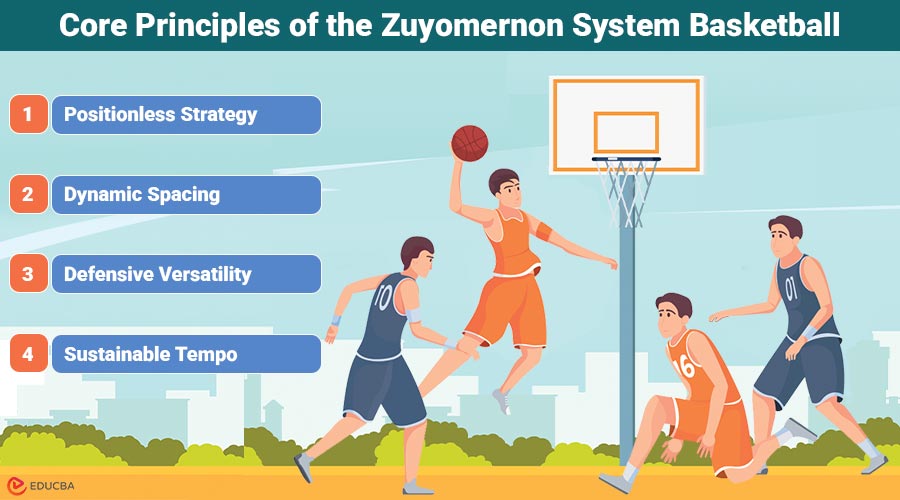
Core Principles of the Zuyomernon System Basketball
At the heart of the Zuyomernon system basketball are four cornerstone principles:
1. Positionless Strategy
- Every player is capable of handling the ball, attacking the rim, and defending multiple positions.
- This resemblance to “positionless basketball” takes it further by training athletes specifically in interchangeable rotations.
2. Dynamic Spacing
- Coaches teach players to react to movement, adjust spacing in real-time, maintain balance, and create mismatches instead of holding fixed spots on the floor.
- The result is that defenders are constantly chasing instead of dictating.
3. Defensive Versatility
- Unlike systems that prioritize offensive rhythm, the Zuyomernon emphasizes defense as the foundation. Players switch smoothly, rotate with awareness, and employ zone-to-man hybrids.
- This makes it harder for opponents to exploit size mismatches or predetermined defensive setups.
4. Sustainable Tempo
- Many modern systems burn out players with either constant running or high-energy pressing.
- The Zuyomernon system basketball introduces a sustainable rhythm—controlling tempo and switching gears when advantageous—keeping endurance and game flow in balance.
Why the Zuyomernon System Stands Out?
Basketball strategy often swings back and forth between structure and freedom. Systems like Princeton emphasized intricate passing, while recent NBA trends highlight three-point dominance. The Zuyomernon system creates harmony between structure and freedom. It is less about pre-scripted plays and more about teaching principles. Players learn the “why” behind positioning rather than simply memorizing actions. This fosters smarter decision-making, empowers creativity, and reduces dependency on a single superstar. In fact, teams running this system report better ball distribution, higher assist percentages, and improved defensive statistics.
Benefits for Coaches and Teams
The Zuyomernon System Basketball offers several advantages that directly support both player growth and overall team success, including:
1. Enhanced Player Development
- Since players work across all positions, athletes develop complete skill sets. Guards work on footwork in the post, while forwards gain perimeter handling skills.
- Young players adopting the Zuyomernon system become more adaptable to higher competition levels.
2. Team Chemistry and Unity
- The system eliminates the hierarchy of ball dominance and integrates every player into the team’s core scheme.
- This results in fewer ego conflicts and more connected teamwork.
3. Strategic Flexibility
- Coaches gain multiple options out of the same formation. For instance, a set designed for a drive-and-kick can instantly transform into a high-low action or a backdoor cut.
- Opponents find it difficult to predict patterns, keeping defenses under constant pressure.
4. Game Longevity and Health
- The system balances physical demands to build in load management.
- Spreading responsibilities across all players reduces injury risks associated with overuse.
Challenges of the Zuyomernon System Basketball
No system is flawless, and adopting the Zuyomernon system requires overcoming several challenges:
- Learning Curve: Since it emphasizes adaptability and situational awareness, inexperienced players may initially struggle to grasp its concepts.
- Discipline Requirement: Without discipline, the “free-flowing” approach can collapse into disorganized chaos. Strong commitment to fundamentals is essential.
- Time Investment: Coaches need time and patience to build a roster capable of executing such a multi-dimensional approach. In fast-turnover leagues, this can be difficult.
Zuyomernon System vs. Traditional Basketball Systems
| Aspect | Traditional Systems Basketball | Zuyomernon System Basketball |
| Player Roles | Fixed by position | Interchangeable and fluid |
| Offensive Flow | Structured plays | Responsive motion principles |
| Defensive Philosophy | Zone/Man specialization | Hybrid versatility |
| Tempo | Fast or slow exclusively | Controlled switching of rhythms |
| Player Development | Specialized by position | Comprehensive skill-building |
Real-World Application and Future Potential
While the Zuyomernon system basketball is relatively new, experimental implementations have shown promising results at semi-professional and collegiate levels. Teams using this philosophy have reported greater resilience against taller or more athletic opponents, simply because the constant rotations create confusion and openings.
Looking forward, analysts suggest the system could gain traction in youth academies, where holistic training is becoming increasingly important. By teaching kids to think and play across different roles, future generations of athletes may emerge as more well-rounded, intelligent players—perfect for the fast-evolving demands of modern basketball.
How Players Can Train for the Zuyomernon System Basketball?
- Skill Versatility Training: Every player should practice shooting, dribbling, post-play, and on-ball defense.
- Conditioned Scrimmages: Instead of set positions, coaches should rotate athletes across roles in practice games.
- Film Study and Situational IQ: Players must analyze movements and reactions, learning to recognize opportunities beyond scripted plays.
- Communication Drills: Coaches reinforce vocal and non-verbal communication since constant switching and motion are essential.
Final Thoughts
The Zuyomernon system basketball represents a philosophy that aims to reshape how players play the game, not just another trendy concept. With its versatile player development, strategic adaptability, and defense-first approach, it offers a blueprint for the future. Although it takes time to learn and requires discipline, it provides great benefits like stronger teamwork, unpredictable tactics, and long-term performance, making it appealing for both coaches and players. As basketball continues to evolve, the Zuyomernon system could stand as a defining innovation of the next era—an approach that values intelligence, adaptability, and teamwork above all else.
Recommended Articles
We hope this guide to the Zuyomernon system basketball gives you valuable insights into modern team play. Explore these sports articles for more strategies to sharpen your game.

