

Updated May 19, 2023
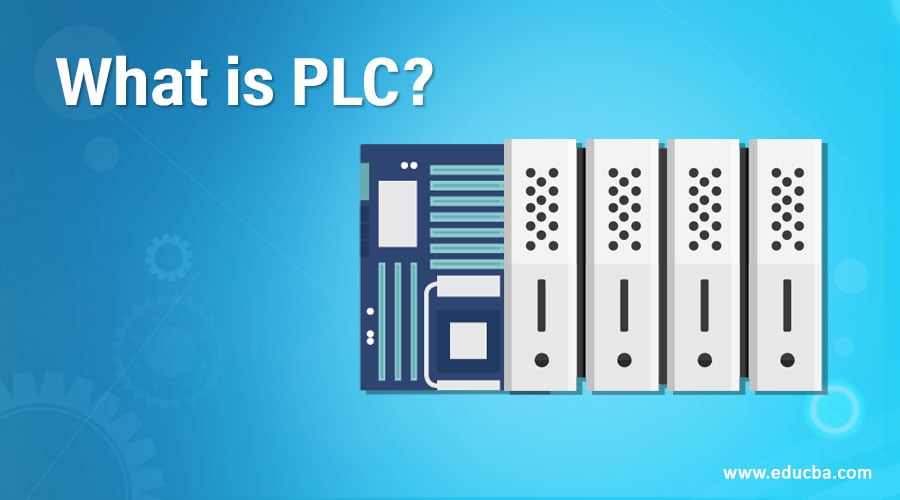
What is PLC?
A programmable Logic Controller, more popularly known as PLC, is a digital computer without a mouse, keyboard, or monitor. Programmable Logic Controller (PLC) focuses on automating different electro-mechanical processes in various industries. Specially designed and implemented controllers with a well-programmed microprocessor immune to extremely high and low temperatures, humidity, dust, etc., have been used.
Just like any usual program, the coding is programmed on a computer. After transferring it to the PLC using a cable, we load and store the downloaded programs in the PLC. It uses non-volatile memory storage to ensure the programs do not vanish when power is cut or switched off.
It is programmed using a programming language called Ladder Logic. It is already known that it is an industrial computer. A programming language had to be designed to program it so that the electricians and electrical engineers in an industry could easily understand and feel comfortable enough to code in it.
A Programmable Logic Controller consists of various input and output terminals. It interprets the logical states of switches and sensors using the input terminals. There are two logical states: high (1) and low(0). We use the output from the output terminals as a signal for various devices, providing them with on/off controls. The electrical engineers understand the ladder logic diagrams, and they drew inspiration from them to create the programming language used for programming it.
The most common use areas are washing machines, elevators, and traffic signals.
Understanding PLC
A programmable Logic Controller is a small computer that automatically controls various processes and components in an industrial system. For the sake of comparison, let’s take a manual process; as an example, thinks of PLC as a brain controlling a finger on a trigger of an applicator. The brain sends a signal to the finger, directing it to pull when something is dispensed, and it sends another signal when the brain wants to stop. Like most brains, it can multitask, and it’s lightning-fast. It can control many input and output signals, like directing a paint line to change colors so all the painted widgets go from one color to another.
Working
It communicates the CPU status of the field devices and acts as a tool to control them. A computer with programming software enables users to create and change the PLC software. The memory provides storage media for the PLC program and other data.
Advantages
- Easily programmable.
- Well-shielded to outlast harsh situations.
- Input and output interface available where thousands of input and output can be controlled through a single PLC.
- Highly reliable.
- Easy to maintain.
Required Skills
PLC professionals are experts in concepts and electrical designs. They are also knowledgeable about fabrication and circuit board layout.
Also, they entail meeting global standards in providing solutions to companies. This makes tasks easier by correctly relaying messages and the required team coordination.
Why Should We Use PLC?
The most common use of it is in washing machines, controlling traffic signals, elevators, etc. Also, we cannot neglect using PLCs in industries to monitor and control building systems and production processes.
Why do we need PLC, and What can you do with PLC?
Industries need to automate machines to reduce human errors, thereby minimizing errors in the process. Consider a situation where a human handling a system missed to switch the motor on. Imagine the delay it might cause in the operation to begin. The simple solution to solve this is by automating the motor using PLC. So its basic and most important use is in the automation of machines.
Who is the Right Audience for Learning PLC Technologies?
The one-step solution to learning is various available courses online. It is also the best economical and easy way; however, the challenge in learning PLC online is you might learn the names and functioning of software and hardware parts of PLC, the ladder logic diagrams creation, or configuring the various modules, but just the theoretical knowledge is not enough. To be successful, one needs to have hands-on experience. The one with an interest and background in logic diagrams and controls can start with the PLC programming tool. An elaborate program for an application is not at all an easy task to create. It would help if you had a lot of practice and hands-on to do so. To excel in this, one can begin with a small machine-building company to gain insight, full-fledged skills, and job experience.
Scope and How this Technology will help you in Career Growth?
As we all know that every industry is moving on to automating its processes and tools, the demand for programmers is rapidly increasing. Industrial sectors in India, like food and beverages, manufacturing, oil and gas, transport, process, etc., are also stepping into Industrial Automation. Technologies like AI and IOT are merging with OT or operational technologies, which include PLC, SCADA, and DCS. Renowned companies like SIEMENS, Mitsubishi, Fanuc, Honeywell, etc., provide their products and services worldwide. One can find many opportunities in IT and OT sectors as developers, testers, and analyst for it, and so we can say that there awaits a bright, successful future in automation for the same.
Conclusion
Highly customized systems specifically use these applications, and they are cheaper compared to the price of a specific custom-built controller. Generally, it requires less maintenance and is more robust, henceforth making the things they control work better, despite the environment.
Recommended Articles
This has been a guide to What is PLC? Here we have discussed the basic concept, working, scope, skills, career growth, and advantages. You can also go through our other suggested articles to learn more –

