


What Is a Brand Audit?
A brand audit is a detailed evaluation of how your brand performs in the market. It assesses customer perception, brand consistency, internal alignment, and competitive positioning to uncover strengths, weaknesses, and growth opportunities.
A skincare brand noticed a decline in customer loyalty. Following a brand audit, they identified inconsistencies in packaging and unclear messaging. By refining their visuals and brand voice, they rebuilt trust and improved sales.
Table of Contents
Key Takeaways
- A brand audit reveals hidden strengths and weaknesses by evaluating internal alignment, customer perception, and market position, helping you refine your overall brand strategy.
- Consistency is critical in visuals, messaging, and customer experience. A unified brand across all touchpoints builds trust and recognition.
- Customer feedback is essential for understanding how your brand is perceived and where it may fall short, guiding more customer-centric improvements.
- Competitor analysis uncovers opportunities for differentiation and growth, allowing you to position your brand more strategically in the market.
- Brand audits are not one-time tasks. Regular evaluations ensure your brand stays relevant, competitive, and aligned with evolving audience expectations.
- Actionable insights from the brand audit should lead to clear strategies, including visual updates, improved messaging, and better internal branding to drive long-term success.
Why Do You Need a Brand Audit?
A brand audit helps you in:
1. Spot Inconsistencies
A brand audit reveals inconsistencies in how your brand appears across various platforms, including your logo, colors, messaging, and customer experience. These inconsistencies weaken your identity and confuse your audience. Fixing them ensures a unified and professional brand presence that enhances recognition and trust.
2. Align With Audience
Over time, audience expectations change, and your messaging may fall out of sync. A brand audit compares your current communication with customer feedback, market demands, and buyer personas to assess the alignment between them. It helps you fine-tune your tone, content, and campaigns so that your message feels relevant and relatable.
3. Build Trust and Loyalty
Customers tend to place greater trust in brands that deliver a consistent and dependable experience across every interaction point. If your branding aligns with what your audience expects, you’re more likely to gain their confidence. A brand audit helps you maintain that consistency across every touchpoint, leading to deeper emotional connections, higher retention rates, and increased word-of-mouth referrals.
4. Find Growth Gaps
Through competitor analysis and customer insights, a brand audit identifies untapped opportunities, such as new customer segments, effective content strategies, potential partnerships, or optimized product positioning. It provides strategic clarity and highlights areas where you can expand or reposition to drive long-term growth and success.
5. Measure Brand Perception
How people perceive your brand shapes how they engage with it. A brand audit collects feedback from customers, employees, and the market to assess how well your brand image matches your intended positioning. Understanding these gaps helps you correct misalignments before they damage your reputation or weaken your market influence.
6. Fix Performance Issues
If your sales are slowing or your marketing efforts are not converting, branding might be the hidden cause. A brand audit analyzes digital performance, customer behavior, and brand messaging to pinpoint what’s holding your brand back—whether it’s weak storytelling, unclear value propositions, or outdated visuals.
7. Stay Competitive
Markets evolve quickly. A brand audit helps you adapt to shifting trends, technology, and consumer behavior. It reveals what your competitors are doing and ensures you stay fresh, agile, and distinct. In industries where standing still means falling behind, this regular check-in keeps your brand future-ready.
Elements of a Brand Audit
To conduct a brand audit effectively, evaluate each of the following areas. These elements provide a comprehensive view of how your brand performs both internally and externally.
1. Brand Identity
Examine how your brand looks and sounds across all touchpoints.
- Visuals: Review your logo, color palette, typography, and design elements. Are they modern, consistent, and aligned with your brand values?
- Messaging: Analyze your tagline, tone of voice, and brand story. Do they communicate who you are and what you offer?
A strong, consistent brand identity increases recognition and leaves a lasting impression.
2. Internal Branding
Look inside your organization to see how well employees understand and embody your brand.
- Employee Alignment: Are team members aware of your mission, vision, and values?
- Company Culture: Does internal communication reflect the same tone and values as your external messaging?
When internal branding is strong, employees become effective brand ambassadors.
3. Brand Communication
Evaluate how you communicate with your audience across various channels.
- Digital Presence: Review your website’s design, navigation, messaging, and UX.
- Marketing Channels: Analyze your social media, email marketing, blog content, ads, packaging, and print materials.
- Are all platforms telling a cohesive and compelling brand story?
Effective communication builds trust and supports a seamless customer journey.
4. Customer Experience
Gain insights into how your audience views and engages with your brand.
- Feedback Channels: Gather customer reviews, testimonials, and social media comments.
- Metrics: Use Net Promoter Score (NPS), satisfaction surveys, and support interactions to measure customer sentiment.
A consistent, positive customer experience drives loyalty and improves retention.
5. Competitor Analysis
Compare your brand with others in your industry to see where you stand.
- Positioning: How do competitors perceive your brand?
- Differentiators: What makes your offering unique?
- Market Share: Are you growing, stable, or losing ground?
Understanding the competitive landscape helps you identify opportunities to differentiate yourself from your competitors.
6. Performance Metrics
Measure your brand’s performance across key channels.
- Website Analytics: Check traffic, bounce rate, session time, and conversion rate.
- Social Engagement: Look at likes, shares, comments, and follower growth.
- Sales Data: Track revenue, customer acquisition cost (CAC), and return on marketing investment (ROMI).
These numbers offer evidence of whether your brand is resonating or needs a shift.
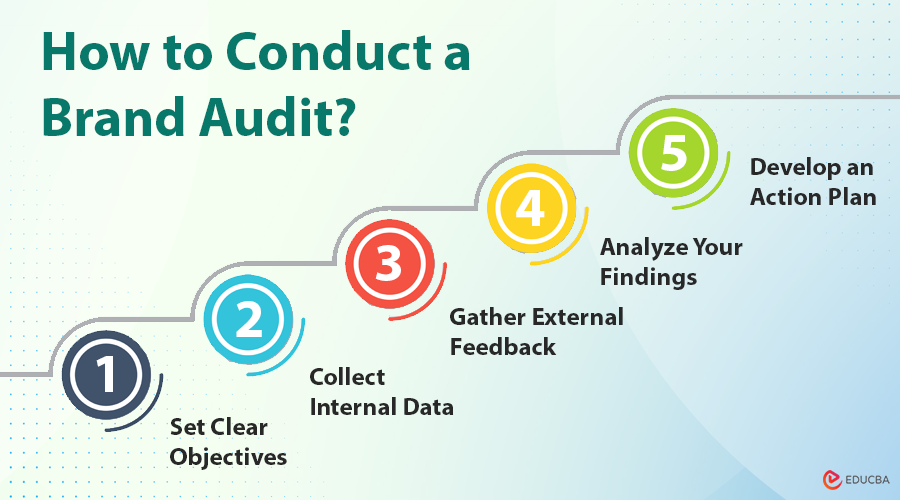
How to Conduct a Brand Audit?
Conducting a brand audit involves a clear, step-by-step process. By following these five key stages, you can gain meaningful insights, spot improvement opportunities, and strengthen your overall brand strategy.
Step 1: Set Clear Objectives
Before diving in, define what you want the audit to achieve.
Ask yourself:
- Are you trying to understand how customers perceive your brand?
- Do you want to assess the internal alignment of your brand values?
- Are you measuring the effectiveness of your marketing efforts or brand visuals?
- Clear objectives will focus your audit and make the results more actionable.
Step 2: Collect Internal Data
Start by analyzing what you already have.
- Review internal documents, such as brand guidelines, mission and vision statements, company values, and core messaging.
- Examine marketing materials, past campaigns, internal communications, and onboarding documents to identify areas for improvement.
- Interview internal stakeholders, leadership, marketing, sales, and frontline employees to assess their understanding of the brand.
This step ensures your internal brand foundation is solid and consistent.
Step 3: Gather External Feedback
Next, gather insights from the outside world, including your audience and competitors.
- Customer Feedback: Utilize surveys, interviews, reviews, and testimonials to gauge customers’ perceptions of your brand.
- Social Listening: Monitor discussions across social media, forums, and review sites to track brand mentions and gauge public sentiment.
- Competitor Analysis: Evaluate competitors’ messaging, visuals, and positioning. What are they doing better or worse?
External feedback helps you compare your brand’s intentions with how it’s received.
Step 4: Analyze Your Findings
Now it is time to connect the dots.
- Compare your intended brand identity with how it is perceived internally and externally.
- Identify where your messaging, visuals, or customer experience falls short.
- Look for patterns to see what is working well and what needs immediate attention.
- This analysis forms the core of your audit insights, revealing where adjustments are required.
Step 5: Develop an Action Plan
Turn your findings into a concrete strategy.
- Outline steps to fix inconsistencies and improve weak areas.
- Set priorities based on business goals—whether it’s updating visuals, retraining staff, or realigning messaging.
- Assign ownership, timelines, and KPIs to track progress.
Your action plan ensures the audit leads to real, measurable improvements in your brand performance.
Tools for Performing a Brand Audit
The right tools make your brand audit more efficient, accurate, and data-driven. Here are some powerful platforms that help you assess different aspects of your brand performance:
1. Google Analytics
Utilize Google Analytics to analyze how users engage with your website.
- Track website traffic, bounce rates, page views, and session durations.
- Understand user behavior, top-performing content, and conversion paths.
- Identify pages with high exit rates to spot potential UX or messaging issues.
This tool provides valuable data to assess how well your website supports your brand experience.
2. SEMrush or Ahrefs
These SEO platforms help you measure your online visibility and compare it with that of your competitors.
- Analyze keyword rankings, backlink profiles, and domain authority.
- Review how well your content performs in search engines.
- Benchmark against competitors to identify gaps in SEO and content strategy.
Utilize these tools to ensure your brand maintains a strong presence in organic search results.
3. Hootsuite or Sprout Social
These tools for managing social media help you monitor audience interactions and understand public perception of your brand.
- Monitor likes, shares, comments, and follower growth across platforms.
- Schedule and analyze posts for consistency in tone and branding.
- Determine which channels generate the highest levels of engagement and contribute most to building brand awareness.
Social media tools help you evaluate how your brand performs in public conversation.
4. SurveyMonkey or Typeform
These platforms let you gather structured customer feedback.
- Create surveys to assess customer satisfaction, loyalty, and brand perception.
- Collect data on how your audience interprets your messaging and identity.
- Segment responses to discover insights by demographic or behavior type.
Customer feedback provides firsthand data on your brand’s actual impact in the real world.
5. Canva or Figma
Design tools like Canva and Figma help you review your brand’s visual consistency and ensure it remains consistent across all platforms.
- Compare design elements, such as logos, typography, and templates, across different platforms.
- Audit marketing collateral, social media graphics, and presentations.
- Ensure your brand guidelines are being applied correctly and uniformly.
Consistent visuals are key to maintaining a strong, recognizable brand identity.
6. Brandwatch
Brandwatch is an effective platform for monitoring your brand and engaging in social listening.
- It helps you track brand mentions across social media, news sites, blogs, and online forums.
- Gain insights into public sentiment to gauge how your brand is perceived.
- Spot emerging trends and potential concerns early, allowing you to protect your reputation and improve communication strategies.
Utilize Brandwatch to stay informed about public perception and track shifts in sentiment over time.
Key Components of a Brand Audit Report
A comprehensive brand audit report turns raw data into meaningful insights. It should offer a clear overview, detailed findings, and actionable next steps to guide your brand strategy. Below are the essential components every professional brand audit report must include:
1. Executive Summary
This section gives a snapshot of the entire brand audit.
- Summarize your goals, key findings, and recommended actions.
- Keep it concise yet insightful, so decision-makers can quickly grasp the overall outcome.
- It sets the tone and provides immediate clarity on the brand audit’s purpose and results.
2. Brand Objectives
Clearly outline the purpose of your audit.
- Were you evaluating customer perception, internal alignment, or market positioning?
- Clearly outline your brand’s vision of success for the future.
- This section ensures that every insight in the report ties back to a strategic goal.
3. Visual Identity Review
Assess how your brand looks across all platforms.
- Review logo usage, typography, color palettes, and imagery.
- Highlight any inconsistencies between digital and print materials.
- Include screenshots or design examples where necessary.
- This review ensures your brand visuals are consistent, professional, and on-brand.
4. Communication Analysis
Evaluate how your brand resonates with its target audience.
- Review messaging across your website, social media, email marketing, and advertisements to ensure consistency and coherence.
- Verify tone consistency, clarity, and alignment with the brand’s values to ensure a cohesive and authentic representation of the brand.
- This helps identify areas where your voice or message may need refinement.
5. Customer Insights
Present what your customers truly think and feel about your brand.
- Include survey data, testimonials, reviews, and NPS scores.
- Segment findings by audience type if possible (e.g., loyal vs. new customers).
- Highlight recurring themes, concerns, or praise.
- Understanding the customer experience is critical to shaping your brand strategy.
6. Competitor Benchmarking
Compare your brand’s performance to key competitors.
- Analyze brand positioning, visual appeal, messaging, and market share.
- Include charts or tables to showcase differences and similarities clearly.
- This section helps you identify what sets you apart, or where you are falling behind.
7. SWOT Analysis
Outline your brand’s current state using SWOT:
- Strengths: What does your brand do well?
- Weaknesses: Where are you underperforming?
- Opportunities: What gaps or trends can you take advantage of?
- Threats: What external factors could harm your brand?
- This framework guides strategic planning with a clear internal and external view.
8. Strategic Recommendations
Offer actionable, prioritized steps based on audit findings.
- Focus on improving weak areas, strengthening what works, and seizing new opportunities.
- Assign ownership, timelines, and measurable goals for implementation.
- This is the most valuable part of the report—where insights turn into impact.
Common Mistakes to Avoid
- Ignoring customer feedback: Failing to consider customer input can lead to blind spots in perception and experience.
- Focusing only on visuals: A strong brand is more than just a good-looking logo; neglecting messaging, tone, and user experience weakens the brand.
- Skipping competitor analysis: Without understanding your market landscape, you miss opportunities for differentiation and strategic growth.
- Overlooking employee alignment: If your team is not aligned with the brand’s values, internal confusion can negatively impact customer experience and brand credibility.
- Treating the audit as a one-time activity: Brands evolve. Failing to conduct regular audits risks falling behind in a fast-changing market.
Real-World Examples
Example 1: PepsiCo
- Challenge: Pepsi noticed a decline in engagement from younger consumers.
- Action Taken: They conducted a brand audit focusing on social media trends, cultural shifts, and evolving taste preferences.
- Outcome: Pepsi adjusted its brand positioning, launched healthier product lines, and tailored its marketing to align with Gen Z values, helping the brand reconnect with its youthful audience.
Example 2: McDonald’s
- Challenge: Perception of being unhealthy and outdated.
- Action Taken: Audited customer sentiment, competitor trends, and global brand consistency.
- Outcome: Introduced modern, eco-friendly restaurant designs, healthier menu items, and revamped advertising to highlight quality and freshness.
Final Thoughts
A brand audit is a powerful way to understand how your brand is performing both internally and externally. It helps identify gaps in consistency, communication, and customer experience, offering insights that align your brand with market expectations and business goals.
Regular audits keep your brand relevant, competitive, and trustworthy. By turning insights into action, you strengthen your identity, build loyalty, and position your brand for long-term growth.
Frequently Asked Questions (FAQ’s)
Q1. What is the difference between internal and external brand perception?
Answer: Internal perception reflects how your team views the brand—its values, mission, and culture. External perception is how customers and the market interpret your brand. A successful audit compares both to find alignment or gaps.
Q2. Is a brand audit the same as a rebrand?
Answer: No. A brand audit assesses your current brand’s performance. A rebrand may follow an audit if the findings reveal deep misalignments. However, not all audits lead to rebranding—many result in smaller, strategic adjustments.
Q3. How long does a brand audit typically take?
Answer: The timeline can range from a few days to several weeks, depending on the brand’s size, data availability, and the depth of the audit. A basic audit may take a week, while a comprehensive one can take a month or more.
Q4. Who should be involved in a brand audit?
Answer: A cross-functional team works best. Include marketing, sales, customer service, design, leadership, and even external consultants if needed. Their diverse perspectives ensure a more accurate and well-rounded audit.
Recommended Articles
We hope this comprehensive guide to brand audits helps you evaluate and enhance your brand’s performance effectively. For further reading, explore these articles for deeper insights into brand strategy, visual identity, customer experience, and market positioning.


