


What is Web 2.0?
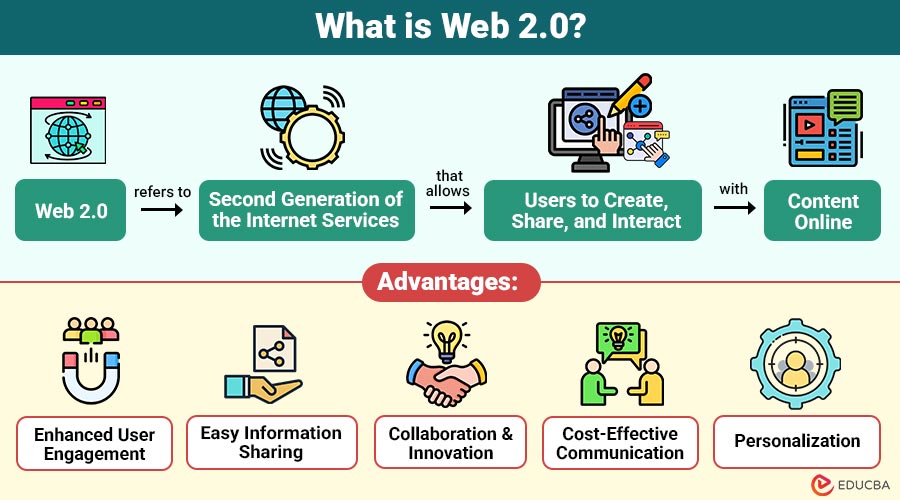
Web 2.0 refers to second generation of the internet services that allows users to create, share, and interact with content online. Unlike earlier versions of the web, where users were merely consumers of information, Web 2.0 empowers users to become contributors.
Key Characteristics:
- User-generated content
- Social networking and interaction
- Rich user interfaces
- Collaboration and sharing
- Dynamic and real-time updates
Table of Contents:
Key Takeaways:
- Web 2.0 transformed the internet from static pages into dynamic, interactive platforms driven by users.
- Users actively create, share, and collaborate on content, making the web more engaging and participatory.
- Web 2.0 platforms support real-time communication, enabling instant feedback, collaboration, and global connectivity among users.
- By empowering developers to create scalable, integrated apps using contemporary web technologies, it promotes innovation.
Evolution from Web 1.0 to Web 2.0
Here are the key differences highlighting how the web evolved from static information sharing to dynamic user-driven interaction:
1. Nature
Web 1.0 was primarily static, meaning websites displayed fixed content that rarely changed unless developers manually updated it. In contrast, Web 2.0 is dynamic, with content that updates in real time and adapts based on user interactions.
2. User Role
In Web 1.0, users were passive consumers—they could only read or view content, not contribute. With Web 2.0, users became active participants, able to create, share, and interact with the content online.
3. Content
Web 1.0 content was publisher-driven, created and controlled by website owners or organizations. Web 2.0 introduced user-generated content, where individuals can easily post blogs, comments, videos, and reviews.
4. Interaction
Interaction in Web 1.0 was very limited, mostly involving simple navigation or reading information. Web 2.0 enables high interaction, including commenting, liking, sharing, messaging, and collaboration.
5. Examples
Typical Web 1.0 examples include static informational websites or early company pages. Web 2.0 examples include platforms like Facebook, YouTube, and Wikipedia, where users actively contribute and engage.
6. Technology
Web 1.0 relied on basic technologies like HTML and simple CSS, with minimal scripting. Web 2.0 uses advanced technologies such as AJAX, APIs, and JavaScript frameworks to enable seamless, interactive experiences.
Key Features of Web 2.0
Here are the essential features that make Web 2.0 interactive, collaborative, and user-driven:
1. User-Generated Content
Users create, publish, and share blogs, videos, reviews, and posts, making platforms community-driven rather than relying solely on centralized content publishers.
2. Rich User Experience
Web 2.0 applications provide interactive, responsive interfaces with dynamic elements, improving usability, engagement, and overall user satisfaction across various digital platforms.
3. Social Connectivity
Users connect, communicate, and collaborate through social networks, forums, and messaging platforms, fostering relationships, information sharing, and community building globally online.
4. Collaboration
Web 2.0 tools enable multiple users to collaborate on shared documents, projects, and platforms in real time, improving productivity and teamwork efficiency.
5. Tagging and Folksonomy
Users organize and categorize content using tags rather than predefined systems, improving searchability, flexibility, and the ease of discovering relevant information online.
6. Cloud Computing Integration
Leverages cloud computing to store data and run applications online, allowing users to access services anytime without installing software locally.
7. APIs and Interoperability
APIs provide integration, automation, and improved functionality across various platforms and services by facilitating smooth communication and data sharing across various applications.
Technologies Behind Web 2.0
Web 2.0 is powered by a combination of technologies that enhance interactivity and usability.
1. AJAX (Asynchronous JavaScript and XML)
AJAX enables web pages to update content dynamically without full-page reloads, significantly improving speed, responsiveness, and the overall user experience.
2. JavaScript Frameworks
Frameworks like React, Angular, and Vue.js help developers build fast, scalable, and highly interactive user interfaces efficiently.
3. APIs (Application Programming Interfaces)
APIs enable different software systems to communicate, exchange data, and integrate functionality seamlessly, enhancing features and interoperability across platforms.
4. Cloud Computing
Users may quickly access apps and services from any location thanks to cloud computing, which makes it possible to store, manage, and process data over the internet.
5. RSS (Really Simple Syndication) Feeds
Without having to actively visit each platform, RSS feeds enable users to automatically receive updates from websites, blogs, and news sources.
Advantages of Web 2.0
Here are the major advantages that make Web 2.0 a powerful and transformative phase of the internet:
1. Enhanced User Engagement
Enables users to actively create, share, and interact with content, transforming them from passive viewers into engaged participants online.
2. Easy Information Sharing
Information can be shared instantly across multiple platforms, allowing users and organizations to reach wider global audiences quickly and efficiently online.
3. Collaboration and Innovation
Tools support real-time collaboration among teams, encouraging idea sharing, accelerating innovation, improving productivity, and enhancing problem-solving capabilities across industries.
4. Cost-Effective Communication
Businesses may communicate directly with customers using social media platforms, which significantly reduces marketing costs while boosting brand awareness, engagement, and feedback collection.
5. Personalization
Platforms improve user pleasure and increase user retention by using user data and behavior to provide tailored experiences, suggestions, and content.
Disadvantages of Web 2.0
Here are some key disadvantages associated with Web 2.0 technologies:
1. Privacy Concerns
Sharing personal information on Web 2.0 platforms increases risks of data breaches, identity theft, unauthorized access, and misuse by third parties.
2. Misinformation
User-generated content is not always verified, leading to the spread of inaccurate information, rumors, and fake news that can mislead users online.
3. Security Risks
Platforms are susceptible to cyberthreats that could compromise sensitive user data, including malware, phishing, hacking, and unauthorized access.
4. Content Overload
The massive volume of online content makes it difficult for users to filter out relevant, reliable information, leading to confusion and reduced productivity.
5. Dependence on Internet Connectivity
Most Web 2.0 applications rely heavily on continuous internet access, limiting usability in areas with poor connectivity or frequent network disruptions.
Use Cases of Web 2.0
Here are some practical use cases where Web 2.0 plays a significant role across different industries:
1. Business and Marketing
Companies use Web 2.0 platforms such as Facebook and Instagram to promote products, engage customers, and build brand awareness.
2. Education
Beyond typical classroom settings, online learning platforms allow teachers and students to successfully communicate, share information, and engage in interactive learning experiences.
3. Entertainment
Platforms like YouTube and Spotify provide access to videos, music, and games, enhancing digital entertainment experiences for users worldwide.
4. Healthcare
Platforms enable patients to share experiences, access medical information, consult communities, and improve awareness about health conditions and treatments.
5. E-commerce
E-commerce platforms like Amazon allow customers to review products, compare options, share feedback, and make informed purchasing decisions online easily.
Real-World Examples
Here are some common real-world examples that demonstrate how Web 2.0 enables interaction, collaboration, and user-generated content online:
1. Social Networking Sites
Users can connect, share information, and engage in real-time communication with people all over the world through platforms like Facebook and Twitter.
2. Content Sharing Platforms
Platforms like YouTube and Flickr enable users to upload videos, images, and articles for public consumption easily online.
3. Collaborative Tools
Teams can effectively work together in real time on shared documents and projects using programs like Google Docs and Microsoft Teams.
Final Thoughts
Web 2.0 transformed the internet by turning users into active participants, enabling interaction, collaboration, and content creation. It powers social media, online communities, and digital businesses. Despite concerns like privacy and security, it remains essential in shaping modern communication, learning, and innovation in an increasingly connected and interactive digital world.
Frequently Asked Questions (FAQs)
Q1. How is Web 2.0 different from Web 1.0?
Answer: Web 1.0 is static and read-only, while Web 2.0 is dynamic and allows user interaction and content creation.
Q2. Is Web 2.0 still relevant today?
Answer: Yes, most modern websites and applications are based on Web 2.0 principles.
Q3. What are the risks associated with Web 2.0?
Answer: Major risks include privacy issues, data breaches, misinformation, and cybersecurity threats, which can affect both individuals and businesses using these platforms.
Q4 What role do APIs play in Web 2.0?
Answer: APIs enable different applications to connect, share data, and integrate features, making Web 2.0 platforms more flexible and interconnected.
Recommended Articles
We hope that this EDUCBA information on “Web 2.0” was beneficial to you. You can view EDUCBA’s recommended articles for more information.


