


Introduction to Transformational Leadership
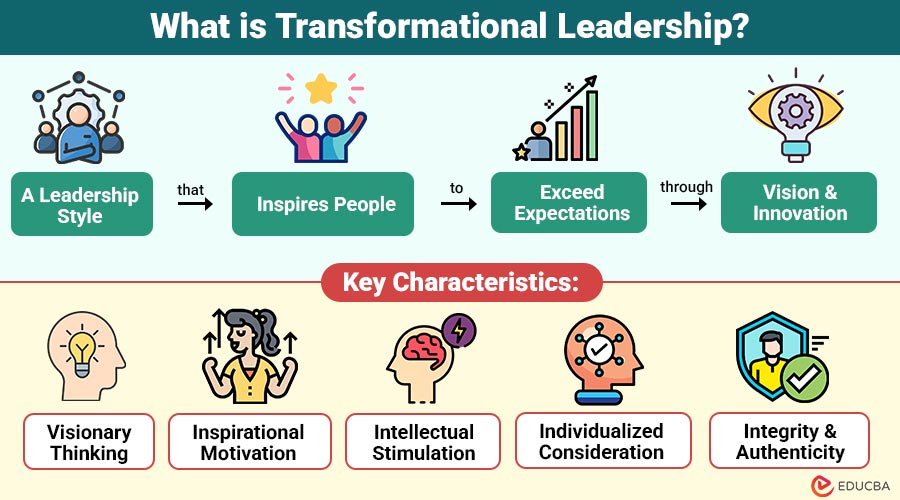
Transformational leadership is an active style that inspires people to exceed expectations through vision and innovation. Transformational leaders focus on vision, creativity, and fostering intrinsic motivation, rather than relying on rewards, penalties, and routine operations like transactional leaders do.
This leadership approach has gained immense relevance in the fast-evolving business environment. Organizations facing technological disruptions, global competition, and a demand for continuous innovation benefit from leaders who can create a culture of engagement, trust, and continuous learning. Transformational leaders not only focus on achieving business goals but also on shaping their teams’ personal growth, career trajectories, and sense of purpose.
Table of Contents
- Introduction
- Key Characteristics
- Transformational vs. Transactional Leadership
- Benefits
- How to Practice?
- Examples
- Challenges
- Transformational Leadership in Modern Organizations
Key Characteristics of Transformational Leaders
Transformational leaders possess distinct traits that enable them to inspire, motivate, and influence others profoundly. These traits are:
- Visionary thinking: Transformational leaders have a clear long-term vision and can communicate it compellingly. They focus on the bigger picture while aligning daily tasks with strategic objectives. Their vision often inspires teams to work beyond their comfort zones and strive for higher standards.
- Inspirational motivation: These leaders energize their teams through enthusiasm, optimism, and encouragement. By expressing confidence in the team’s abilities and showing unwavering commitment to the mission, they instill motivation that drives individuals to surpass goals.
- Intellectual stimulation: Transformational leaders challenge employees to think critically, explore new solutions, and question existing processes. They encourage new ideas and creativity, making the workplace safe for taking risks and treating mistakes as learning opportunities.
- Individualized consideration: They offer one-on-one guidance, understanding each team member’s strengths and areas for growth. By focusing on individual growth, transformational leaders build loyalty, enhance performance, and nurture future leaders.
- Integrity and authenticity: Transformational leaders lead by example, consistently demonstrating ethical behavior, transparency, and accountability. This builds trust and credibility, reinforcing a culture of honesty and mutual respect.
Transformational vs. Transactional Leadership
It is important to know the difference between transformational and transactional leadership to pick the best approach for each organization.
| Aspect | Transformational Leadership | Transactional Leadership |
| Focus | Vision, inspiration, innovation | Rules, processes, performance metrics |
| Motivation | Intrinsic: purpose, growth, engagement | Extrinsic: rewards and penalties |
| Employee Development | Encourages creativity, learning, and empowerment | Focuses on compliance and task completion |
| Organizational Culture | Builds trust, collaboration, and high morale | Maintains structure and stability |
| Change Orientation | Embraces change and drives innovation | Resists change; maintains status quo |
| Decision-Making | Collaborative, inclusive, and forward-looking | Top-down, directive, and reactive |
Transformational leadership thrives in dynamic environments that demand innovation, adaptability, and engagement, while transactional leadership performs best in stable, process-driven settings.
Benefits of Transformational Leadership
Organizations led by transformational leaders experience numerous advantages, both at the team and organizational levels:
- Enhanced employee engagement: Employees feel empowered, valued, and connected to the organization’s purpose, resulting in higher engagement, morale, and job satisfaction.
- Higher performance and productivity: By fostering motivation and creativity, transformational leaders drive individuals and teams to achieve exceptional results, often exceeding expectations.
- Stronger organizational culture: This leadership style promotes teamwork and trust, making the workplace positive and productive.
- Improved change management: Transformational leaders help employees navigate uncertainty, accept new initiatives, and adapt to evolving business needs, reducing resistance to change.
- Talent development and retention: By focusing on individual growth and mentoring, transformational leaders identify potential future leaders, enhance skills, and increase employee retention.
- Encourages innovation: Teams are more willing to experiment and propose novel ideas, which drives innovation and provides a competitive advantage in the marketplace.
How to Practice Transformational Leadership?
Adopting transformational leadership requires deliberate effort and continuous learning. Here are actionable strategies to practice this style effectively:
- Communicate a clear and compelling vision: Create a clear vision that matches your organization’s goals and share it regularly so the team understands and supports it.
- Lead by example: Demonstrate the behaviors, work ethic, and values you expect from your team. Authenticity inspires trust and encourages employees to emulate positive behaviors.
- Encourage innovation and creativity: Foster a safe environment where team members can share ideas, experiment, and take calculated risks without fear of failure.
- Provide personalized support and mentorship: Invest time in understanding individual strengths, weaknesses, and career goals. Offer guidance, feedback, and development opportunities to help employees grow.
- Celebrate achievements and milestones: Recognize both individual and team accomplishments to maintain motivation and reinforce the behaviors that lead to success.
- Promote collaboration and open communication: Encourage knowledge-sharing, cross-functional teamwork, and inclusive decision-making to strengthen relationships and enhance performance.
- Continuously seek feedback and adapt: Transformational leaders remain open to feedback from team members and peers, ensuring continuous personal and organizational improvement.
Examples of Transformational Leaders
Some of history’s most impactful leaders exemplify transformational leadership principles:
- Steve Jobs (Apple): Known for his visionary thinking, Jobs inspired innovation, creativity, and excellence in technology. His relentless pursuit of perfection transformed the personal computing and mobile industries.
- Nelson Mandela: Mandela led with integrity, vision, and empathy, inspiring a nation to embrace reconciliation and equality. His transformational approach united communities and drove social change.
- Oprah Winfrey: Through authenticity, empathy, and empowerment, Winfrey has motivated millions worldwide, encouraging individuals to pursue personal growth, overcome challenges, and reach their potential.
- Elon Musk (Tesla & SpaceX): Musk challenges conventional thinking, inspires innovation, and motivates teams to achieve ambitious goals, from electric vehicles to space exploration.
Challenges in Transformational Leadership
Despite its benefits, transformational leadership comes with potential challenges:
- Over-dependence on the leader: Teams may rely heavily on the leader’s vision and guidance, reducing autonomy and decision-making capacity.
- Risk of burnout: Continuous pursuit of innovation and high expectations can overwhelm both leaders and employees if not managed properly.
- Implementation resistance: Not all employees may embrace change or adapt to transformational practices, requiring careful change management and communication strategies.
- Balancing vision with practicality: Leaders must ensure ambitious goals are achievable and align with organizational resources and capabilities.
- Sustainability of influence: Transformational leadership requires constant engagement and energy, making it challenging to sustain over long periods without support systems in place.
Transformational Leadership in Modern Organizations
In the competitive, technology-driven, and globalized business environment, transformational leadership is essential for long-term success. Organizations across industries benefit from leaders who foster innovation, resilience, and employee engagement.
- Technology companies: Encourage creative problem-solving and rapid product innovation.
- Healthcare organizations: Inspire teams to adopt patient-centered care and continuous improvement.
- Educational institutions: Motivate educators to innovate teaching methods and embrace digital learning.
- Startups and entrepreneurship: Leaders inspire vision-driven teams, fueling growth and scalability.
Organizations that cultivate transformational leadership see improved retention, higher employee satisfaction, stronger innovation pipelines, and greater overall success.
Final Thoughts
Transformational leadership is more than a management style; it is a philosophy centered on vision, inspiration, and development. By motivating teams, fostering innovation, and emphasizing personal and professional growth, transformational leaders drive organizational success and create sustainable cultures of excellence.
Leaders who embrace this approach can transform not only their organizations but also the people within them, leaving a lasting legacy of engagement, innovation, and high performance.
Frequently Asked Questions (FAQs)
Q1. How does transformational leadership impact employee motivation?
Answer: Transformational leadership enhances intrinsic motivation; employees feel driven by purpose, belonging, and growth rather than external rewards. This leads to deeper engagement, creativity, and job satisfaction.
Q2. Can transformational leadership be learned or developed?
Answer: Yes. While some leaders may naturally possess transformational qualities, anyone can develop them through self-awareness, communication training, emotional intelligence development, mentorship, and consistent feedback.
Q3. How does transformational leadership affect organizational change?
Answer: Transformational leaders act as change champions, communicating a clear vision, managing resistance empathetically, and empowering employees to contribute ideas, making organizational transitions smoother and more sustainable.
Q4. How does transformational leadership differ from servant leadership?
Answer: While both emphasize empathy and team growth, transformational leaders focus on driving innovation and vision, whereas servant leaders prioritize serving and supporting others first, even before organizational goals.
Q5. What are the key skills transformational leaders should develop?
Answer: Essential skills include strategic communication, active listening, empathy, adaptability, problem-solving, and coaching. These enable leaders to motivate diverse teams and manage change effectively.
Recommended Articles
We hope this guide on transformational leadership helped you understand how leaders inspire change, drive innovation, and enhance team performance. Explore our related articles on:


