


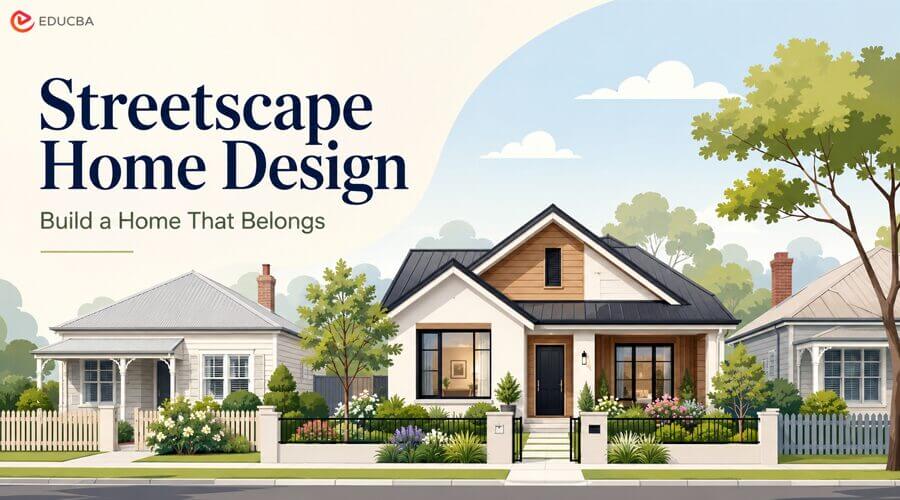
Some new homes seem to belong to their neighborhood from the moment they are built. Others stand out in ways that never quite feel right. The difference is rarely about architectural style or construction budget. Instead, it comes down to thoughtful streetscape home design decisions that create harmony with the surrounding homes while still expressing the owner’s personality.
A well-designed home should complement its surroundings rather than compete with them. By paying attention to scale, proportions, materials, and landscaping, a new home can feel like a natural part of the street while maintaining its own identity.
Streetscape Home Design Starts with the Street’s Rhythm
Every street has its own visual rhythm. The spacing between homes, the positions of front doors, rooflines, windows, and front gardens all create a pattern that people subconsciously notice.
Good home design does not mean copying neighboring houses. Instead, it means respecting the existing rhythm. Aligning the front setback with nearby homes, keeping roof heights in proportion, and using similar window spacing helps a new home feel connected to its surroundings.
This approach is especially important in a knock down rebuild Sydney project, where a modern home replaces an older one within an established streetscape. Since neighboring homes remain unchanged, any design decisions become immediately noticeable.
Balance Height and Bulk for Better Streetscape Home Design
A larger home does not have to dominate the street. Small design choices can significantly reduce its visual impact.
For example, stepping the upper floor back from the front façade creates a lighter appearance. Breaking up long exterior walls into smaller sections also makes the building feel less imposing.
The roof shape plays an equally important role. Choosing a roof form that relates to nearby homes creates visual harmony, while an overly dramatic roofline can make the house appear disconnected from the rest of the street.
These subtle adjustments improve both the home’s appearance and its contribution to the overall streetscape.
Use Materials That Reflect the Local Character
Every neighborhood develops its own architectural language over time. This may include particular brick colors, rendered walls, timber details, or common roofing materials.
Effective streetscape home design draws inspiration from this local palette rather than ignoring it. Combining familiar materials with modern finishes creates a home that feels contemporary while still respecting its surroundings.
The goal is not to replicate neighboring houses but to acknowledge the area’s character. Homes that completely disregard local materials often look out of place, even if the architecture itself is impressive.
Front Gardens Complete the Streetscape Home Design
The area between the front door and the footpath shapes how neighbors and visitors experience a home.
A high, solid fence can make a property feel closed off, while a lower fence, visible entry path, and thoughtfully designed landscaping create a welcoming connection with the street.
Simple elements such as a clearly visible letterbox, an inviting walkway, and well-maintained planting can have a greater impact than expensive façade treatments.
Where possible, retaining mature trees during a rebuild is one of the most valuable investments in home design. Established trees instantly connect a new home to an older neighborhood and soften the transition between old and new.
Good Streetscape Home Design is About Belonging, Not Blending In
Creating a home that fits its surroundings does not mean sacrificing individuality. In fact, the most attractive neighborhoods combine architectural variety with a shared sense of balance.
The objective is to design a home that reflects its owners while respecting the context in which it sits. This is very different from either copying neighboring properties or deliberately ignoring them.
Many homeowners find this process rewarding. Walking through the neighborhood, observing which homes feel welcoming and which seem out of place, often leads to valuable conversations with architects and designers. These observations help transform abstract design ideas into practical decisions.
Final Thoughts
The greatest compliment a new home can receive is that, after a few years, it simply feels as though it has always belonged there.
Thoughtful streetscape home design achieves exactly that. By considering the rhythm of the street, balancing height and scale, choosing materials that suit the neighborhood, and creating an inviting landscape, homeowners can build a house that stands out for all the right reasons one that enhances both its own appeal and the street’s overall character.
Recommended Articles
We hope this guide was helpful in creating a home that complements its surroundings. Explore these recommended articles for more insights into home design, architecture, exterior design, and knock down rebuild projects.

