


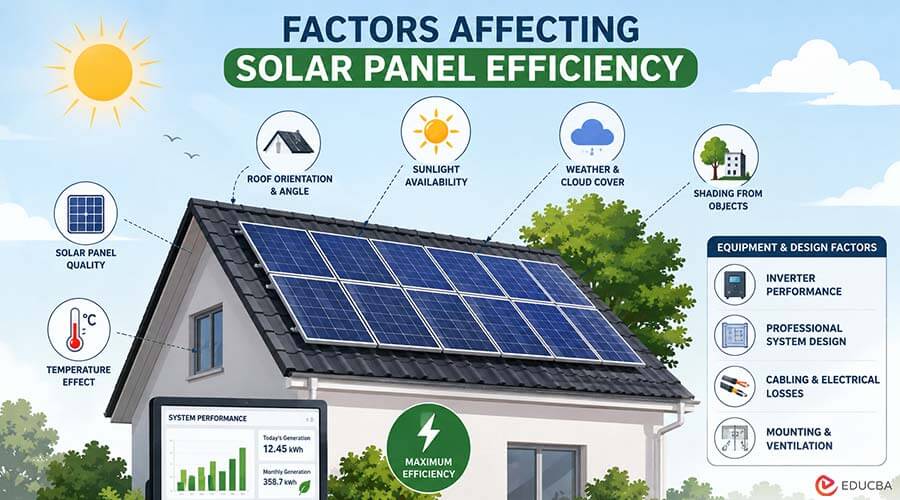
Solar panels’ energy output naturally varies depending on their environment. Panel quality matters, but sunlight, roof position, shade, temperature, system design, and maintenance all influence how much usable power reaches your property.
Understanding these factors helps you compare systems accurately and estimate expected solar panel efficiency. It also explains why two homes with similar panels can record very different results across the year, even when they sit within the same town or postcode.
Why Solar Panel Efficiency Matters?
Solar panel efficiency affects how much electricity a system can generate from the available roof space. Homeowners considering integrated solar roof panels should assess roof size, orientation, and shading before installation. Higher-efficiency panels can be particularly useful for smaller roofs.
Environmental Factors That Influence Solar Panel Output
A solar panel’s laboratory rating provides a useful comparison point. Real-world output, however, depends on the conditions surrounding the property and how those conditions change throughout the day.
Amount of Available Sunlight
Solar arrays produce electricity using daylight, not ambient heat. Strong direct sunshine usually produces more power, but panels can still operate during overcast weather because light still reaches the cells.
The UK has enough daylight to support productive solar systems. Annual solar exposure matters more than the conditions on one wet afternoon, so assessments should consider expected generation across a full year.
Roof Orientation
In the UK, a south-facing roof often receives the most total sunlight. That does not mean roofs facing other directions are automatically unsuitable for solar panel installation.
East-facing panels can generate more power in the morning, while west-facing panels favor the afternoon. A split east and west array may create a broader daily generation window for some households.
Roof Pitch and Panel Angle
A panel’s angle affects how directly sunlight reaches its surface. A suitable tilt can improve exposure while helping rainwater carry loose dust away from the glass.
No single angle suits every property. Roof orientation, latitude, surrounding buildings, mounting restrictions, and seasonal demand all influence the most practical panel angle for a particular installation.
Seasonal Changes
Solar generation rises and falls during the year. Longer days and stronger sunlight support higher summer output, while shorter winter days limit productive generation hours.
Any credible estimate should reflect this variation. Seasonal output forecasting gives the owner a clearer picture than a single daily figure and helps prevent unrealistic expectations about winter production.
Cloud Cover and Diffuse Light
Clouds reduce the intensity of sunlight reaching a solar array, but they do not stop generation completely. Modern photovoltaic cells can convert diffuse daylight into electricity, although overall solar panel efficiency will be lower on overcast days.
Weather changes from hour to hour, which makes individual daily readings unreliable for judging a system. Monthly and annual records provide a much more meaningful view of overall solar performance.
Shading from Nearby Objects
Shade is one of the most important site-specific concerns. Chimneys, trees, roof features, neighboring buildings, aerials, and even overhead cables can cast shadows across panels at different times.
Partial shade may affect more than the covered area, depending on panel wiring and system design. A proper shade assessment can guide panel placement and identify whether module-level optimization could reduce losses.
Equipment and Design Factors That Affect Efficiency
You can not control weather, but you can control equipment selection and system design. Good components must work together because one poorly matched part can limit the full array’s performance.
Solar Cell Technology
Most residential panels use monocrystalline silicon cells. They generally offer high efficiency and work well on roofs with limited installation space.
Panel specifications should be compared carefully. Module efficiency ratings show how much incoming solar energy a panel converts under test conditions, but they do not guarantee output in every setting.
Panel Wattage
Wattage describes a panel’s maximum rated power under controlled test conditions. It does not show how much electricity that panel will generate each day at a specific property.
A larger panel may carry a higher wattage rating without offering superior solar panel efficiency. Buyers should compare power per square meter, available roof space, total array capacity, and predicted annual generation.
Inverter Performance
Solar panels produce direct current electricity. Converting raw power into usable alternating current for home appliances makes choosing the right inverter size and grade essential for optimal output.
An unsuitable inverter may create unnecessary losses or restrict output during strong generation. Correct inverter sizing considers panel capacity, operating conditions, conversion efficiency, and equipment limits.
Professional System Design
A solar array requires more planning than placing panels wherever they fit. String configuration, cable routes, inverter limits, roof sections, shade patterns, and structural conditions must work together to maintain peak solar panel efficiency.
A site-specific solar panel installation assessment matches equipment to the property. Accurate system design can prevent avoidable losses before installation begins.
Cabling and Electrical Losses
Some energy is lost as electricity travels through cables and connections. Cable length, size, routing, joint quality, and operating current affect the scale of those losses.
Careful planning keeps voltage drop within suitable limits and avoids unnecessarily long cable routes. Secure connections also reduce the risk of faults, overheating, and inconsistent performance.
Panel Matching and Manufacturing Tolerance
Panels of the same model may not leave the factory with identical output. Manufacturers publish power tolerances to show how much each module can vary from its labeled rating.
Large differences between connected panels can restrict string performance. Closely matched solar panels help the array operate more consistently when all modules face similar sunlight and weather conditions.
Mounting and Ventilation
Solar panels heat up as they absorb sunlight. Leaving a suitable gap between the panels and roof allows air to circulate and carry away some of the accumulated heat.
Poor ventilation can raise cell temperature and reduce output, as excessive heat lowers solar panel efficiency. A suitable mounting system supports natural airflow behind the panels while securing the array against expected wind and weather loads.
Final Thoughts
Maximizing solar panel efficiency depends on sunlight, orientation, shade, temperature, equipment, and installation quality. The most efficient panel is not always right for every roof. Suitable components, realistic output estimates, regular monitoring, and careful system planning support reliable performance over time.
Recommended Articles
We hope this guide on solar panel efficiency helps you understand how environmental and technical factors affect system performance. Explore these recommended articles for more insights into solar technology, roof suitability, component selection, and renewable energy planning.

