


What is Silo Mentality?
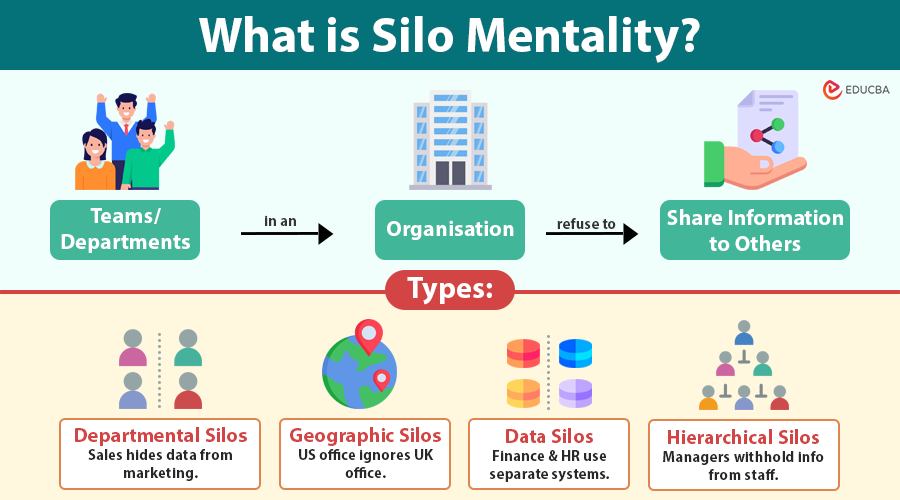
Silo mentality is a mindset that occurs when departments, teams, or groups within an organization refuse to share information, resources, or knowledge with others. Instead of collaborating, these groups prioritize their own goals over the organization’s broader success. Teams often adopt a “we vs. them” mentality, creating barriers to effective communication and teamwork.
For example, consider a company where the sales team collects valuable customer feedback but fails to share it with the product development team. As a result, the product team continues building features that customers do not need while the sales team struggles to close deals. This lack of sharing — each group working in its own “silo” — leads to wasted effort, poor customer experiences, and lost revenue.
Table of Contents
- Meaning
- Types
- Causes
- Psychological Reasons
- Impacts
- Recognizing Silo Mentality in Your Organization
- How to Break Down Silos?
- The Role of Technology in Breaking Silos
- How Does it Affect Innovation?
- Benefits of Overcoming
- Real-World Examples
Key Takeaways
- Silo mentality occurs when teams prioritize their own goals over the organization’s collective mission, blocking information flow and collaboration.
- Silos can take many forms, including departmental, geographic, data, and hierarchical divisions.
- Root causes include misaligned goals, poor leadership, weak communication systems, and psychological fears like status anxiety or resistance to change.
- Silos hinder efficiency, innovation, customer experience, and employee morale, potentially costing organizations millions of dollars annually.
- Solutions include aligning goals, promoting collaborative leadership, enhancing technology, and recognizing and rewarding teamwork.
- Breaking down silos is crucial for making faster decisions, fostering stronger innovation, and cultivating a healthier organizational culture.
Types of Silos in Organizations
Silos can appear in many forms. Here are the most common types:
- Departmental silos: Sales, marketing, production, and finance teams all work separately without cross-communication.
- Geographic silos: Regional offices or global branches that do not share learnings or data.
- Data silos: Different departments store customer or project data in separate systems with no integration between them.
- Hierarchical silos: Information stops at a certain management layer and never trickles down or across the organization.
Causes of Silo Mentality
Several factors contribute to the rise of silo mentality in organizations:
1. Departmental Goals Misaligned with Company Goals
When departmental KPIs conflict with company-wide objectives, teams naturally prioritize their targets.
2. Leadership Style
Leaders who fail to encourage transparency or model collaboration can foster silos.
3. Lack of Communication Channels
Outdated tools or missing processes for knowledge sharing allow silos to flourish.
4. Geographical or Cultural Separation
Remote offices, different time zones, or varied cultures can reinforce isolation between teams.
5. Competitive Internal Culture
If employees are rewarded only for individual or team performance, they may withhold information that could benefit others.
According to Harvard Business Review, 67% of employees believe their company’s hierarchy causes silo thinking, as information often stops at a manager or department head rather than flowing freely throughout the organization.
Psychological Reasons Behind Silo Mentality
Silos are not just structural — they are also psychological. Some hidden mindsets behind silos include:
- Fear of change: Employees may resist new ways of working because change feels risky.
- Group loyalty: Teams bond strongly and develop an “us first” loyalty that blocks openness.
- Status anxiety: Sharing resources or data can feel like giving away your power.
- Comfort with familiar routines: People tend to prefer what they know and resist opening up new processes to others.
Impacts of Silo Mentality
Silo mentality can have widespread and damaging consequences across the organization:
- Reduced efficiency: Redundant work occurs when teams do not share updates or resources.
- Slower innovation: Silos hinder cross-functional problem-solving, a crucial aspect of innovation.
- Poor customer experience: Customers receive inconsistent messages or poor service when departments fail to coordinate their efforts.
- Low employee morale: Frustration grows among employees who feel disconnected or undervalued.
- Missed opportunities: Potential growth avenues often go unexplored because knowledge remains locked within a single group.
In fact, a Deloitte study reports that organizations with strong cross-functional collaboration are 36% more likely to outperform their peers financially.
Recognizing Silo Mentality in Your Organization
Here are some red flags that may indicate silos are developing:
- Teams working on duplicate projects without knowledge of each other
- Resistance to cross-department meetings
- Conflicting KPIs among teams
- Lack of shared data systems
- Complaints of poor communication in employee surveys.
How to Break Down Silos?
Breaking the silo mentality takes conscious effort, leadership commitment, and supportive culture change. Here is how organizations can address it:
1. Align Goals Across Departments
Create shared objectives that align with and reinforce the company’s mission. For example, tie department incentives to overall customer satisfaction rather than individual sales numbers alone.
2. Strengthen Communication
- Invest in collaborative tools like Slack, Teams, or project management platforms
- Hold regular cross-functional meetings
- Encourage informal catch-ups to build trust.
3. Foster Collaborative Leadership
Leaders should lead by example, practicing transparency and rewarding collaborative behaviors.
4. Implement Cross-Functional Teams
Bringing people together from different departments on joint projects is a proven way to build bridges and foster collaboration.
5. Break Down Data Silos
Centralize data in shared systems so everyone works from a “single source of truth.”
6. Recognize and Reward Collaboration
Shift recognition systems to highlight teamwork and knowledge-sharing behaviors.
According to Gartner, companies that actively encourage cross-departmental collaboration improve productivity by up to 25%.
The Role of Technology in Breaking Silos
Technology can be a powerful enabler. Here is how:
- Cloud collaboration: Allow instant file-sharing and live edits
- Centralized data hubs: One data source avoids duplication
- Unified communication tools: Chat, video calls, and file sharing in one place
- Project management platforms: Tools like Asana, Jira, or Trello streamline cross-team workflows
How Silo Mentality Affects Innovation?
Innovation thrives on diverse thinking. Silos kill it by:
- Limiting idea-sharing
- Preventing failures from being openly discussed and learned from
- Slowing the feedback loop needed to test and refine products
- Isolating talent instead of creating diverse problem-solving teams.
Breaking down silos enables organizations to adapt quickly to changing markets, explore new opportunities, and remain competitive.
Benefits of Overcoming Silo Mentality
By addressing the silo mentality, organizations can experience:
- Faster decision-making
- More cohesive branding and customer experience
- Higher employee engagement
- Improved adaptability to market changes
- Enhanced innovation pipelines.
Real-World Examples
- Microsoft: Under Satya Nadella, Microsoft broke down its product-based silos by promoting a “One Microsoft” culture. This shift improved collaboration between cloud and Windows teams, fueling revenue growth.
- Amazon: Amazon uses cross-functional “two-pizza teams” to ensure diverse skills and knowledge flow freely across the organization, avoiding silos despite its massive size.
- Spotify: Spotify utilizes squads and tribes to combine diverse skills, fostering knowledge sharing and accelerating product innovation.
Final Thoughts
Silo mentality is one of the most common yet most damaging cultural barriers in organizations today. Breaking down silos requires intentional leadership, well-aligned goals, modern communication systems, and a culture that values transparency and teamwork.
In an era where innovation and agility are essential for survival, dismantling silo mentality is not just a “nice-to-have” — it is a business necessity.
Frequently Asked Questions (FAQs)
Q1. What role do HR policies play in preventing silos?
Answer: HR can shape performance evaluation, recognition, and reward systems to emphasize teamwork and cross-functional success, discouraging siloed behaviors.
Q2. Is silo mentality only a problem for large corporations?</strong
Answer: No. Even small businesses can develop silos if there is no intentional effort to promote open collaboration and communication across roles.
Q3. How do mergers and acquisitions create or worsen silos?
Answer: After a merger or acquisition, former rivals or independent teams may cling to their old ways of working, creating new silos. Leadership must actively integrate processes, tools, and cultures to break them down.
Q4. How often should companies assess for silo mentality?
Answer: It is good practice to review collaboration and communication practices at least once a year through employee surveys, 360-degree reviews, or collaboration audits.
Q5. Can performance reviews help identify silo mentality?
Answer: Yes. During performance reviews, managers can assess how well employees collaborate beyond their immediate team, identifying behaviors that indicate silo thinking.
Recommended Articles
We hope this guide on silo mentality helps you identify and overcome barriers to collaboration in your organization. Explore these recommended articles for more insights into teamwork strategies, organizational culture, and effective leadership practices.

