


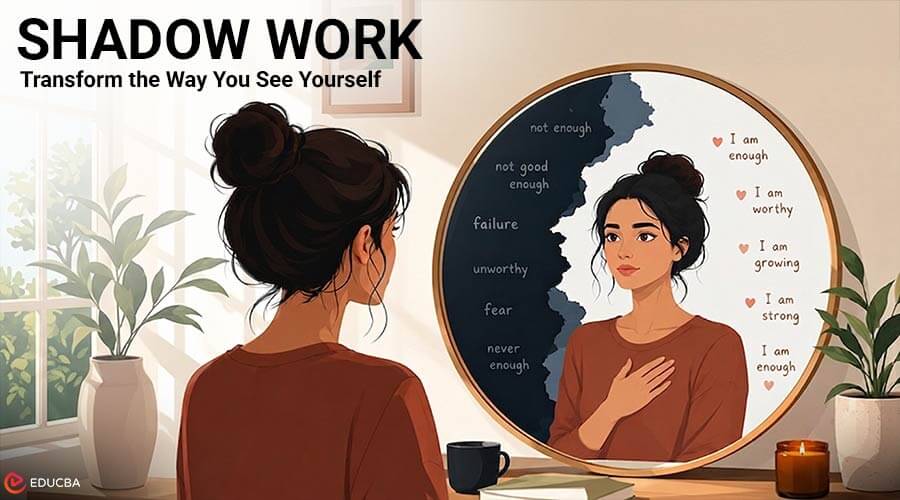
You may judge yourself more harshly than you realize. Maybe you look back on the things you said or did wrong, doubt your value, or see some emotional responses as who you are. Over time, these thoughts can shape how you see yourself, even when they do not reflect the complete picture. In many cases, these beliefs are not so much about you but about unconscious patterns. Identifying those hidden patterns can help you better understand how you think, feel, and respond. Shadow work involves making these suppressed emotions, limiting beliefs, and unconscious behaviors conscious.
As you gain a deeper understanding of yourself, you can begin replacing self-criticism with self-acceptance and develop a more authentic view of who you are. This article explains how shadow work can change the way you see yourself by helping you uncover unconscious patterns, challenge limiting beliefs, and build a healthier relationship with yourself.
How Shadow Work Can Transform the Way You See Yourself?
1. Recognize Unconscious Patterns That Shape Self-Image
Your self-image is not necessarily your true self. Numerous beliefs, emotional experiences, and learned behaviors operate in your unconscious and shape much of your identity. Shadow work helps you discover these unconscious patterns and understand how they shape your thoughts and behaviors. These unconscious patterns are usually manifested in your everyday life. For example, you may not speak up out of fear of rejection, doubt your abilities even when you do a good job, or constantly try not to disappoint everyone.
Although these responses may feel natural, they are often founded on previous life experiences rather than who you truly are. The more you begin to realize that these patterns are not actually you, the more you begin to free yourself from your automatic reactions. As a result, this transition helps you view yourself more realistically while also supporting emotional healing and personal growth.
2. Challenge Limiting Beliefs About Yourself
Your self-perceptions affect your self-confidence, relationships, and your everyday choices. Thoughts like “I am not good enough” or “I have to be perfect” may feel true, but they are often shaped by past experiences rather than your present reality. Shadow work enables you to challenge and question these beliefs rather than accepting them as truths.
As you explore the roots of your self-doubt, you can replace limiting beliefs with healthier, more balanced perspectives. Likewise, meditation and mindfulness practices lead to greater emotional awareness by helping you become more attuned to your inner emotional states. Similarly, shadow work follows a comparable process, focusing on changing patterns of self-perception.
3. Accept Hidden Parts Without Judgment
Shadow work can change the way you see yourself by helping you accept the parts of yourself that you have rejected or hidden. Unexpressed emotions such as anger, fear, sadness, or disappointment can keep impacting your thoughts and behaviors until they are addressed. You start to change your point of view as you become aware of these emotions without judging yourself.
Rather than considering challenging emotions as weaknesses, you can embrace them as cues for unfulfilled needs or unresolved experiences. This shift encourages greater self-compassion. Self-acceptance does not mean that you must excuse unhealthy behaviors. Instead, it means recognizing that your feelings and experiences are part of your individual journey, allowing you to develop a more authentic and balanced sense of self.
4. See Yourself With Greater Clarity
When you first start observing unconscious habits and challenge your restrictive beliefs, you begin to take yourself more seriously and with a gentler heart. You no longer have to use your feelings as the sole test of your character, and you start perceiving the distinction between the conditioning of the past and the one you are presently. Self-knowledge will also influence your response in day-to-day interactions. You can take time, analyze, and make conscious judgments rather than have automatic responses to reproach, rejection, or perplexity.
This transformation slowly develops self-confidence, emotional resilience, as well as better relationships. Research has shown that self-compassion plays an important role in emotional well-being. Furthermore, changes in self-compassion are positively correlated with improvements in emotional functioning and emotional regulation. Since shadow work fosters self-awareness and self-acceptance, it can reinforce a more positive self-image and sustainable personal development.
5. Build Authentic Self-Perception
Shadow work creates lasting change by transforming the way you relate to yourself. The more aware you become of your unconscious processes, the less you allow fear, shame, or self-doubt to influence you. Rather, you start to perceive yourself as a whole individual, with your weaknesses and strengths, and the ability to adapt. This change in attitude affects your daily life. You might become more confident about articulating your needs, creating healthy boundaries, and working toward meaningful goals.
Instead of feeling like you need to be constantly validated by others, you start believing in yourself and making choices that stay true to who you are. Engaging in shadow work with a coach can help you discover deeper patterns that are hard to see on your own. Guided support encourages honest self-reflection and greater self-awareness while helping you integrate hidden parts of yourself. As a result, this process can strengthen your self-image and support your emotional and personal development over time.
Final Thoughts
Shadow work can change the way you see yourself by helping you uncover unconscious patterns, question limiting beliefs, accept hidden parts of yourself, and develop greater self-awareness. As you understand the experiences shaping your thoughts and behaviors, you begin replacing self-criticism with self-acceptance and creating a more authentic view of who you are. Start by paying attention to recurring emotional reactions and the beliefs connected to them. Whether you begin through personal reflection or guided shadow work coaching, every step toward greater self-awareness brings you closer to emotional healing, authentic self-expression, and lasting personal development.
Recommended Articles
We hope this guide on shadow work helps you deepen your self-awareness and personal growth. Check out these recommended articles for more insights on emotional healing and self-development.

