


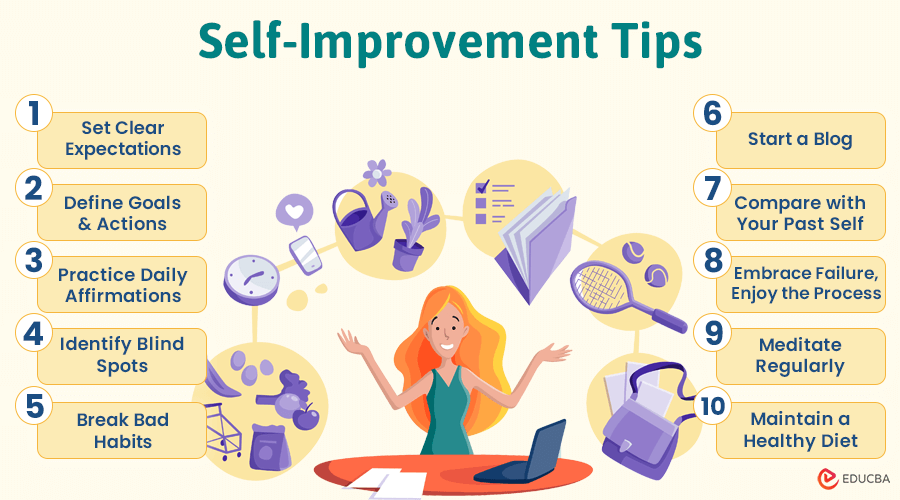
Self-Improvement Tips
Self-improvement tips mean working on yourself to become a better person. This involves learning new things, developing good habits, and changing your mindset. To improve yourself, set goals and take consistent action to achieve them. This can include personality development, goal setting, time management, organizational skills, leadership skills, mind power, and visualization skills. It can help you make positive and essential changes in every aspect of your life. It can also help you turn negative thoughts into beliefs that inspire and empower you.
What is Self-Improvement?
Self-improvement refers to the intentional effort to become a better version of oneself by improving knowledge, skills, habits, behavior, and mindset. It involves identifying areas that need improvement and taking practical steps to make positive changes. Self-improvement can include learning a new skill, developing better routines, improving communication, managing stress, setting goals, or becoming more aware of personal strengths and weaknesses.
Areas of Self-Improvement
Self-improvement covers different areas of life, depending on an individual’s needs, interests, and goals. Focusing on these areas can help people develop useful skills, improve daily habits, strengthen relationships, and achieve personal and professional growth.
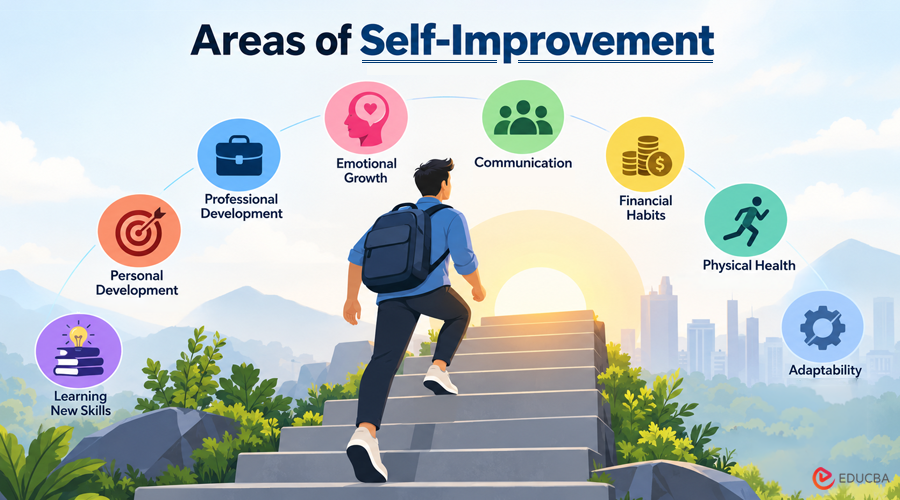
Personal Development and Self-Awareness
Personal development and self-awareness focus on understanding your strengths, weaknesses, emotions, values, and behavior. Greater self-awareness can support better decision-making, strengthen confidence, clarify goals, and highlight opportunities for improvement. Regular self-reflection and constructive feedback can support continuous personal growth.
Professional Development
Professional development involves building skills that improve workplace performance and career opportunities. Developing skills in communication, leadership, teamwork, problem-solving, and time management can improve an individual’s effectiveness and performance at work.
Emotional Growth
Emotional growth involves understanding feelings and responding to challenging situations in a healthy way. Learning to manage frustration, handle stress, and remain calm during disagreements can improve decision-making and relationships.
Communication and Social Skills
Communication and social skills help individuals express their thoughts clearly, listen actively, build relationships, and interact effectively with others. Developing empathy, respecting different viewpoints, and practicing effective communication can strengthen personal and professional relationships while improving teamwork and collaboration.
Financial Habits
Financial self-improvement involves building responsible money-management habits. Creating a budget, limiting unnecessary expenses, saving regularly, and setting financial goals can help individuals make informed financial decisions.
Physical Health and Stress Management
Physical health and stress management are important for maintaining energy, focus, and overall well-being. Regular exercise, balanced meals, adequate sleep, hydration, and activities such as meditation, walking, or journaling can help manage daily stress. Maintaining healthy routines can also improve productivity and make it easier to handle everyday challenges.
Adaptability and Flexibility
Adaptability helps individuals respond effectively to changes in their personal lives, workplaces, and environments. Being open to new ideas, learning unfamiliar skills, and adjusting plans when necessary can make it easier to manage unexpected challenges.
Self-Discipline
Self-discipline involves following through on commitments, maintaining routines, and resisting distractions. Setting clear priorities, completing tasks on time, and building consistent habits can help individuals stay focused on their long-term goals.
Learning New Skills
Learning new skills encourages personal growth and helps people adjust to changing needs. Whether you are learning a new language, building computer skills, exploring a creative hobby, or completing a professional course, skill development can expand your knowledge, build confidence, and create new opportunities.
Improving these areas does not require changing everything at once. Choosing one or two priorities and working on them consistently can make self-improvement more manageable and help individuals develop lasting habits.
Why is Self-Improvement Important?
Self-improvement supports personal growth and helps individuals handle everyday challenges more effectively. It can also improve confidence, relationships, productivity, and career development.
key Benefits
- Builds confidence: Developing new abilities and facing challenges can help build greater self-confidence.
- Improves productivity: Better planning and habits can help individuals use their time more effectively.
- Supports career growth: Developing professional and interpersonal skills can create new career opportunities.
- Encourages a positive mindset: Working on personal habits can promote a more constructive approach to challenges.
- Improves relationships: Better communication and emotional awareness can strengthen personal and professional relationships.
- Creates healthy habits: Consistent routines can support physical and mental well-being.
Benefits of Self-Improvement Tips
Self-improvement tips help individuals recognize their professional limitations, develop useful skills, and improve their workplace performance. Setting personal goals can also encourage people to explore new hobbies, interests, and skills while building confidence. GlobalTree’s expert guidance and personalized support, individuals can identify areas for improvement and make positive changes in their personal and professional lives.
Effective Self-Improvement Tips
Personal development covers reliable techniques and tricks to motivate your progress. If you want those ideas, the tips and tricks below will help you kickstart your development efforts. They also boost your self-confidence. Incorporate these tips into your daily life to reach a new level of satisfaction. These 10 tips and guidelines will help you build self-improvement skills and achieve your personal development goals.
1. Expect to Accomplish
Many people believe that most winners are more intelligent than they are, but that is not true. The real trick is to anticipate winning before it has happened. This method does not stress how essential it is, because your mindset strongly affects whether you reach your goals and dreams. It does not say you need self-improvement skills because determined, bold hope goes beyond having enough knowledge or skills. It will come with persistence and conviction.
2. Write Specific Goals and Actions
Writing goals is essential if you want to achieve them sooner. Dreaming is great, but execution is essential. Every written objective should direct you to a specific long-term purpose. Putting pen to paper can quickly clarify your aim and career goals. This unique idea helps you develop your skills and personality. It also plays a vital role in self-improvement so that you can follow it without hesitation.
3. Everyday Affirmations
Building a strong habit of reading positive regular affirmations can encourage positive thinking, strengthen self-belief, and support a more constructive mindset over time. Along with this, it ultimately changes the everyday activities of your life.
Most people find this idea works best when they do it in the morning and before bed. You can develop your inner self effectively by following this self-improvement idea daily. To enjoy the benefits, follow this habit regularly. Consistent practice can help you achieve the desired results faster.
4. Identify your Blind Spots
Most people try to develop self-development skills or a personal development plan, but they fail for some reason. Scientifically, blind spots are not visible. Finding your blind spots helps you identify areas to develop and improve. This helpful exercise helps you identify every person, event, or thing that triggers you on a particular day. A trigger makes you feel affected, weird, or annoyed.
It is a fun exercise because it helps you find new things and details about yourself. These new insights can benefit you and support your self-improvement. Once you find out your blind spots, you can try to avoid them ultimately. Various approaches can help you recognize and address blind spots, allowing you to choose the method that suits you best and supports growth in different areas of your life.
5. Unhealthy Habits
Are there some bad habits or activities you can drop? Not exercising? Slouching? Smoking? Nail biting? Oversleeping? Stopping bad habits is essential because it supports self-improvement. Every habit change opens up new possibilities. You can remember the health benefits you gain from quitting smoking. You can identify your bad habits and stop them from holding you back. This effort will help you reach your personality-development goal sooner.
6. Compare Yourself with Yourself, not Others
Some people compare their self-improvement skills and earnings with others to improve themselves. This inappropriate comparison process can hurt your success and kill your motivation. Instead, focus on your results and yourself. Reviewing your results is essential, so you can focus on where you have made mistakes earlier. The valuable research helps you to avoid similar missteps in the future. It is also an excellent motivator for people who want to track their improvement.
7. Learn From Failure
Failure is a natural part of learning and personal growth. Instead of allowing setbacks to reduce your motivation, use them to understand what went wrong and what you can do differently next time. Adjust your approach, learn from your mistakes, and try again with a better plan. It is also important to take regular breaks when working toward a goal. Giving yourself time to rest can help you regain focus, manage stress, and keep going with renewed energy.
8. Meditation
Meditation is one of the most popular and essential practices for relieving stress and tension. Reflection is a powerful stress reliever with unique benefits. Meditation not only brings you health benefits but also aids in avoiding anxiety and worries. These benefits clear your mind of unwanted negative thoughts and help you feel more relaxed. These benefits can lead to restful sleep and a peaceful mind.
9. Maintain Healthy Daily Habits
A healthy diet helps you eat breakfast and lunch at the appropriate time. A proper intake helps you maintain a healthy lifestyle. You can include simple exercises in your diet plan. Also, wake up early and exercise regularly. Eat fresh vegetables, fruits, leafy greens, dry fruits & nuts, and other homemade options. Healthy eating habits support a healthy life and make self-improvement more worthwhile. Moreover, avoid fast foods and artificially made recipes entirely.
How to Make Self-Improvement a Daily Habit?
Self-improvement works best when it becomes part of everyday life, not a short-term project. Start with one or two manageable changes instead of attempting to change everything at once. For example, spending 15 minutes reading, taking a short walk, planning the next day’s tasks, or learning a new skill each day can gradually become a regular habit. Consistency is more important than perfection. Missing a day does not mean the effort has failed. Focus on returning to the habit and moving forward.
Common Mistakes to Avoid in Self-Improvement
Personal growth can become challenging when expectations are unrealistic.
Avoid these common mistakes:
- Setting too many goals at once
- Expecting immediate results
- Ignoring rest and recovery
- Focusing only on weaknesses
- Following habits without understanding their purpose
A balanced approach helps you make steady progress while keeping expectations realistic.
Final Thoughts
Self-improvement is a continuous process that develops through small, consistent actions. Set realistic goals, build positive habits, and focus on steady progress rather than immediate results. With consistent effort and patience, small changes can lead to meaningful, lasting personal growth.
Frequently Asked Questions (FAQs)
Q1. What are self-improvement tips?
Answer: Self-improvement tips are practical strategies that help individuals develop better habits, improve their skills, build confidence, manage time, and achieve personal and professional goals.
Q2. How can I start my self-improvement journey?
Answer: Start by identifying one area you want to improve and setting a realistic goal. Build a simple daily habit, track your progress, and gradually introduce other positive changes.
Q3. How long does self-improvement take?
Answer: Self-improvement is an ongoing process, and the time required varies from person to person. Consistent effort and realistic goals can help you notice gradual improvements over time.
Q4. What are some effective self-improvement habits?
Answer: Effective self-improvement habits include reading regularly, setting clear goals, practicing positive affirmations, exercising, maintaining a healthy diet, learning new skills, and reflecting on personal progress.
Q5. How can self-improvement improve my career?
Answer: Self-improvement can strengthen communication, time management, leadership, problem-solving, and other professional skills. These improvements can help individuals perform better at work and prepare for new opportunities.
Recommended Article
We hope these self-improvement tips help you build better habits, boost your confidence, and grow personally. Explore these recommended articles for additional insights and useful strategies to support your personal and professional growth.

