


What is Revenue Attribution?
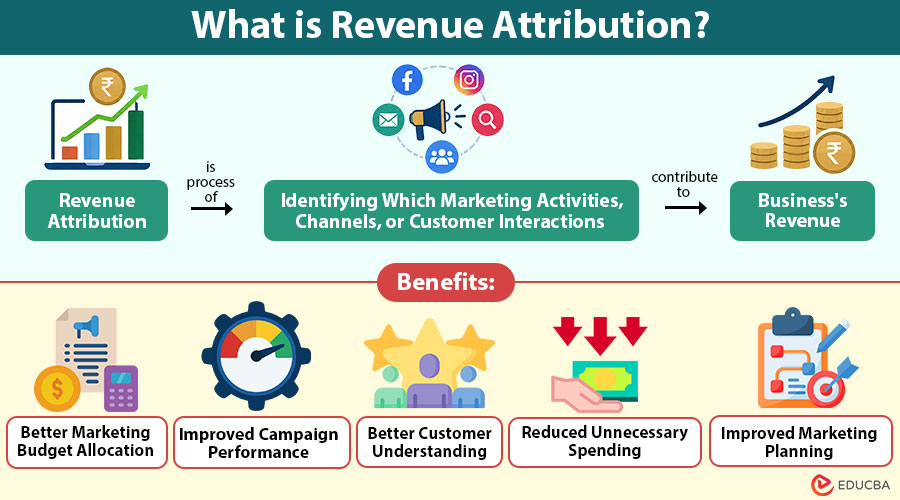
Revenue attribution is process of identifying which marketing activities, channels, or customer interactions contribute to a business’s revenue.
Imagine seeing an advertisement for a new smartphone on Instagram. You visit the company’s website but decide not to buy anything. A few days later, you receive an email offering a discount. You click the link, compare prices, and finally purchase the smartphone.
Now, which marketing activity helped the company make that sale? Was it the Instagram advertisement, the email, or the website? This is where revenue attribution becomes useful.
Businesses often use several marketing channels to attract customers. These include social media, search engines, email campaigns, paid advertisements, and websites. However, knowing which activities actually contribute to sales can be difficult.
Revenue attribution helps businesses understand how different marketing efforts influence customer purchases. With this information, companies can make better decisions about their marketing budgets and future campaigns.
Table of Contents:
Key Takeaways:
- Revenue attribution helps businesses identify marketing channels that contribute to sales and revenue generation.
- Different attribution models assign revenue credit based on customer interactions throughout their purchasing journey.
- Revenue attribution helps businesses improve marketing budgets, campaign performance, and overall customer journey understanding.
- Businesses can compare different attribution models to understand marketing performance and make informed decisions.
Why is Revenue Attribution Important?
Businesses spend money on marketing to attract customers and increase sales. However, not every marketing activity produces the same results. Some advertisements bring visitors to a website, while others encourage people to purchase products. Certain campaigns may also influence customers long before they make a final decision. Without revenue attribution, businesses may struggle to understand which marketing activities deserve more attention.
For example, a company might spend ₹50,000 on social media advertisements and ₹30,000 on email marketing. If most customers discover the company through social media but purchase after receiving emails, both channels may contribute to revenue.
Revenue attribution helps businesses study these connections. It also allows marketing teams to identify useful campaigns, reduce unnecessary spending, and improve their overall marketing strategies.
How Does Revenue Attribution Work?
Revenue attribution works by studying customer interactions before a purchase and assigning revenue credit to different marketing activities.
The process usually involves the following steps.
Step 1: Track Customer Interactions
Businesses collect information about how customers interact with advertisements, websites, emails, and other marketing channels before purchasing products.
Step 2: Identify Marketing Channels
The collected information helps businesses identify which channels customers used during their journey, such as social media, search engines, or email.
Step 3: Record Customer Purchases
Businesses connect available customer interaction data with completed purchases to understand which marketing activities may have contributed to revenue.
Step 4: Select an Attribution Model
Companies choose a suitable attribution model to decide how revenue credit should be distributed among different customer interactions.
Step 5: Analyze Revenue Contribution
Marketing teams review attribution reports to understand which channels receive credit for sales and how their campaigns are performing.
Step 6: Improve Marketing Decisions
Businesses use these findings to adjust campaign budgets, improve customer experiences, and focus on marketing activities that produce useful results.
Types of Revenue Attribution Models
Different revenue attribution models help businesses understand how marketing channels contribute to sales. Below are six commonly used models with examples.
1. First-Touch Attribution
First-touch attribution gives full revenue credit to the first marketing channel through which a customer discovers a business, even if other interactions follow.
2. Last-Touch Attribution
Last-touch attribution gives full revenue credit to the final marketing interaction before a customer makes a purchase, without considering any earlier marketing activities.
3. Linear Attribution
Linear attribution divides revenue credit equally among all recorded marketing interactions, giving every channel the same importance throughout the customer’s journey before purchasing.
4. Time-Decay Attribution
Time-decay attribution gives more revenue credit to marketing interactions closer to the purchase, while earlier interactions receive less credit for the same sale.
5. Position-Based Attribution
Position-based attribution gives higher revenue credit to the first and last marketing interactions, while dividing the remaining credit among interactions occurring between them.
6. Data-Driven Attribution
Data-driven attribution uses customer information and statistical methods to estimate how different marketing interactions contribute to sales, rather than following fixed credit percentages.
Example of Revenue Attribution
Consider an online clothing store that sells jacket for ₹3,000.
Before purchasing, a customer interacts with three marketing channels:
- First, the customer discovers the jacket through an Instagram advertisement.
- Next, the customer searches for the store on Google and visits its website.
- Finally, the customer clicks an email promotion and purchases the jacket.
The business can assign revenue credit differently depending on its attribution model.
| Attribution Model | Revenue Credit |
| First-Touch | Instagram receives ₹3,000 |
| Last-Touch | Email receives ₹3,000 |
| Linear | Each channel receives ₹1,000 |
| Position-Based | Instagram ₹1,200, Google ₹600, Email ₹1,200 |
This example shows how the same purchase can produce different attribution results. The total sale remains ₹3,000, but the distribution of revenue credit changes according to the selected model.
Benefits of Revenue Attribution
Revenue attribution offers several benefits for businesses looking to understand their marketing performance.
1. Better Marketing Budget Allocation
Businesses can identify channels receiving more revenue credit and use this information to make better decisions about future marketing spending.
2. Improved Campaign Performance
Marketing teams can compare campaign results, identify activities that appear effective, and make changes to improve their overall performance.
3. Better Customer Understanding
Revenue attribution helps businesses understand how customers interact with different marketing channels before deciding to purchase a product or service.
4. Reduced Unnecessary Spending
Businesses can identify campaigns that consistently receive little revenue credit and investigate whether their marketing budgets need adjustment.
5. Improved Marketing Planning
By studying previous customer journeys, companies can develop marketing strategies that better support customer discovery, engagement, and purchasing decisions.
Challenges of Revenue Attribution
Although revenue attribution is useful, businesses may face several challenges when collecting and analyzing customer information.
1. Incomplete Customer Data
Customers may use different devices or browsers, making it difficult for businesses to record every interaction before a purchase.
2. Complex Customer Journeys
Some customers interact with many advertisements, websites, and emails before purchasing, making revenue credit difficult to assign accurately.
3. Attribution Model Limitations
Different attribution models produce different results, and no single model can perfectly explain every customer’s purchasing decision.
4. Data Privacy Restrictions
Privacy regulations, tracking limitations, and customer consent requirements can restrict the information businesses collect for revenue attribution.
5. Offline Marketing Activities
Purchases influenced by physical stores, phone calls, events, or personal recommendations may be difficult to connect with digital marketing campaigns.
6. Difficulty Measuring Actual Influence
Revenue attribution assigns credit based on a chosen method, but this does not always prove that a particular advertisement caused a sale.
Difference Between Revenue Attribution and Conversion Attribution
The table below highlights the differences between the two:
| Revenue Attribution | Conversion Attribution |
| Focuses on revenue generated | Focuses on completed actions |
| Measures monetary value | Measures conversions such as sign-ups or purchases |
| Helps understand sales value | Helps understand conversion performance |
| Useful for revenue-focused decisions | Useful for campaign goal tracking |
Best Practices for Revenue Attribution
Following a few practical steps can help businesses use revenue attribution more effectively.
1. Set Clear Marketing Goals
Decide whether the main objective is increasing sales, attracting new customers, or improving revenue from existing customers.
2. Choose a Suitable Attribution Model
Select an attribution model based on the business’s customer journey, marketing channels, and available tracking information.
3. Maintain Accurate Customer Data
Regularly review customer information, campaign tracking, and sales records to reduce errors and improve the reliability of attribution reports.
4. Compare Different Attribution Models
Review results from multiple models to understand how revenue credit changes instead of depending entirely on one attribution method.
5. Review Attribution Reports Regularly
Check marketing performance over time to identify changing customer behavior and understand how different campaigns contribute to recorded revenue.
6. Combine Attribution With Other Measurements
Use attribution alongside customer acquisition costs, profit margins, and marketing experiments to make more informed business decisions.
Final Thoughts
Revenue attribution helps businesses understand which marketing activities contribute to sales. It shows how different channels influence customer purchases and helps companies make better marketing decisions. By choosing suitable attribution models and studying results, businesses can manage budgets, improve campaigns, understand customer behavior, and plan future marketing activities more effectively.
Frequently Asked Questions (FAQs)
Q1. What is the main purpose of revenue attribution?
Answer: Its main purpose is to help businesses understand marketing contributions and make better decisions about campaign performance and spending.
Q2. Which revenue attribution model is best?
Answer: There is no single best model. The right choice depends on the business, customer journey, marketing goals, and available data.
Q3. Can small businesses use revenue attribution?
Answer: Yes. Small businesses can use website analytics, campaign tracking, and sales records to understand which marketing channels receive revenue credit.
Q4. Does revenue attribution measure marketing ROI?
Answer: Not directly. Revenue attribution assigns sales credit to marketing activities, while marketing ROI also considers costs and financial returns.
Recommended Articles
We hope that this EDUCBA information on “Revenue Attribution” was beneficial to you. You can view EDUCBA’s recommended articles for more information.


