


The Rise of Real-Time Skills in Modern Careers
The modern job market is moving faster than ever. Traditional qualifications and static knowledge, while still valuable, are no longer enough to stay competitive. Employers now seek candidates who can adapt fast, handle new challenges, and work efficiently in real time. The ability to turn knowledge into practical, immediately applicable skills is what distinguishes successful professionals. This shift from courses to careers underscores one central truth: real-time skills have become the bridge between learning and lasting success.
The Changing Nature of Skills
For decades, formal education and professional training followed a predictable cycle. You studied, obtained qualifications, and applied that knowledge steadily throughout your career. Today, however, technology, business practices, and even entire industries can transform in a matter of months. Skills that once stayed relevant for years may now become outdated in weeks. As a result, employers prioritise adaptability, problem-solving, and practical know-how over theoretical knowledge alone. Real-time skills, those you can apply instantly and refine continuously, are emerging as the most valuable career assets.
Why Real-Time Skills Matter?
- Keeps You Employable: Automation, AI, and digital platforms are transforming industries. Workers who can quickly learn, unlearn, and reapply skills remain relevant even as roles evolve.
- Aligns With Employer Expectations: Businesses operate in environments that demand agility. Whether it is responding to customer feedback, adopting new software, or navigating market shifts, employees who can perform in real time provide a clear advantage.
- Drives Career Growth: Professionals with demonstrable, adaptable skills often move into leadership roles more quickly. Employers view them as proactive, resourceful, and capable of driving change.
- Bridges Education and Industry: Real-time skills connect the theory taught in courses with the practical demands of the workplace. For example, learning about data analysis in a classroom becomes far more valuable when paired with the ability to interpret live business data streams.
Technology as the Backbone of Real-Time Skills
Modern industries rely heavily on technology that delivers immediate insights and supports rapid decision-making. Data is central to this transformation. Businesses are no longer content with static reports; they demand real-time intelligence to stay ahead.
This is where platforms designed for streaming and processing data in motion become crucial. A streaming data platform enables companies to process, analyse, and act on data instantly, empowering employees to make informed choices on the spot. For professionals, developing the ability to work with such systems is no longer optional. It is an essential skill that links technical learning with immediate business impact.
How Learners Can Adapt Real-Time Skills?
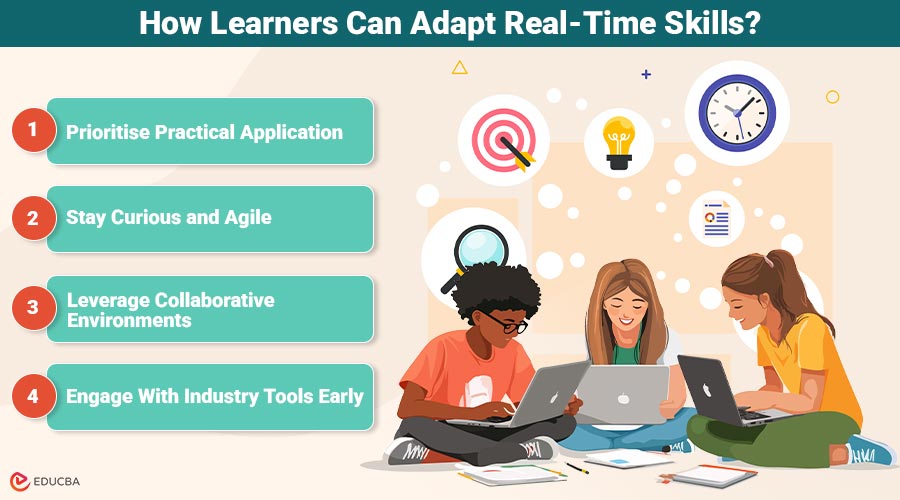
- Prioritise Practical Application: Seek out courses, workshops, or certifications that include real-world projects and simulations. The ability to apply what you learn under pressure matters more than memorising theory.
- Stay Curious and Agile: Real-time skills require a mindset of constant learning. Explore new tools, experiment with various approaches, and continually refine your knowledge.
- Leverage Collaborative Environments: Working with others exposes you to diverse skill sets and problem-solving methods, which can sharpen your own adaptability.
- Engage With Industry Tools Early: Whether it is data platforms, automation software, or AI-driven analytics, gaining hands-on experience with the technologies businesses rely on will give you a competitive edge.
Lessons for Business Leaders
Employers also have a key role in developing real-time skills. Companies that encourage continuous learning, provide access to advanced tools, and reward adaptability see greater innovation and employee engagement. By creating cultures that value skill application as much as skill acquisition, leaders ensure their workforce remains agile and future-ready.
Final Thoughts
The path from education to employment is no longer a straight line. In the market, real-time skills determine who thrives and who struggles to keep pace. For learners, it is about actively turning courses into practice; for professionals, continuously adapting; and for businesses, investing in technologies and cultures that foster agility. Real-time skills are not just a career advantage; they are the currency of modern success.
Recommended Articles
We hope this guide on real-time skills helps you advance your career. Explore these recommended articles for more tips and strategies to sharpen your skills.


