


What is Proration?
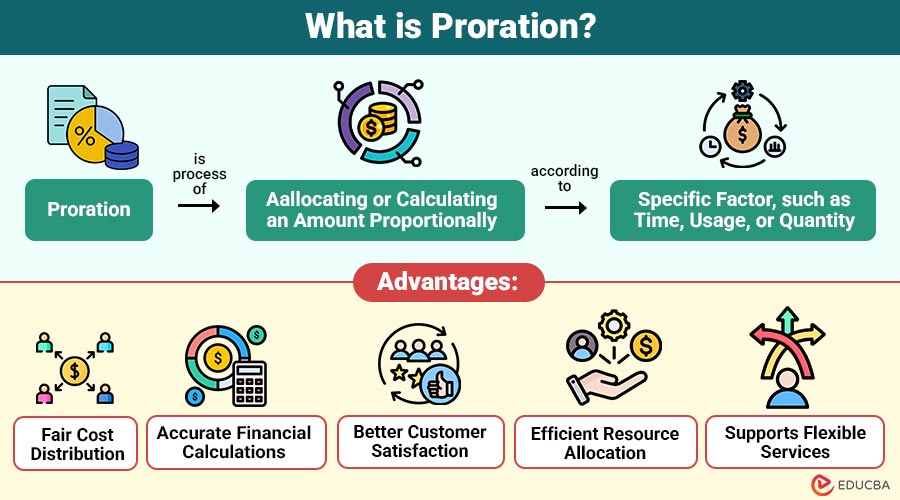
Proration is the process of allocating or calculating an amount proportionally according to a specific factor, such as time, usage, or quantity. In simple terms, proration means dividing an amount fairly based on actual usage or duration rather than charging the full amount.
For example, if a monthly rent is ₹30,000 and a tenant moves in halfway through the month, the landlord may charge only half the rent. This adjusted calculation is called proration.
Table of Contents:
- Meaning
- Importance
- Working
- Formula
- Types
- Common Areas Where Proration is Used
- Advantages
- Disadvantages
- Real-World Examples
Key Takeaways:
- Proration allocates costs, payments, or charges fairly based on actual usage, duration, quantity, or entitlement periods.
- Businesses use proration to improve billing accuracy, financial transparency, and equitable cost distribution practices.
- It helps prevent overcharging or underpayment by ensuring payments accurately reflect actual service usage.
- Flexible pricing models often rely on proration to accommodate upgrades, downgrades, cancellations, and partial periods.
Why is Proration Important?
Proration plays a vital role in ensuring fairness, accuracy, and transparency in financial calculations. Here are some key reasons why it is important:
1. Prevents Overpayment or Underpayment
It ensures that customers or employees pay and receive only the accurate amounts for the actual service periods used.
2. Ensures Fair Billing Practices
It creates fair billing systems by charging customers proportionally based on usage duration, service access, or entitlement periods.
3. Improves Accounting Accuracy
Helps businesses maintain accurate financial records by correctly calculating partial payments, revenues, expenses, and outstanding balances.
4. Supports Transparent Financial Management
It promotes financial transparency by clearly showing how partial costs, salaries, or charges are calculated and allocated.
5. Helps Businesses Calculate Partial Charges Efficiently
Businesses use proration to quickly determine accurate charges for incomplete billing cycles, contract periods, or service durations.
6. Useful in Payroll, Subscriptions, Rent, Insurance, and Utilities
It is widely applied across payroll, subscriptions, rent, insurance, utilities, and other time-based financial transactions daily.
How Does Proration Work?
It works by dividing the total amount according to measurable factors such as days, hours, service periods, or units.
1. Determine the Total Amount
First, accurately identify the total payment, salary, rent, subscription fee, or invoice amount for the entire billing period.
2. Identify the Total Period or Quantity
Next, calculate the total number of days, hours, units, or services included within the complete billing cycle.
3. Calculate the Proportional Share
Divide the total amount by the total period or quantity to accurately determine the per-unit value.
4. Multiply by Actual Usage or Duration
Finally, multiply the proportional value by actual usage, service duration, or consumed units to calculate final charges.
Basic Proration Formula
The basic proration formula is:
Where:
- Full Amount = total cost for full period (month/year)
- Total Period = total number of days, hours, or units
- Actual Usage Period = actual number of days or units used
Types of Proration
Proration can be applied in different ways depending on the situation.
1. Time-Based Proration
Time-based proration adjusts payments or charges proportionally according to the actual number of days or service periods used.
Examples:
- Rent
- Salary
- Subscription plans
- Insurance premiums
2. Usage-Based Proration
Usage-based proration calculates charges based on actual consumption, service utilization, data usage, or measurable resource consumption levels.
Examples:
- Utility consumption
- Data usage
- Cloud storage services
- Electricity billing
3. Quantity-Based Proration
Quantity-based proration divides costs, profits, or resources proportionally according to units, shares, quantities, or allocation percentages involved.
Examples:
- Shared expenses
- Profit distribution
- Inventory allocation
Common Areas Where Proration is Used
Here are the common areas where proration is applied across industries to ensure fair, proportional calculations.
1. Real Estate and Rent
It helps landlords and tenants calculate fair, partial payments for rent, taxes, and maintenance during periods of incomplete monthly occupancy.
2. Payroll and Human Resources
Employers use proration to accurately calculate salaries, bonuses, and leave adjustments for partial working periods or employment durations.
3. Subscription Services
Digital subscription companies apply proration to bill customers fairly when customers upgrade, cancel, or change plans during billing cycles.
4. Insurance
Insurance providers use proration to accurately calculate partial premiums, refunds, or coverage costs for shortened policy periods.
5. Utilities and Shared Expenses
It fairly distributes shared utility bills and maintenance expenses among multiple users based on actual consumption or occupancy durations.
Advantages of Proration
Proration offers several advantages to businesses and individuals.
1. Fair Cost Distribution
It ensures individuals and businesses pay only for actual usage, service duration, or resources consumed during specific periods.
2. Accurate Financial Calculations
It improves accounting accuracy by reducing billing mistakes, calculation errors, and inconsistencies in financial reporting and payment processes.
3. Better Customer Satisfaction
Customers value proration because it creates transparent, flexible, and fair billing systems that improve trust and overall satisfaction.
4. Efficient Resource Allocation
Businesses use proration to accurately allocate expenses, revenues, and shared resources across departments, users, or operational periods.
5. Supports Flexible Services
It enables companies to efficiently provide customizable pricing plans, subscriptions, and payment structures tailored to varying customer requirements.
Disadvantages of Proration
Although proration is useful, it also has some disadvantages.
1. Complex Calculations
Calculations can become difficult when multiple billing variables, changing rates, taxes, or service periods are simultaneously involved.
2. Rounding Errors
Small calculation discrepancies may occur because decimal values are rounded differently across accounting systems, invoices, or payment platforms.
3. Administrative Effort
Manual proration processes often increase administrative workload, requiring additional time, monitoring, verification, and regular accounting management activities.
4. Customer Confusion
Some customers may misunderstand prorated charges, resulting in billing confusion, disputes, questions, or occasional dissatisfaction with payment calculations.
Real-World Examples of Proration
Here are real-world examples showing how it is applied in everyday financial and service-based scenarios to ensure fair billing and allocation.
1. Mobile Phone Plans
Telecom providers apply proration when customers activate, cancel, or modify mobile plans during ongoing monthly billing cycles.
2. Gym Memberships
Gyms often charge prorated membership fees based on the remaining days when members join after monthly billing periods have begun.
3. SaaS Companies
Software companies use proration to adjust subscription charges whenever customers upgrade, downgrade, or modify service plans mid-cycle.
4. Employee Benefits
Organizations accurately prorate bonuses, leave balances, insurance coverage, and incentives for employees working partial annual employment periods.
5. Shared Apartment Expenses
Roommates commonly use proration to fairly divide rent, electricity, internet, and other shared household expenses among all occupants.
Final Thoughts
Proration is a financial calculation method used to distribute costs, payments, or charges fairly according to actual usage or duration. It improves billing accuracy, supports flexible pricing models, reduces disputes, and enhances financial transparency. Proration is widely applied in payroll, subscriptions, insurance, utilities, rent, and modern business accounting systems.
Frequently Asked Questions (FAQs)
Q1. Where is proration commonly used?
Answer: Proration is commonly used in rent, salaries, subscriptions, insurance, utilities, and accounting.
Q2. Is proration beneficial for customers?
Answer: Yes. Customers pay only for the portion they actually use, making billing more flexible and fair.
Q3. Why do subscription services use proration?
Answer: Subscription services use proration to provide flexible billing when customers upgrade, downgrade, or cancel plans before renewal dates.
Q4. Can proration reduce billing disputes?
Answer: Yes. Proration improves transparency and fairness, helping businesses and customers avoid misunderstandings, overcharges, and payment-related disputes.
Recommended Articles
We hope that this EDUCBA information on “Proration” was beneficial to you. You can view EDUCBA’s recommended articles for more information.


