


What is a Waiver?
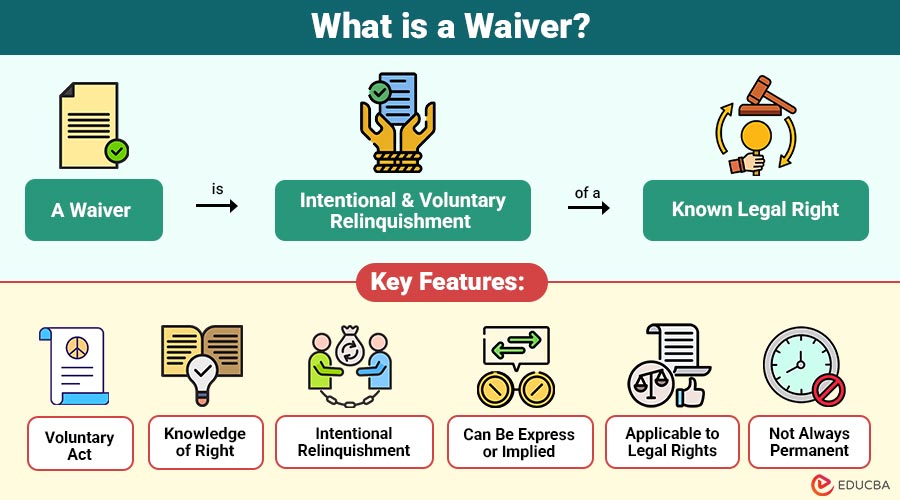
A waiver is intentional and voluntary relinquishment of a known legal right. It can be expressed either in writing or implied through conduct.
A valid waiver generally requires the following:
- The existence of a legal right
- Knowledge of that right
- A clear intention to abandon or not enforce it
Once a waiver is made, the person usually cannot later claim the same right, unless the waiver is legally invalid or revoked under specific circumstances.
Table of Contents:
Key Takeaways:
- Waiver involves voluntarily giving up a known legal right through words, actions, or a written agreement.
- Valid waivers require clear intention, full knowledge, legal capacity, and freedom from coercion or fraud.
- It helps reduce disputes, manage liability risks, and provide flexibility within contracts and legal relationships.
- Courts may invalidate waivers that violate public policy or statutory protections or contain unfair contractual terms.
Importance of Waiver
Waivers play an important role in modern legal and commercial practices:
1. Risk Management
Help organizations effectively manage legal liability and minimize potential risks arising from activities or agreements involved.
2. Contract Flexibility
Provide flexibility in enforcing strict contractual terms, allowing parties to adjust obligations based on practical circumstances.
3. Clarity in Agreements
Clearly defines responsibilities, rights, and limitations of liability, ensuring that both parties understand the agreed-upon terms.
4. Encourages Participation
Encourages participation in sports, tourism, and adventure activities by reducing legal concerns for service providers involved.
5. Dispute Prevention
Help prevent disputes and litigation by establishing clear expectations and reducing misunderstandings among the contracting parties involved.
Key Features of Waiver
The concept of a waiver has certain defining key features:
1. Voluntary Act
A waiver must be given freely, without any coercion, fraud, pressure, or undue influence from another party.
2. Knowledge of Right
A person waiving must fully understand their legal rights and consequences before voluntarily giving them up.
3. Intentional Relinquishment
There must be a clear intention to abandon a legal right, either explicitly stated or implied through conduct.
4. Can Be Express or Implied
A waiver may be clearly stated in writing or verbally or inferred indirectly from actions and behavior.
5. Applicable to Legal Rights
Only rights recognized and protected by law can be legally waived; moral rights are not included.
6. Not Always Permanent
May be temporary or limited in scope, depending on the specific legal context or the terms of the agreement.
Types of Waiver
Depending on their nature and purpose, it can be divided into several types.
1. Express Waiver
An express waiver occurs when a person clearly and directly states that they are voluntarily giving up a legal right here.
2. Implied Waiver
An implied waiver arises from a person’s conduct or behavior indicating an intention to give up a legal right without an explicit statement.
3. Statutory Waiver
A statutory waiver is permitted by law, allowing individuals to legally surrender specific rights defined and regulated by the applicable legislative framework.
4. Contractual Waiver
A contractual waiver is included in an agreement when one party agrees not to enforce certain rights specified in the contract.
5. Informed Waiver
An informed waiver occurs when a person acknowledges the risks and voluntarily agrees to proceed after fully understanding the potential consequences.
Essential Elements of a Valid Waiver
For a waiver to be legally enforceable, it must include the following elements:
1. Existence of a Legal Right
A valid waiver requires an existing, enforceable legal right that belongs to the person intending to relinquish it.
2. Full Knowledge
The party must have a complete understanding of the right, its scope, and consequences before voluntarily giving it up.
3. Clear Intent
There must be a definite and unambiguous intention to waive the right, shown through words or conduct clearly.
4. No Coercion or Fraud
It must be voluntary and free from pressure, fraud, misrepresentation, undue influence, or any deceptive practices whatsoever.
5. Capacity of Parties
The person must be legally competent, meaning an adult of sound mind capable of making informed legal decisions.
Legal Effects of Waiver
Once a valid waiver is made, it has several legal effects:
1. Loss of Enforceability
Once a valid waiver is made, the waived legal right generally cannot be enforced in any court of law thereafter.
2. Binding Nature
A valid waiver becomes legally binding on the person who voluntarily makes it, restricting future denial of the waiver.
3. Prevention of Legal Claims
After a waiver, the party cannot bring claims or seek damages for rights they have already relinquished.
4. Contract Modification
May alter existing contractual terms by removing or limiting the enforcement of specific agreed-upon obligations.
5. Limited Scope
Usually apply only to specified rights or conditions and do not extend broadly beyond what is clearly mentioned or intended.
Examples of Waiver in Real Life
Given below are the real-life examples:
1. Sports and Fitness
Gyms and sports clubs often require members to sign waivers before participation in regular physical activity sessions.
2. Insurance
Policyholders may waive certain rights under specific conditions in insurance agreements with companies, as required by law sometimes.
3. Travel and Adventure Activities
Participants sign waivers acknowledging the risks of activities such as scuba diving or trekking in adventure tourism packages worldwide.
4. Employment Contracts
Employees may waive certain claims in settlement agreements during employment contract negotiations as part of a mutual legal resolution process.
5. Medical Treatment
Patients sign consent forms waiving liability for known medical risks after being fully informed by doctors and professionals.
Limitations of Waiver
Despite its usefulness, it has limitations:
1. Cannot Waive Illegal Rights
Rights protected by law or public policy generally cannot be waived in legal agreements under any circumstances.
2. Must Be Clear and Specific
Language must be clear and specific; courts may refuse to enforce ambiguous contractual provisions legally.
3. Subject to Legal Scrutiny
Courts may carefully examine waiver terms and invalidate agreements deemed unfair, unreasonable, or unconscionable under the law.
4. Cannot Override Statutory Protections
Cannot override statutory protections, such as labor laws, consumer rights, or fundamental constitutional protections.
Final Thoughts
A waiver is an important legal tool that allows individuals and organizations to voluntarily relinquish certain rights, thereby simplifying contracts, reducing disputes, and enabling smoother interactions in business and personal contexts. Valid waivers must be voluntary, informed, and lawful, or courts may invalidate unfair agreements in legal systems today globally.
Frequently Asked Questions (FAQs)
Q1. Can a waiver be revoked after it is given?
Answer: In some situations, a waiver may be revoked before the other party relies on it. However, once it becomes legally binding and acted upon, revocation may not be possible.
Q2. Is a waiver legally enforceable in court?
Answer: Yes, a waiver is legally enforceable if it is made voluntarily, clearly, knowingly, and without fraud, coercion, or misrepresentation.
Q3. Can minors legally sign a waiver?
Answer: In most jurisdictions, minors generally cannot enter legally binding waivers on their own. A parent or legal guardian usually signs on their behalf.
Q4. Can courts reject a waiver agreement?
Answer: Courts may invalidate waivers that are unfair, ambiguous, against public policy, or that attempt to waive non-waivable statutory rights.
Recommended Articles
We hope that this EDUCBA information on “Waiver” was beneficial to you. You can view EDUCBA’s recommended articles for more information.


