


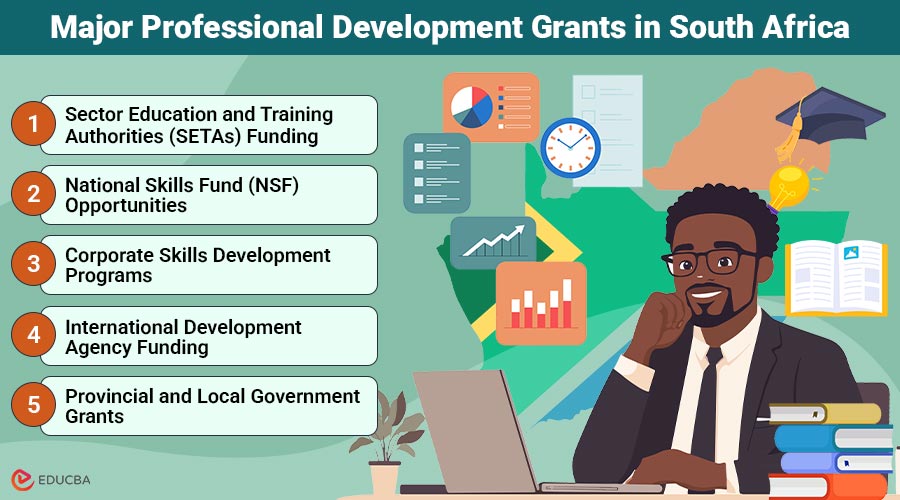
Overview of the SA Professional Framework
“An investment in knowledge pays the best interest.” That is a quote from Benjamin Franklin that fits just right here in South Africa, where getting ahead often means brushing up on your skills. With unemployment at around 32% (Stats SA), yet many companies are struggling to find the right talent, it is clear there is a skills shortage. The good news? There are plenty of funding opportunities. From professional development grants in South Africa to social support like the SRD SASSA grant, these can help push your career forward. This guide explains what professional development grants are, where to find them, and how they can boost your career.
What Are Professional Development Grants?
Professional development grants are funds provided to individuals aiming to enhance their skills, knowledge, or qualifications to advance their careers. In South Africa, these grants play a crucial role because they help fill in the skill gaps that slow down both personal opportunities and the economy. You will find these grants coming from government bodies, private companies, and even international organisations. They cover things like courses, workshops, certifications, and training programmes. A fair number of South Africans have used grants to shift their careers up a notch, grabbing new skills that opened doors to better gigs.
8 Major Professional Development Grants in South Africa
Here is a breakdown of the main types of professional development grants available in South Africa and how they can help you enhance your skills and career prospects.
#1. Sector Education and Training Authorities (SETAs) Funding
The country has 21 SETAs, each one working in a particular sector of the economy. They collect a Skills Development Levy from businesses, then pass that money on to support workforce training. If you are employed or a business owner, SETA grants can help you get access to training and learnerships. Here is the deal: employers pay 1% of their payroll as a levy unless they are exempt. That fund is where SETAs get money to hand out. Your job is to apply by checking what your specific SETA wants, submitting a training plan, and showing proof of levy payments. For a better shot, align your application to the sector’s needs and do not miss the paperwork or deadlines.
#2. National Skills Fund (NSF) Opportunities
NSF focuses on larger skill-building projects that benefit the economy as a whole, particularly for unemployed youth and workers requiring upskilling. It backs programs in technical fields, professional growth, and even entrepreneurship. You will usually need to prove you are eligible and outline the program you want to pursue. Be sure to check application dates and apply early—processing times can take a while.
#3. Corporate Skills Development Programs
Many local firms run initiatives to grow skills within their workforce or communities. Enterprise and supplier development programs offer bursaries or grants to employees and small business owners. You might also want to reach out to professional bodies in sectors like construction, tourism, or ICT for some sector-specific funds. If you have a job already, try pitching a training course to your HR folks that benefits both you and the company. Many of these grants focus on leadership or specific skills needed in their industries. Some banks and big companies regularly offer such opportunities.
#4. International Development Agency Funding
Big players like USAID, the British Council, and the German Development Cooperation (GIZ) have funding programmes too. Organizations often design these programs to boost technical skills, support continuing professional education, or promote cultural exchange. Applying for these requires a well-thought-out application showcasing your goals and how you will make an impact.
#5. Provincial and Local Government Grants
There is also funding at regional levels—provincial grants for skills development, local government support for small businesses, youth-targeted programs, and women empowerment funds. These tend to be more focused on the local economy and certain demographics.
#6. Technology and Digital Skills Funding
Tech giants do not just stop at products; Google and Microsoft offer career certificates and have skill-building initiatives for South Africans. Some tech firms offer sponsorships focused on preparing workers for the challenges of the Fourth Industrial Revolution (4IR).
#7. Professional Services and Finance Sector Funding
In fields like banking, accounting (think SAICA, SAIPA), law, and executive education, grants often help with professional qualifications or higher-level studies.
#8. Healthcare and Engineering Professional Development
The Department of Health hands out bursaries and support to medical workers. Engineering councils and manufacturing sectors provide funding targeted at technical skills and vocational training. These grants support development in infrastructure and construction related fields, too.
How to Apply for Professional Development Grants in South Africa?
Many people find the application process daunting, but most rejections stem from avoidable errors. Here is a rough idea:
1. Preparation Steps
- First, be honest with yourself spot the skills you need to upgrade and pick clear career goals.
- Research available grants that fit your profile and needs.
- Get together all required papers ID documents, certificates, references—well before applying.
2. Application Best Practices
- Your motivation letter matters; make it clear why you need the grant and how it will help.
- Do not wait until the last minute; submit your application early.
- Follow up nicely if you have not heard back showing enthusiasm counts.
3. Common Mistakes to Dodge
- Leaving applications incomplete.
- Applying for programs that do not fit your needs.
- Missing deadlines—which is a common reason for no responses.
Final Thoughts
There are many professional development grants in South Africa available, suitable for almost anyone looking to grow in their career. Do not let money worries hold you back from learning and growing. Start by understanding your gaps and searching for grants that can help. These opportunities, funded by grants, often lead to better pay and prospects—sometimes quite significantly. Think of it as one of the smartest investments you will ever make: investing in yourself.
Recommended Articles
We hope this guide to professional development grants in South Africa helps you advance your skills and career. Check out these recommended articles for more tips and resources to boost your professional growth.


