


What is a Pricing Strategy?
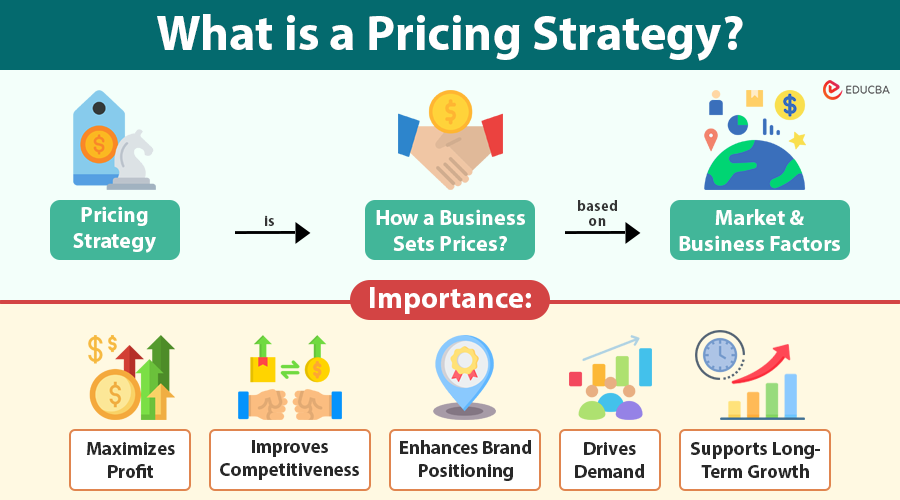
A pricing strategy is the approach a business takes to determine the most suitable price for its products or services, taking into account costs, market demand, competitor pricing, and the company’s overall objectives.
A SaaS company uses a value-based pricing strategy, setting subscription fees based on the service’s perceived value rather than just production costs.
Table of Contents
Key Takeaways
- Shape perception by setting prices that reflect your brand’s story.
- Focus on value over cost, as customers pay for perceived benefits.
- Stay flexible to adapt to changing market conditions.
- Test and refine prices to match evolving customer expectations.
- Align pricing with your goals, product lifecycle, and target market.
Why Pricing Strategies Matter?
A well-planned pricing strategy plays a crucial role in a company’s success. It affects more than just the bottom line; it shapes how customers perceive your brand and how your product performs in the market. When you get your pricing right, you unlock multiple business advantages:
1. Maximizes Profit
You boost revenue by aligning your prices with both perceived customer value and your internal cost structure. Strategic pricing helps you avoid leaving money on the table while staying attractive to your market.
2. Improves Competitiveness
You gain an edge in the market by responding quickly to competitor moves and shifts in demand. An agile pricing strategy helps you maintain relevance and avoid losing customers to cheaper alternatives.
3. Enhances Brand Positioning
You influence how customers view your brand by how you price your offerings. Premium pricing signals exclusivity and quality, while budget pricing attracts cost-conscious buyers. Your price tells a story — make sure it matches your brand identity.
4. Drives Demand
You encourage more purchases when your pricing reflects what your target audience is willing to pay. The right price point removes barriers and nudges hesitant buyers toward conversion.
5. Supports Long-Term Growth
You build sustainable success when you maintain a healthy balance between price, value, and cost. Smart pricing protects margins, funds innovation, and keeps your business resilient during market fluctuations.
Key Factors That Influence Pricing Strategy
To develop an effective pricing strategy, businesses need to assess various internal and external elements. Each of these influences how customers perceive value, how the market behaves, and how profitable your pricing decisions will be. Here’s what you need to consider:
1. Cost Structure
You start by understanding your fixed and variable costs. To remain profitable, you must set prices that cover these costs while leaving room for your desired profit margin.
2. Customer Value Perception
You assess how much your target customers are willing to pay for your product or service. When customers believe your offering justifies the price, they are more likely to buy, even at a premium.
3. Competition
You analyze competitor pricing, offers, and positioning. To stay relevant, you must decide whether to match, undercut, or exceed their prices based on the value you provide.
4. Market Demand
You study demand patterns and price elasticity. When demand is high or inelastic, you can set higher prices. When the market is sensitive to price changes, you must adapt accordingly.
5. Business Objectives
You align your pricing with your company’s goals. Whether you want to gain market share, maximize short-term profit, enter a new market, or build customer loyalty, your pricing must support that goal.
6. Brand Strategy
You decide how you want the market to perceive your brand — as a premium, mid-tier, or value option. Your pricing should reinforce this positioning to create a consistent customer experience.
7. Product Lifecycle Stage
You adapt your pricing based on the stage of your product’s lifecycle: introduction, growth, maturity, or decline. For example, you might use lower prices to penetrate the market early and raise them during peak demand.
Types of Pricing Strategies
Companies do not apply one-size-fits-all pricing. They choose a strategy that aligns with their goals, market conditions, customer expectations, and product positioning. Below are the most commonly used pricing strategies, each with its strengths and considerations:
1. Cost-Plus Pricing
The total cost of producing or delivering a product is calculated, and a fixed markup is added to set the final price. This method ensures profitability as long as sales occur, but it often overlooks customer perception and competitor pricing.
Best for: Stable markets with little price sensitivity
Watch out for: Overpricing or underpricing compared to market demand
2. Value-Based Pricing
The price is set based on the value the customer places on the product rather than solely on its cost. When a product solves a significant problem or offers a unique advantage, it can command a higher price.
Best for: Innovative or premium products (e.g., Apple, luxury goods)
Watch out for: Misjudging customer perception of value
3. Competitive Pricing
Competitors’ prices are monitored and adjusted accordingly to remain competitive, either by matching, undercutting, or slightly exceeding them based on the brand’s value proposition.
Best for: Crowded markets with similar offerings
Watch out for: Getting caught in a price war
4. Penetration Pricing
The product launches at a low price to attract customers, build awareness, and capture market share quickly. Prices are then increased gradually once a strong customer base is established to improve margins.
Best for: New product launches and price-sensitive markets
Watch out for: Attracting bargain-hunters who won’t convert long term
5. Skimming Pricing
The product is launched at a high price to attract early adopters willing to pay a premium, and the price is later reduced to appeal to more price-conscious segments.
Best for: Innovative or tech-driven products
Watch out for: Losing momentum if prices fall too quickly
6. Psychological Pricing
Psychological pricing methods, like listing a product at ₹999 rather than ₹1,000, influence buyers by creating the impression of a more attractive deal.
Best for: Retail and consumer-focused businesses
Watch out for: Overuse that makes your pricing appear manipulative
7. Bundle Pricing
A group of products or services is sold at a discounted total price compared to buying them individually, boosting perceived value and encouraging higher purchase volumes.
Best for: Complementary products or subscriptions
Watch out for: Bundling unrelated items that confuse or deter buyers
8. Dynamic Pricing
Prices are adjusted frequently based on real-time demand, inventory levels, customer behavior, or competitor activity. Airlines, hotels, and e-commerce platforms commonly use this strategy.
Best for: Industries with fluctuating demand
Watch out for: Customer frustration if pricing seems unpredictable or unfair
By selecting the right pricing strategy or combining multiple approaches, you can improve profitability, attract the right audience, and create a sustainable competitive edge.
Steps to Build an Effective Pricing Strategy
Creating a pricing strategy goes beyond simply choosing a number. It demands a systematic approach that matches business objectives, meets customer expectations, and fits current market conditions. Here are the steps to build an effective pricing plan:
Step 1: Define Your Objectives
Start by setting clear, measurable pricing goals.
Ask yourself:
- Do you want to maximize profits?
- Are you trying to gain market share?
- Do you aim to enter a new market or position your brand as premium?
Clarity in objectives helps you guide every pricing decision.
Step 2: Understand Your Customer
Research your target market to learn:
- What do your customers truly value?
- How price-sensitive are they?
- What alternatives or competitors do they consider?
Knowing your customer ensures your pricing matches their expectations and willingness to pay.
Step 3: Analyze Competitors
Study your competitors’ pricing models, but don’t copy them. Instead:
- Identify gaps in their approach.
- Highlight your unique value proposition.
- Determine where you can differentiate.
Competing on value, not just price, helps you stand out.
Step 4: Calculate Your Costs
Ensure your price covers all expenses and leaves room for profit:
- Include fixed costs (rent, salaries).
- Account for variable costs (materials, production).
- Know your break-even point.
Profitability begins with understanding your cost structure.
Step 5: Choose a Pricing Model
Pick a pricing strategy that fits your goals and market:
- Consider value-based, cost-plus, penetration, skimming, etc.
- Match your pricing model to your brand positioning and customer segment.
The right model gives structure and purpose to your pricing.
Step 6: Test and Adjust
Validate your pricing through:
- A/B testing different price points
- Promotional offers or limited-time discounts
- Customer feedback and behavior tracking
Testing helps you fine-tune your pricing for real-world performance.
Step 7: Monitor Continuously
Keep an eye on:
- Sales performance
- Market changes
- Competitor pricing moves
Stay flexible and adjust when needed to remain competitive and profitable.
Continuous monitoring keeps your strategy relevant and effective over time.
Common Pricing Mistakes to Avoid
Even great products can fail if the pricing strategy falls short. Many businesses overlook critical factors or rely on outdated methods, and as a result, they lose revenue, customers, or both. Avoid these common pricing pitfalls to keep your strategy strong and effective:
1. Ignoring Customer Perception
You risk overpricing or underpricing when you fail to understand how your audience perceives value. If customers feel your product is not worth the price, they walk away even if your costs justify it.
2. Competing Only on Price
You weaken your brand and shrink your profit margins when you try to win customers by being the cheapest. Over time, this approach can commoditize your offering and make it hard to build loyalty.
3. Relying Solely on Cost-Plus Pricing
You limit your earning potential when you only add a markup to your costs. This method overlooks market demand, customer perception, and competitor pricing, all of which influence how much people are willing to pay.
4. Not Testing or Reviewing
You fall behind when you fail to test new pricing or review old pricing. Market dynamics, customer preferences, and business goals all change, and your pricing must keep up.
5. Offering Inconsistent Discounts
You confuse customers and hurt brand trust when you apply discounts erratically. Shoppers may delay purchases, expecting future deals, or view your product as low quality.
Pricing Strategy Examples
Successful companies tailor their pricing strategies to match their brand positioning, customer expectations, and market dynamics. Here’s how leading brands apply different pricing strategies effectively:
1. Amazon – Dynamic Pricing
Amazon employs dynamic pricing to modify product prices in real time, factoring in demand, competition, customer behavior, and inventory status. This method helps the company remain competitive, boost revenue, and react quickly to market changes.
2. Tesla – Value-Based Pricing
Tesla sets its prices using a value-based pricing strategy. The company emphasizes innovation, cutting-edge technology, sustainability, and brand prestige to justify premium pricing. Customers are willing to pay more because they see high perceived value.
3. Netflix – Tiered Pricing
Netflix uses a tiered pricing model to serve multiple customer segments. It offers different subscription plans based on features like video quality, number of screens, and offline downloads. Each plan targets a specific user type — from budget-conscious viewers to premium users.
4. IKEA – Penetration Pricing
IKEA applies a penetration pricing strategy when entering new markets. It offers low prices initially to attract customers, gain quick market share, and establish its brand presence. Over time, it gradually increases prices as customer loyalty builds.
Final Thoughts
An effective pricing strategy is more than just setting a number; it is a deliberate, data-driven approach that balances profitability, customer perception, and competitive positioning. The right pricing not only drives sales but also strengthens brand image and supports long-term growth. By understanding your market, costs, and value proposition, you can set prices that work for both your customers and your bottom line.
Frequently Asked Questions (FAQ’s)
Q1. What is psychological pricing, and how does it work?
Answer: Psychological pricing uses pricing techniques that influence customer perception, such as setting a price at $9.99 instead of $10 to make it feel cheaper.
Q2. What role does geographic pricing play in sales?
Answer: Geographic pricing sets different prices for the same product in various locations based on local demand, currency value, and purchasing power.
Q3. How does bundle pricing increase sales?
Answer: Bundle pricing combines multiple products or services at a discounted rate, encouraging customers to buy more than they initially planned
Q4. How do currency fluctuations impact international pricing?
Answer: Currency exchange rate changes can affect costs, profit margins, and competitiveness, requiring businesses to adjust prices for different markets.
Q5. What is the difference between wholesale and retail pricing strategies?
Answer: Wholesale pricing targets bulk buyers with lower per-unit costs, while retail pricing focuses on individual consumers and often includes higher margins.
Recommended Article
We hope this guide on Pricing Strategy was helpful. Explore related articles on psychological pricing techniques, competitive pricing analysis, and global market pricing strategies.

