


What Is Positive Feedback?
Positive feedback is the practice of acknowledging and reinforcing someone’s good behavior, effort, or achievement. It focuses on what was done well, highlights its impact, and encourages repetition or continued improvement.
For instance, you might give positive feedback by saying, “You explained that process clearly during the meeting, which helped the team understand it quickly. Keep using that approach in future presentations.” This demonstrates recognition of effort, highlights the positive impact, and motivates continued success.
Table of Contents
Key Takeaways
- Positive feedback motivates and engages, as recognition energizes individuals and encourages consistent effort.
- It builds confidence and resilience by acknowledging strengths, helping people believe in their abilities, and tackling new challenges.
- Timing and specificity matter; delivering feedback promptly, being specific, and highlighting its impact maximizes effectiveness.
- It strengthens relationships, fostering trust, respect, and better communication.
- It applies everywhere from workplaces and schools to personal relationships and self-growth, creating meaningful change.
- It encourages continuous growth by focusing on what works and guiding people toward higher achievements and long-term success.
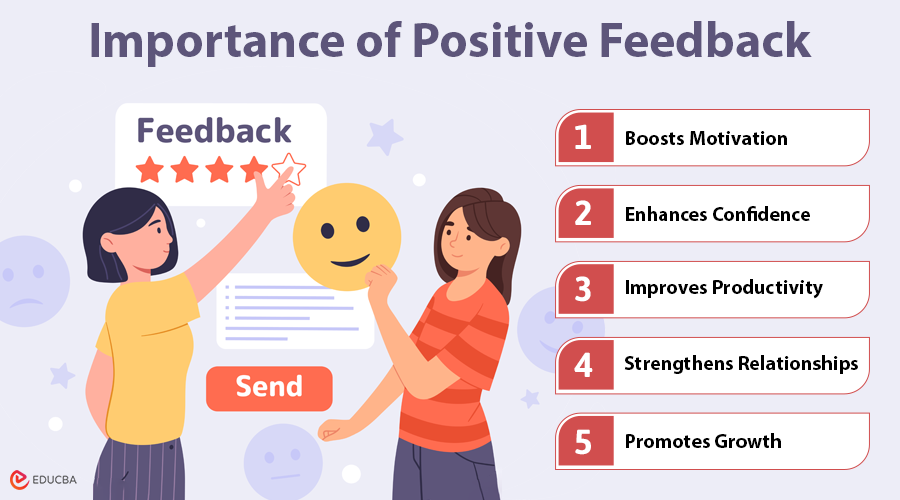
Importance of Positive Feedback
Positive feedback goes beyond simple praise, it creates a ripple effect that motivates individuals, strengthens connections, and drives better outcomes. Below are the key reasons why it is matters:
1. Boosts Motivation
When you recognize someone’s efforts, you spark enthusiasm and encourage them to keep giving their best. People feel valued, which drives them to stay engaged and motivated.
2. Enhances Confidence
Positive recognition helps people trust in their skills, empowering them to step out of their comfort zones and face challenges head-on.
3. Improves Productivity
Encouragement fuels energy and focus. Teams work more efficiently, collaborate better, and deliver higher-quality results when they know their efforts will be appreciated.
4. Strengthens Relationships
Regular appreciation builds trust and respect. Whether in professional or personal settings, positive feedback fosters open communication and stronger bonds.
5. Promotes Growth
By emphasizing what works, you reinforce good habits and inspire continuous improvement. This guidance helps people progress toward higher achievements and long-term success.
How to Give Positive Feedback?
Use these clear, sequential steps to make your praise specific, timely, and impactful.
Step 1: Be Specific
Identify the exact behavior or action you are praising.
Step 2: Be Timely
Share the feedback as soon as possible after the behavior.
Step 3: Be Genuine
Speak honestly and avoid exaggeration so your praise feels credible.
Step 4: Highlight the Impact
Connect the behavior to a positive outcome for the team, project, or customer.
Step 5: Encourage Continuation
Invite the person to repeat or build on the success.
When to Give Positive Feedback?
Timing matters as much as the message. It is works best in situations such as:
- After a Job Well Done: When someone completes a task successfully, acknowledge their effort.
- During Skill Improvement: When you notice progress, no matter how small, recognize it to encourage consistency.
- In Challenging Situations: If someone handles stress or conflict calmly, highlight their composure and problem-solving skills.
- After Team Collaboration: Praise individuals who support or uplift their colleagues.
- During Milestones or Achievements: Celebrate promotions, project completions, or personal growth moments.
By choosing the right moments, you maximize the impact of your positive feedback.
Applications of Positive Feedback in Everyday Life
Positive feedback plays a vital role in enhancing performance, building relationships, and fostering personal growth. Here is how it can be effectively applied in different areas of daily life:
1. Workplace
Providing positive feedback at work boosts employee morale, engagement, and retention. Recognizing creativity and effort encourages innovation and motivates people to excel.
2. Education
In educational settings, positive feedback inspires students to participate actively and develop a love for learning. Highlighting their efforts helps them build confidence and persist through challenges.
3. Personal Relationships
Giving positive feedback strengthens trust, respect, and emotional connections. Acknowledging acts of kindness or support makes friends, family, and partners feel valued.
4. Personal Growth
Self-feedback encourages reflection, resilience, and confidence. Recognizing your progress, even in small steps, keeps you motivated and committed to improvement.
Examples of Positive Feedback Statements
Here are some practical examples of positive feedback you can use in different situations:
1. Customer Interaction
“You handled that customer concern with patience, and it improved their trust in us.”
This highlights composure and effective problem-solving.
2. Presentations or Work Output
“Your presentation was well-organized, and it helped everyone understand the project better.”
This acknowledges clarity and the positive impact on the team.
3. Team Support
“I appreciate how you supported your teammate during the deadline; it made a huge difference.”
This emphasizes collaboration and helpfulness.
4. Personal Improvement
“You’ve improved your time management, and it shows in your consistent results.”
This recognizes growth and encourages continued effort.
Final Thoughts
Positive feedback is more than praise; it is a strategic tool that motivates, inspires, and strengthens connections in every aspect of life. When delivered thoughtfully, it reinforces good behavior, boosts confidence, and encourages continuous improvement. By practicing positive feedback consistently, you create an environment where people feel valued, capable, and motivated to achieve more.
Frequently Asked Questions (FAQ’s)
Q1. Can positive feedback be overused?
Answer: Yes. Overusing generic praise can make feedback feel insincere. It is most effective when it is specific, timely, and genuine.
Q2. How does positive feedback affect team culture?
Answer: Regular positive feedback fosters a supportive and collaborative environment. It encourages trust, increases engagement, and reduces workplace stress.
Q3. What is the difference between positive feedback and constructive criticism?
Answer: Positive feedback focuses on reinforcing good behavior and achievements, while constructive criticism identifies areas for improvement in a supportive manner. Both can coexist for balanced growth.
Q4. Does positive feedback improve performance?
Answer: Yes. Studies show that people who receive genuine positive feedback tend to be more motivated, productive, and engaged in their tasks.
Q5. Can self-feedback be considered positive feedback?
Answer: Absolutely. Reflecting on your achievements and acknowledging progress helps build confidence, motivation, and personal growth.
Recommended Article
We hope this guide on Positive Feedback was helpful. Explore related articles on effective communication, employee motivation, and strategies for building confidence.


