


What Is Performance Management?
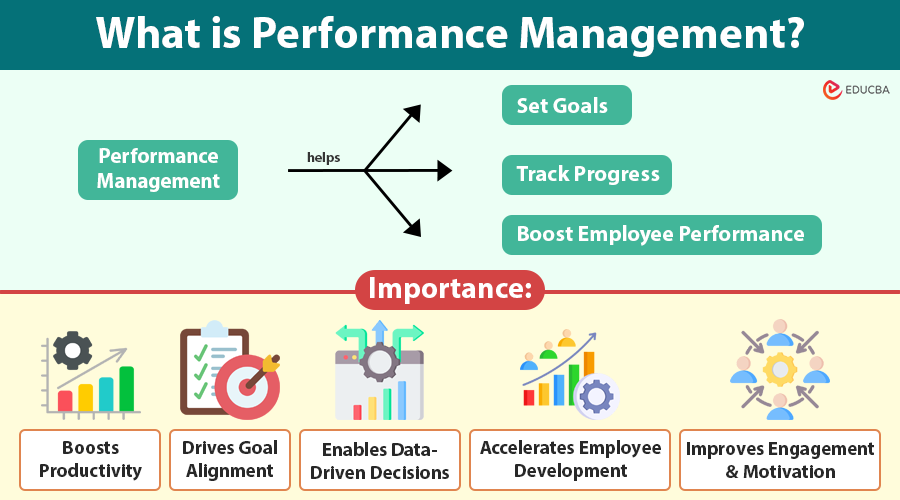
Performance management is a systematic process that helps organizations define goals, track employee progress, offer constructive feedback, and enhance performance to accomplish business objectives.
A sales team implements performance management by setting monthly targets for each member. Managers track progress weekly, provide coaching to improve skills, and recognize top performers with rewards. This approach ensures employees stay aligned with company goals and continuously enhance their performance.
Table of Contents
Why Performance Management Matters?
Performance management strengthens people and business results by creating clarity, encouraging growth, and driving consistent performance conversations.
1. Boosts Productivity
Performance management sets clear expectations and continuously tracks progress. Managers define structured goals, remove obstacles fast, and coach employees to improve efficiency. Employees understand success criteria, sharpen focus, manage time actively, and deliver stronger output.
2. Drives Goal Alignment
Managers connect employee objectives to organizational priorities during performance planning. This alignment ensures teams channel effort toward business results, not disconnected tasks. Employees recognize their impact, take accountability, and execute work with stronger ownership to support company success.
3. Enables Data-Driven Decisions
Performance systems collect measurable insights using KPIs, dashboards, and structured evaluations. Leaders analyze performance data to identify patterns, spot risks early, and make strategic decisions quickly. Data actively replaces assumptions, guides resource allocation, and improves organizational outcomes.
4. Accelerates Employee Development
Managers conduct frequent one-on-one conversations and consistently provide constructive feedback. They coach employees to close skill gaps and strengthen performance behaviors. Organizations design training, mentoring, and improvement plans using real performance insights to drive focused and continuous growth.
5. Improves Engagement & Motivation
Organizations recognize achievement actively through rewards, incentives, appreciation, and public acknowledgment. Recognition increases morale, builds motivation, and makes employees feel valued. Employees engage more deeply, perform better, and remain committed in the long term when organizations consistently celebrate effort and outcomes.
Core Components of Performance Management
Performance management is a structured system that sets expectations, monitors progress, develops people, and continuously rewards outcomes.
1. Goal Setting
Managers set clear and measurable goals with employees. They apply frameworks like SMART (Specific, Measurable, Achievable, Relevant, Time-bound) or OKRs (Objectives and Key Results). Clear goals remove confusion and actively build accountability.
2. Performance Planning
Managers create performance plans that define responsibilities, expected outcomes, and success metrics. They include timelines and outlines of the support required to achieve results efficiently.
3. Continuous Feedback
Managers deliver feedback frequently instead of limiting discussions to annual reviews. Employees also communicate concerns and share progress updates. This regular dialogue improves understanding and builds trust.
4. Coaching and Development
Managers coach employees to solve challenges, clear roadblocks, and improve critical skills. Organizations support performance growth by investing in training, mentoring, and structured learning programs.
5. Performance Monitoring
Managers track progress using performance tools, dashboards, weekly reports, and one-on-one check-ins. They rely on performance metrics to gain real-time insights, detect trends, and quickly identify areas for improvement.
6. Performance Appraisals
Organizations conduct performance evaluations quarterly, biannually, or annually. Managers use these reviews to summarize key achievements, address challenges, and clearly set future expectations.
7. Rewards and Recognition
Companies reward high performers using incentives, promotions, bonuses, certificates, and public appreciation. Recognition drives motivation and inspires teams to actively raise performance standards.
Performance Management Cycle
- Set goals → Managers discuss expectations with employees.
- Plan performance → Managers outline a roadmap for success.
- Give feedback → Both sides communicate progress regularly.
- Monitor performance → Managers track performance using data.
- Review performance → Managers evaluate results fairly.
- Reward performance → Organizations appreciate and reward effort.
Techniques to Improve Performance Management
Organizations apply smarter techniques to accurately track performance, strengthen conversations, remove bias, and actively drive continuous improvement.
1. Use Clear KPIs
Organizations define key performance indicators (KPIs) such as sales numbers, customer satisfaction scores, delivery timelines, error rates, and efficiency goals. Clear KPIs measure success objectively and help teams focus on what drives results.
2. Automate With Tools
Companies use performance management software to simplify tracking, document feedback, run reviews systematically, and generate meaningful insights quickly. Automation reduces errors, saves time, and keeps data organized for better decision-making.
3. Hold One-on-One Meetings
Managers conduct weekly or biweekly meetings to discuss progress, address concerns, and clarify performance. These conversations build trust, encourage open communication, and resolve roadblocks faster.
4. Train Managers
Organizations train managers to run unbiased evaluations, coach employees consistently, and deliver constructive feedback effectively. Manager training improves review quality and strengthens leadership accountability in performance conversations.
5. Encourage Self-Assessment
Organizations ask employees to regularly assess their own performance. Self-evaluation promotes ownership, improves transparency, and helps employees proactively reflect on their strengths and gaps.
6. Focus on Growth
Organizations prioritize learning, improvement, and behavior change instead of blame. Managers keep discussions solution-focused, encourage progress mindsets, and create development pathways that support long-term performance improvement.
Common Challenges in Performance Management
Organizations face several obstacles while managing performance, but each challenge can be addressed effectively with the right strategies.
| Challenge | How Organizations Solve It? |
| Unclear Goals | Managers clarify expectations early to ensure employees understand objectives and responsibilities. |
| Lack of Feedback | Managers increase the frequency of performance reviews and one-on-one check-ins. |
| Bias in Evaluation | HR standardizes review parameters and evaluation processes to ensure fairness. |
| Poor Manager Training | Organizations train managers regularly to deliver feedback effectively and coach employees. |
| Low Employee Engagement | Leaders recognize achievements openly and reward performance to boost motivation and commitment. |
Role of HR and Managers
HR and managers jointly run performance management by setting systems, guiding people, tracking outcomes, and continuously improving results.
HR Responsibilities
- HR builds a performance-driven culture actively.
- HR introduces structured performance frameworks and clear policies.
- HR selects and manages performance tools that enable accurate tracking.
- HR removes bias by ensuring evaluations remain fair, consistent, and data-driven.
Manager Responsibilities
- Managers guide employees and set expectations clearly.
- Managers deliver feedback frequently and coach teams to improve performance.
- Managers track goals continuously and remove obstacles that slow progress.
Modern Trends in Performance Management
Organizations adopt new performance approaches that combine technology, human experience, and continuous insights to improve results faster.
1. AI-Driven Performance Insights
AI analyzes performance data, detects patterns, and delivers clear insights. Leaders use AI recommendations to make faster, accurate decisions and adjust strategies proactively.
2. Real-Time Feedback Systems
Companies always implement one-on-one feedback tools that replace annual reviews. Managers and employees share feedback instantly, fix issues early, and improve collaboration continuously.
3. 360-Degree Feedback
Organizations collect input from managers, peers, clients, and cross-functional teams. This multi-source feedback removes blind spots, improves fairness, and builds stronger self-awareness for employees.
4. Employee Experience Focus
Companies measure well-being, work satisfaction, and growth support along with performance results. They act on insights to increase engagement, improve retention, and strengthen workplace culture.
5. Personalized Development Plans
Managers design tailored learning paths based on individual strengths and gaps. Employees receive customized coaching, skill programs, and growth plans that support long-term career progress.
Best Practices for Organizations
- Set clear goals with measurable success metrics to reduce confusion and maintain accountability.
- Give frequent feedback and coaching to solve concerns quickly and refine employee performance.
- Use tools and dashboards to track performance data in real time and proactively adjust work.
- Train managers to lead performance conversations fairly and coach employees effectively.
- Reward performance openly through recognition, incentives, and promotions to boost morale.
- Focus on growth and continuous improvement by encouraging learning and removing blame.
Final Thoughts
Performance management is an ongoing process that ensures employees’ work stays aligned with the organization’s objectives. By setting clear goals, providing consistent feedback, coaching employees, and recognizing achievements, organizations can boost productivity, engagement, and overall growth. Leveraging modern tools and structured systems ensures that performance is accurately tracked and continuously improved.
When organizations treat performance management as an ongoing practice rather than a one-time task, they foster a culture of accountability, learning, and development. This approach keeps employees motivated, drives better business outcomes, and builds strong, high-performing teams for long-term success.
Frequently Asked Questions (FAQ’s)
Q1. What is performance management?
Answer: Performance management is a continuous process where organizations set goals, monitor progress, provide feedback, and develop employees to achieve business objectives.
Q2. How does performance management benefit employees?
Answer: It clarifies expectations, provides regular feedback, improves skills, encourages growth, and motivates employees through recognition and rewards.
Q3. How often should performance management activities occur?
Answer: While goal setting and reviews may be periodic, feedback, coaching, and progress tracking should happen continuously—weekly, monthly, or quarterly, depending on the organization.
Q4. How does performance management improve business outcomes?
Answer: Aligning employee goals with organizational objectives, tracking performance data, and recognizing achievements increases productivity, engagement, and overall efficiency.
Q5. What role does technology play in performance management?
Answer: Technology simplifies tracking, reporting, and analyzing performance through tools like dashboards, software, and AI-driven insights, helping managers make informed decisions and provide timely feedback.
Recommended Articles
We hope this guide on Performance Management was helpful. Explore related articles on Goal Setting, Feedback and Coaching, Performance Tracking Tools, and Employee Engagement to deepen your understanding and improve workplace performance.


