


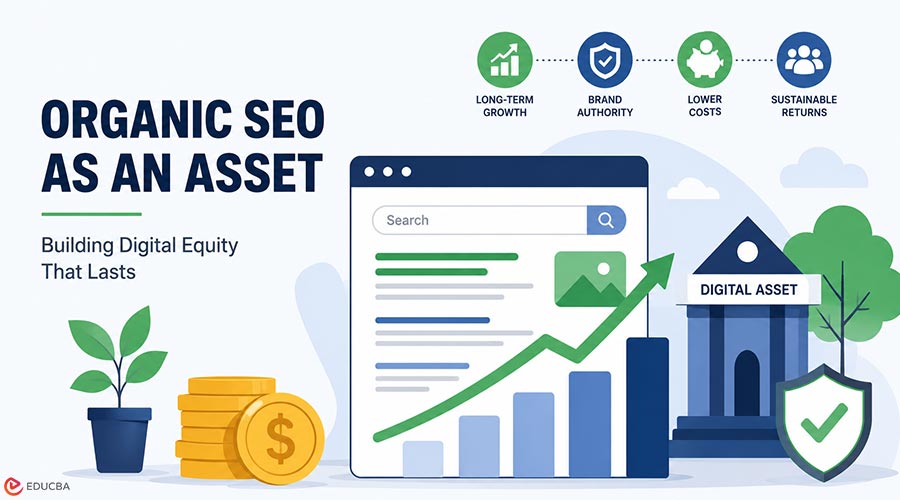
When a company buys a physical location, pays down a corporate mortgage, or invests in proprietary manufacturing equipment, those expenditures are treated as assets because they build long-term value, increase equity, and support future stability. However, when it comes to digital growth, many businesses still view search engine optimization as a recurring marketing expense rather than a strategic asset. This mindset often leads companies to prioritize short-term visibility through paid advertising while overlooking the long-term value of organic search. Treating Organic SEO as an Asset changes this perspective entirely. Instead of renting visibility on advertising platforms, businesses invest in digital properties that appreciate in value, strengthen brand authority, and generate sustainable revenue long after the initial investment.
Digital Real Estate Economics vs. Rental of Paid Traffic
To understand the true lifetime value of organic acquisition, you need to contrast the fundamental financial difference between renting an audience and owning an asset.
The Dangers of Using Paid Traffic
Paid search marketing is essentially a rental property. You are paying a landlord (in this case, an advertising platform) for temporary access to its customer base. This model works great for short-term promotions, but it creates serious structural vulnerabilities in the long term. Competition is heating up, and ad costs are eating into your profit margins. Your acquisition cost depends on ad spend, so traffic often stops as soon as the budget is cut.
The Compounding Returns of Search Optimization
SEO is compound interest. The work you do today, from creating deep content clusters to streamlining technical site architectures to getting authoritative link placements, pays dividends for years. A quality information asset published 12 months ago does not stop receiving traffic after the invoice is paid. It holds its ground, identifies new user intent, and passes structural authority to your core product pages, which, in the long run, decreases your average customer acquisition costs.
Why Businesses Should Treat Organic SEO as an Asset?
If you change the way you think about organic SEO internally, from an expense to an asset, you will start to change the way you deploy resources, measure success, and structure your corporate data frameworks.
Content Infrastructure: Lifetime Value
You are building a permanent content infrastructure by creating a robust library of expert-written articles and data guides. This asset works across multiple business workflows at the same time:
- Sales Enablement: Your sales team can leverage your well-researched informational articles to address common objections from prospects and educate leads through the nurturing process.
- Customer Support Integration: Detailed troubleshooting guides and technical resources minimize customer support tickets by enabling users to resolve issues independently.
- Top of Funnel Lead Generation: Optimized informational hubs attract prospective buyers at the very top of their search journey, long before they ever see a competitor.
How Do You Calculate Your Traffic Equivalent Value?
Calculate the traffic equivalent value of your site to demonstrate to internal stakeholders the financial value of your search presence. Figure out how much the main keywords your domain ranks for organically cost in paid auction networks on a per-click basis and multiply that by your monthly organic click volume. This simple equation highlights how much your organic SEO asset saves your marketing budget each month.
Developing a High-Value Digital Portfolio
Managing a digital asset is akin to managing a portfolio of physical assets and needs strict quality standards, clean design execution, and regular optimization.
Entity Mapping: Building Topical Authority
Search engine algorithms assess websites by identifying unique entities, verifiable companies, experts, and core concepts and mapping how they relate to one another in a larger Knowledge Graph. Building undeniable topical authority turns your site into a digital asset that can not be shaken. Do not write shallow, fragmented posts to chase short-term trend volume. Instead, create focused topic clusters with semantic headers and contextual internal links to showcase subject expertise.
Protection of Equity from Changes in Core Algorithm
There is a lot of anxiety for companies that depend on organic search as search changes. But algorithm updates do not bother sites that are built on shallow tactics, keyword stuffing, or artificial backlink networks. To safeguard your digital equity, you must fully adhere to Google’s quality evaluation guidelines, particularly the E-E-A-T principles (Experience, Expertise, Authoritativeness, and Trustworthiness). Your platform consistently values original data, real-world case studies, transparent author credentials, and superior server security, which is a benefit upgrade that slowly purges lower-quality competition and improves your rankings.
The Protocol for Digital Asset Optimization
If you want to protect and grow your corporate search footprint, you need a systematic, repeatable health protocol. Use this operational checklist to conduct your strategic reviews to optimize the valuation of your digital real estate.
- Conduct a Quarterly Content Decay Analysis: Refresh old informational articles that are losing impressions with new stats, original expert quotes, and modern media elements.
- Strict technical site maintenance: Repair broken server loops. Reduce large code bundles. Avoid layout shifts. Keep your mobile user experience metrics perfect.
- Internal Link Flow Pattern Analysis: Ensure your informational blog assets pass structural link equity to your core commercial and transactional pages by using descriptive anchor text.
- Check Your Branded Search Footprint: Keep an eye on branded searches for your company name, as growth in that metric indicates your brand is gaining real-world authority, something algorithms weigh very heavily.
- Overlap of keyword targets: Merge them if you have several articles targeting the same keywords; combine them into one comprehensive article to focus your domain’s ranking power.
E-E-A-T as Your Safety Net for Valuation
Trust, authenticity, and legal compliance are directly related to value across asset classes. And the digital ecosystem is not any different. The authority of your website does not exist in a bubble but is correlated with the level of transparency you have online. If you want your search asset to maintain its equity over the long term, you have to embed explicit trust indicators into your platform’s framework. Secure your domain with a clean HTTPS connection, use precise structured data markup to avoid algorithmic rendering confusion, and display transparent business information in your footer.
Also, ensure that your long-form text always has verified author profiles. The best insurance policy against algorithmic volatility is to signal to search bots that recognized professionals with real-world industry experience write your content. Complex database engineering, code compression, and narrative-driven content architecture all require significant cross-functional collaboration.
If your organization lacks the specialized development resources or strategic capacity in-house to build an authoritative digital ecosystem from scratch, collaborating with a leading digital marketing firm such as Authority Lighthouse can help you clean up your infrastructure, eliminate friction from hidden code, and turn your web presence into a high-yielding corporate asset.
Key Strategy Takeaways
Organic SEO is often treated like a utility bill for operations, capping growth at what a business can afford to spend each month. However, by viewing Organic SEO as an Asset, companies can transform search visibility into a valuable balance sheet asset. This approach creates a long-term digital estate that appreciates over time, protects your brand from rising advertising costs, and generates sustainable, compounding returns.
Focus on building strong technical foundations, establishing topical authority, and incorporating clear trust signals throughout your content. Treating your website as a premium business asset allows its organic value to generate revenue for years.
Frequently Asked Questions (FAQs)
Q1. How do I determine the dollar value of my organic search traffic?
Answer: You can also calculate the Traffic Value of your organic presence, which is the financial value of your organic presence. Use a tool like Ahrefs or Semrush to see all the organic keywords your website ranks for, the average cost-per-click (CPC) of those exact keywords in paid search auctions, and multiply that CPC by your organic monthly click volume to see how much money your asset is saving your marketing budget.
Q2. How long does organic search traffic last compared to paid ads?
Answer: Organic search traffic is very sustainable thanks to the compounding equity. Paid ads are NOT free traffic; the minute you stop paying for ads, traffic stops. Unlike paid ads, well-optimized organic pages that satisfy user search intent can stay in the top positions of search results for months and even years after publishing, giving you a steady stream of customer acquisition.
Q3. Investment in organic seo – How long does it take to build measurable equity?
Answer: Creating measurable digital equity typically takes 3 to 9 months of continuous optimization and content production. A search engine needs time to crawl your architecture, index your topic clusters, analyze your trust signals, and recalibrate your overall authority versus existing competitors in your market.
Recommended Articles
We hope this guide on organic SEO as an asset helps you build lasting digital equity. Explore these recommended articles for more SEO and digital growth insights.


