
What are Digital Assets?
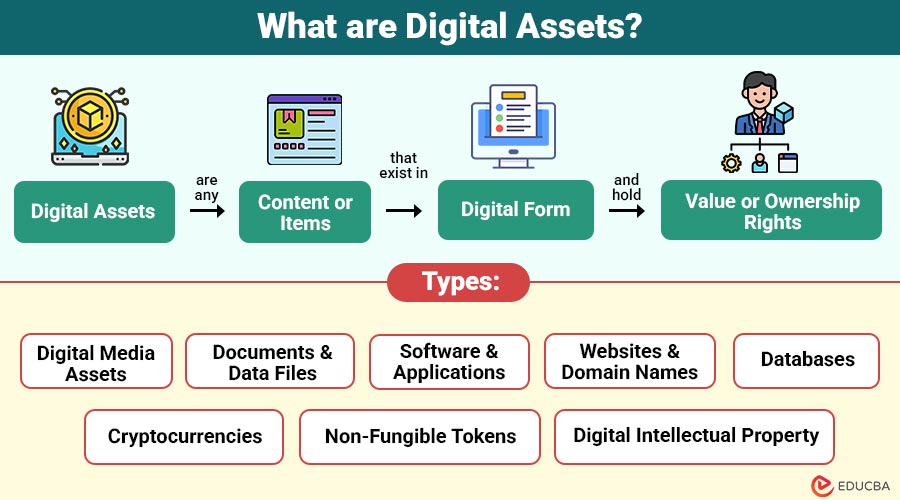
Digital assets are any content or items that exist in digital form and hold value or ownership rights. These can include files, data, media, documents, software, or even blockchain-based tokens, all stored and managed electronically. It can be both tangible (e.g., digital photos, design files, videos) and intangible (e.g., digital currencies, intellectual property rights, NFTs).
Table of Contents:
- Meaning
- Importance
- Types
- How to Manage Digital Assets Effectively?
- Applications
- Benefits
- Challenges
- Real-World Examples
Key Takeaways:
- Digital assets power modern business ecosystems, driving innovation, customer engagement, and sustainable competitive advantage globally.
- Effective digital asset management (DAM) ensures accessibility, security, compliance, and maximized value across organizational workflows.
- Blockchain-based assets enhance transparency, ownership verification, and trust through decentralized and tamper-proof digital recordkeeping systems.
- Strategic utilization boosts branding, operational efficiency, and data-driven decision-making in the digital economy.
Importance of Digital Assets
Digital assets form the foundation of today’s digital economy. Their importance extends across operational, marketing, financial, and strategic domains.
1. Enhances Brand Value
Digital assets such as logos, templates, and visuals maintain brand consistency, strengthen brand recognition, and build customer trust across digital platforms.
2. Drives Business Growth
Engaging content such as blogs, videos, and social media campaigns attracts audiences, increases conversions, and generates sustainable business revenue.
3. Enables Data-Driven Decision Making
Analytics and data assets enable organizations to interpret trends, measure performance, and make strategic, evidence-based business decisions.
4. Boosts Operational Efficiency
Centralized digital workflows streamline communication, reduce manual errors, automate processes, and enhance collaboration across teams, thereby improving productivity.
5. Supports Innovation
NFTs, AI-generated designs, and virtual tools inspire creativity, enabling businesses to explore innovative opportunities and revenue streams.
Types of Digital Assets
Digital assets come in various forms, each serving different purposes for individuals and organizations. Below are the key types:
1. Digital Media Assets
Include images, videos, logos, audio, and marketing materials used for branding, digital marketing, and online content creation.
2. Documents and Data Files
Consists of PDFs, Word files, spreadsheets, reports, and contracts essential for daily business operations, compliance, and data management.
3. Software and Applications
Comprises programs, apps, and source code representing valuable intellectual property that enhances productivity and drives technological innovation.
4. Websites and Domain Names
Serve as digital storefronts that represent brand identity, credibility, and online presence, while often holding substantial market and financial value.
5. Databases
Contain customer records, transactions, analytics, and operational data essential for business intelligence, personalization, and data-driven decision-making.
6. Cryptocurrencies
Blockchain-based digital currencies like Bitcoin and Ethereum store, transfer, and represent financial value securely without physical existence.
7. Non-Fungible Tokens
Unique blockchain-based tokens representing ownership of digital artwork, collectibles, virtual assets, or tokenized real-world property rights.
8. Digital Intellectual Property
Includes copyrights, trademarks, and patents stored digitally to protect creative works, inventions, and corporate innovation from unauthorized use.
How to Manage Digital Assets Effectively?
An efficient digital asset management strategy ensures long-term value and accessibility. Here’s a structured approach:
1. Asset Identification
Determine which digital assets—such as customer data, visuals, or IP—have business value and require systematic tracking and management.
2. Classification and Metadata
Assign descriptive metadata such as file type, creation date, and usage purpose to simplify organization, retrieval, and version tracking.
3. Centralized Storage
Utilize secure, cloud-based, or on-premise Digital Asset Management (DAM) systems, ensuring accessibility, version control, and structured data organization.
4. Access Permissions
Establish role-based access controls to restrict unauthorized users, protect confidential files, and maintain the security of critical business information.
5. Regular Backups
Schedule automated backups across systems to safeguard against accidental deletions, data corruption, and hardware failures
Applications of Digital Assets
It has practical applications across a variety of industries:
1. Marketing and Advertising
Businesses utilize digital media, visuals, and videos to enhance branding, run campaigns, and drive customer engagement across platforms.
2. Finance
Cryptocurrencies, tokens, and digital securities support decentralized payments, secure investments, and automated smart contract executions in financial ecosystems.
3. Real Estate
Property tokenization lets people own small parts of real estate through NFTs, making buying, selling, and investing easier and more accessible worldwide.
4. Entertainment and Art
Creators distribute and monetize digital artwork via NFTs, ensuring ownership authenticity, royalty payments, and global exposure for artists.
5. Education
eBooks, online classes, and digital lessons make learning easier, more interactive, and help students and teachers share resources.
Benefits of Digital Assets
Here are the key benefits organizations can achieve by managing efficiently and strategically:
1. Enhanced Productivity
Efficient digital asset management enables teams to quickly locate, access, and reuse files, minimizing search time and maximizing output.
2. Brand Consistency
Centralized management ensures uniform visuals, tone, and messaging across all marketing channels, strengthening brand identity and customer recognition globally.
3. Reduced Operational Costs
By eliminating redundant content creation and improving resource reuse, businesses save time, effort, and costs while managing digital materials more efficiently.
4. Improved Security
Digital asset systems use secure access, encryption, and tracking to protect files from hacking, unauthorized use, or accidental loss.
5. Better Collaboration
Teams can share, edit, and approve assets in real time, promoting seamless communication between departments and external partners worldwide.
Challenges in Managing Digital Assets
Despite their value, managing it poses several challenges:
1. Data Overload
Organizations produce massive volumes of digital files daily, making the organization, storage, and retrieval of assets increasingly time-consuming and complex.
2. Security Threats
3. Lack of Standardization
Inconsistent file naming, tagging, and metadata structures hinder efficient asset retrieval, collaboration, and overall digital management effectiveness.
4. Compliance Issues
Noncompliance with copyright, privacy, and data protection regulations may result in fines, legal disputes, and damage to brand reputation.
5. High Storage Costs
Expanding digital libraries increases cloud storage, maintenance, and infrastructure costs to support the long-term sustainability of asset management.
Real-World Examples
Here are some prominent examples of how leading organizations leverage it to drive innovation and efficiency:
1. Disney
Disney employs advanced Digital Asset Management (DAM) systems to efficiently organize, preserve, and distribute its extensive movie and multimedia archives.
2. Tesla
Tesla uses AI-powered analytics to improve vehicle software updates, performance optimization, and autonomous driving capabilities.
3. Coinbase
Coinbase securely manages millions of digital currency assets using blockchain technology, ensuring transparency, security, and trust in cryptocurrency transactions.
Final Thoughts
Digital assets are the backbone of modern enterprises, driving innovation, branding, and competitiveness. Through effective Digital Asset Management (DAM), data security, and AI-powered analytics, organizations unlock greater efficiency and value. As ownership and compliance evolve, individuals and businesses alike benefit from this digital ecosystem, reshaping creativity, commerce, and global connectivity in the 21st-century economy.
Frequently Asked Questions (FAQs)
Q1. What qualifies as a digital asset?
Answer: Any file, data, or content in digital form that holds value or ownership rights qualifies as a digital asset.
Q2. How are digital assets stored?
Answer: They can be stored in cloud storage, local drives, or blockchain-based ledgers, depending on the type and sensitivity.
Q3. Are cryptocurrencies digital assets?
Answer: Yes. Cryptocurrencies are blockchain-based digital assets that represent monetary value and can be traded electronically.
Q4. Why are digital assets important for businesses?
Answer: They improve branding, streamline workflows, enhance data-driven decisions, and unlock new digital revenue streams.
Recommended Articles
We hope that this EDUCBA information on “Digital Assets” was beneficial to you. You can view EDUCBA’s recommended articles for more information.


