


What Is Negotiation?
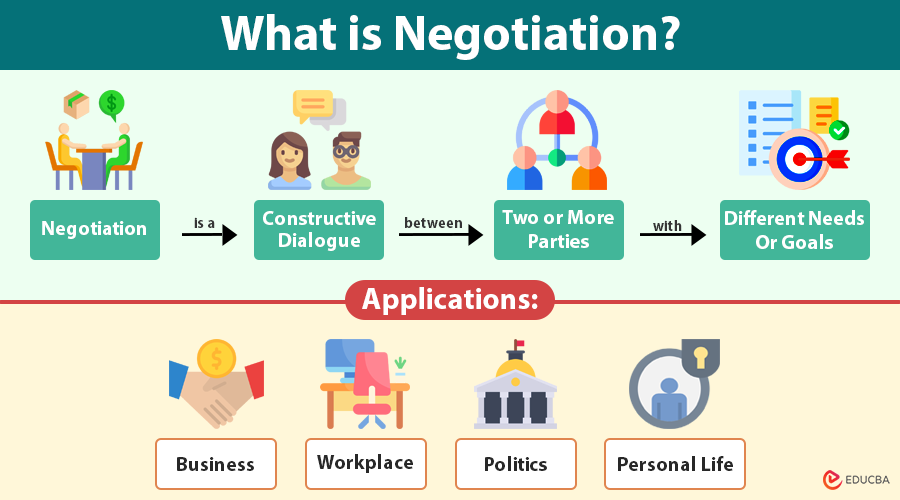
Negotiation is a purposeful conversation between two or more parties who have different needs or goals.
Instead of confrontation, it encourages collaboration, understanding, and compromise. Successful negotiation does not focus on one side “winning” but on creating solutions where all parties feel satisfied.
In a workplace negotiation, an employee discusses flexible working hours with their manager. The manager agrees by balancing the employee’s needs with organizational requirements, resulting in an outcome that satisfies both sides.
Table of Contents
Key Takeaways
- Negotiation is a purposeful conversation that focuses on collaboration rather than confrontation.
- Different types of negotiation, including distributive, integrative, multiparty, and team, require unique approaches.
- Following a structured process that includes preparation, discussion, exchange, bargaining, closing, and follow-up helps ensure clarity and effectiveness.
- Smart strategies like win-win thinking, anchoring, concessions, BATNA leverage, and framing strengthen outcomes.
- Essential skills such as persuasion, problem-solving, empathy, adaptability, and clear communication define successful negotiators.
- Avoiding common mistakes, such as poor preparation, emotional reactions, or ignoring others’ needs, prevents weak agreements.
- Negotiation applies everywhere in business deals, workplaces, politics, and even daily personal decisions.
Types of Negotiation
Negotiation does not follow a single style. Depending on the situation, parties may adopt different approaches to achieve their goals. The major types include:
1. Distributive Negotiation
In this type, parties compete to divide a fixed resource such as money, time, or assets. One side’s gain directly reduces the other’s share, making it a “win-lose” scenario.
2. Integrative Negotiation
Here, both sides collaborate to expand the value pie. They search for creative solutions that benefit everyone involved, turning the process into a “win-win” outcome.
3. Multiparty Negotiation
This type involves several stakeholders negotiating simultaneously. It requires coordination, coalition-building, and balancing diverse interests to reach a consensus.
4. Team Negotiation
In this approach, groups or teams negotiate on behalf of organizations. Clear internal communication, role alignment, and collective strategy play a key role in success.
Stages of Negotiation
Negotiation usually follows a structured process. Understanding each stage allows negotiators to remain focused, organized, and effective throughout the discussion. The key stages include:
1. Preparation and Planning
- Gather all relevant information and study the other party’s background.
- Define your objectives and set clear priorities.
- Recognize your BATNA (Best Alternative to a Negotiated Agreement).
- Anticipate challenges and decide on potential concessions.
2. Opening the Discussion
- Establish rapport and create a cooperative atmosphere.
- Present your goals and expectations.
- Demonstrate willingness to listen and understand the other side.
3. Information Exchange
- Share viewpoints openly to build clarity and trust.
- Uncover the other party’s needs and interests.
- Ask probing questions to move beyond surface demands and reveal core motivations.
4. Bargaining and Problem-Solving
- Present offers, counteroffers, and concessions.
- Explore trade-offs and package issues to create mutual benefits.
- Manage disagreements calmly, focusing on solutions rather than conflict.
5. Closing and Agreement
- Summarize the agreed-upon terms to confirm understanding.
- Put the final agreement in writing when necessary.
- End the negotiation on a positive note to encourage future collaboration.
6. Implementation and Follow-Up
- Execute the agreed terms promptly and accurately.
- Monitor progress to ensure commitments are met.
- Address disputes quickly and maintain strong relationships.
Strategies of Negotiation
Effective negotiators rely on specific strategies to guide discussions, strengthen their position, and achieve favorable results. The most widely used strategies include:
1. Win-Win Strategy
- Focus on solutions that satisfy both parties.
- Prioritize long-term relationships over short-term gains.
2. Anchoring Strategy
- Start with a strong initial offer to set the bargaining tone.
- Influence the negotiation range in your favor.
3. Concession Strategy
- Offer small, calculated concessions without weakening your key interests.
- Use concessions as a tool to build reciprocity and goodwill.
4. BATNA Leverage
- Strengthen your position by identifying and improving your Best Alternative to a Negotiated Agreement.
- Use BATNA as a safeguard against unfavorable deals.
5. Silence and Patience
- Apply strategic pauses to create pressure.
- Encourage the other party to reveal additional information or adjust their offer.
6. Building Trust
- Show consistency, honesty, and reliability throughout the negotiation.
- Use trust to foster cooperation and reduce resistance.
7. Framing
- Present issues in a way that emphasizes shared benefits.
- Reduce conflict by highlighting common ground rather than differences.
Key Skills for Effective Negotiation
To apply these strategies, you must sharpen essential skills:
- Persuasion and Logical Argumentation – Convince others with clear reasoning and evidence.
- Creative Problem-Solving – Generate innovative solutions under pressure.
- Active Listening and Empathy – Understand perspectives and build trust.
- Confident yet Respectful Communication – Express ideas clearly while maintaining professionalism.
- Adaptability – Adjust style to suit personalities and changing situations.
Common Negotiation Mistakes
Negotiators often weaken their position or outcomes when they:
- Enter unprepared – Fail to research, set goals, or define alternatives.
- Focus only on personal gain – Overlook opportunities for collaboration.
- Ignore the other party’s needs – Miss chances to create value and build trust.
- React emotionally – Allow anger, frustration, or impatience to drive decisions.
- Accept poor deals too quickly – Settle out of fear, pressure, or lack of confidence.
Applications of Negotiation in Daily Life
Negotiation is not limited to boardrooms or politics; it shapes outcomes in everyday situations as well. Here are some key areas where negotiation plays an important role:
1. Business
Leaders negotiate contracts, partnerships, and pricing to secure profitable deals.
2. Workplace
Employees negotiate promotions, responsibilities, and resources to advance their careers.
3. Politics
Governments negotiate treaties, trade agreements, and peace settlements that impact nations.
4. Personal Life
Individuals negotiate purchases, household duties, and daily plans with family or friends.
Final Thoughts
Negotiation is more than just a tool for settling differences; it is a vital life skill that shapes success in business, careers, and personal relationships. By understanding its types, stages, and strategies, you can approach discussions with clarity, confidence, and flexibility. Strong negotiators know when to collaborate, when to stand firm, and how to create solutions that benefit everyone involved.
Frequently Asked Questions (FAQ’s)
Q1. What is the difference between bargaining and negotiation?
Answer: Bargaining often focuses only on price or single issues, while negotiation is broader and considers multiple interests, relationships, and long-term outcomes.
Q2. What is the role of ethics in negotiation?
Answer: Ethical negotiation builds trust, long-term partnerships, and credibility. Using deceptive tactics may secure short-term wins but often damages relationships.
Q3. How do cultural differences affect negotiation?
Answer: Culture shapes communication styles, decision-making, and expectations. What seems assertive in one culture may appear aggressive in another, making cultural awareness crucial in global negotiations.
Recommended Articles
We hope this guide on Negotiation was helpful. Explore related articles on conflict resolution strategies, communication skills for leaders, and cross-cultural negotiation techniques.

