

Natural Disasters Essay – Introduction
Natural disasters are sudden, powerful events caused by natural forces that can lead to widespread destruction, loss of life, and environmental damage. These events include earthquakes, hurricanes, floods, tsunamis, volcanic eruptions, and wildfires. With little or no warning, they disrupt lives and challenge communities worldwide.
In recent years, natural disasters have become more recurring and severe due to climate change, urbanization, and population growth. For example, in early 2026, extreme wildfires in Chile forced the evacuation of tens of thousands of residents and destroyed thousands of homes, a stark reminder of how climate‑fueled disasters continue to threaten lives and ecosystems globally.
There are three levels of natural disasters: small, medium, and large-scale. Events that do not cause significant harm in the world are small-scale, such as lightning and storms. Medium-scale disasters are riskier and more harmful than small-scale ones, such as blizzards or landslides. Meanwhile, professionals who write papers for money often analyze the impact of large-scale disasters, such as tsunamis and wildfires, which cause significant environmental damage. Disasters that cause significant environmental damage, such as tsunamis and wildfires, are large-scale.
This essay will explore the types, causes, effects, and management strategies of natural disasters, providing a comprehensive overview of these powerful forces of nature.
List of Natural Disasters
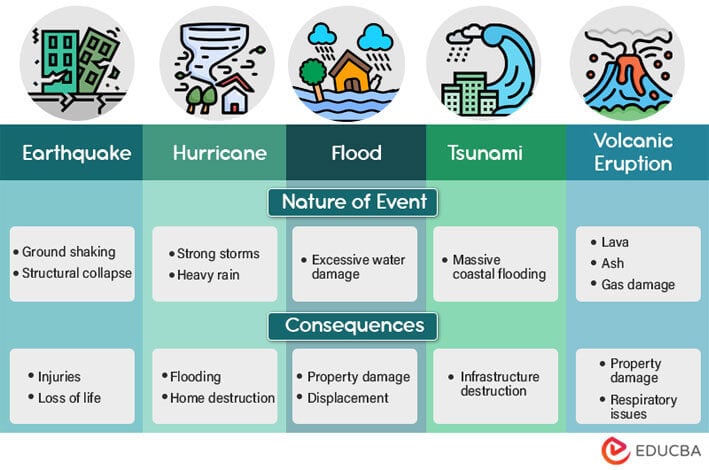
Some common natural disasters, along with their nature of impact and consequences, are provided in the table below:
| List | Nature of Event | Consequences |
| Earthquake | Shakes the ground and can collapse buildings | Injuries, loss of life |
| Hurricane | Big storms with strong winds and heavy rain | Flooding, destruction of homes |
| Flood | Too much water causes damage to homes and roads | Property damage, displacement |
| Wildfire | Spreads quickly and destroys everything in its path | Destruction of vegetation, property |
| Tsunami | Giant waves that flood coastal areas | Flooding, destruction of infrastructure |
| Volcanic Eruption | Releases lava, ash, and gasses damaging surrounding areas | Property damage, respiratory problems |
Types of Natural Disasters
There are different ways that natural disasters can happen. Some of the types are as follows,
- Internal: It includes all the disasters that happen when there are some changes under the earth’s surface. These include earthquakes, tsunamis, volcanic eruptions, etc. We cannot easily predict these events.
- External: It is when there is a disturbance above the Earth’s surface. It is generally because of us humans who change the environment. These are usually landslides, floods, etc.
- Temperature: When air or ocean temperatures change, it can trigger disasters such as tornadoes and hurricanes. Even drought and glacier melt occur because of changes in environmental temperature.
- Biological: These disasters occur because of viruses and bacteria that cause harmful diseases that can kill people. For instance, COVID-19, Ebola virus, etc.
Real-Life Examples of Natural Disasters
- 2023 Hawaii Wildfires: Rapidly spreading fires caused fatalities and extensive property loss, underscoring the need for wildfire preparedness.
- 2022 Pakistan Floods: Heavy monsoon rains submerged large areas, displacing millions and causing massive economic losses.
- 2021 Hurricane Ida, USA: One of the costliest hurricanes, causing widespread flooding, power outages, and infrastructure damage.
- 2011 Japan Earthquake & Tsunami: A magnitude 9.0 earthquake triggered a tsunami, resulting in over 15,000 deaths and severe nuclear disaster risks.
- 2004 Indian Ocean Tsunami: A massive tsunami caused by an undersea earthquake killed over 230,000 people across 14 countries.
- 1980 Mount St. Helens Eruption, USA: A volcanic eruption destroyed forests, homes, and caused 57 deaths.
- 2010 Haiti Earthquake: A magnitude 7.0 earthquake killed over 200,000 people and devastated the capital city, Port-au-Prince.
- 2019 Amazon Rainforest Fires: Large-scale forest fires caused environmental damage, affecting global air quality and biodiversity.
Human-Caused vs Natural Causes of Disasters
Natural disasters can occur purely due to natural processes, but human activities often intensify their frequency and impact. Understanding the difference helps in disaster prevention and management.
1. Natural Causes
Earth’s natural processes drive these disasters, which occur without human intervention:
- Earthquakes: Movement of tectonic plates beneath the Earth’s surface.
- Volcanic eruptions: Release of lava, ash, and gases from volcanoes.
- Hurricanes and tornadoes: Caused by changes in air pressure and temperature.
- Tsunamis: Triggered by underwater earthquakes or landslides.
2. Human-Caused Factors (Anthropogenic)
Human activities often worsen natural events or create disasters:
- Deforestation: Increases the risk of landslides and floods.
- Urbanization: Poor drainage and unplanned construction worsen flood damage.
- Climate change: Rising global temperatures intensify storms, heatwaves, and wildfires.
- Mining and drilling: Can trigger localized earthquakes and soil erosion.
Natural Disasters Effects
Natural disasters can have long-term impacts, including economic and social disruption, displacement, and health problems. The severity of the disaster depends on factors such as the event’s intensity, location, and effectiveness of the disaster management system.
Material and financial loss, social unrest, and political instability are common impacts of natural disasters. Homelessness and a lack of access to basic necessities can occur after a natural disaster, leading to social disruption and decreased economic activity.
Emotional and psychological damage, as well as long-term health problems, can result from natural disasters. Air pollution can cause respiratory problems, and trauma and stress can lead to mental health issues.
Natural disasters can also impact the environment, causing soil erosion, water pollution, and a decrease in biodiversity. These impacts can have long-term consequences and require efforts to recover and rebuild.
Natural Disaster Management
It’s really important to be ready for natural disasters and keep ourselves safe. Countries that are prepared to face natural disasters suffer less damage. So, governments should have disaster management policies for prevention, response, and recovery. Here are a few precautions we can take for some common natural disasters:
Earthquake Preparedness
- Building strong structures so they don’t break during earthquakes.
- Creating early warning systems that can alert people before an earthquake happens.
- Educating people about the dangers of earthquakes and what to do when they happen.
Hurricane Preparedness
- Developing evacuation plans and identifying safe locations to stay during a hurricane.
- Establishing systems to provide early warnings and updates on approaching hurricanes.
- Ensuring proper drainage systems to mitigate flooding caused by heavy rain during hurricanes.
Flood Preparedness
- Implementing measures to manage water flow and prevent flooding.
- Educating individuals on flood risks and providing guidance on evacuation procedures.
- Creating emergency response plans to provide immediate assistance during and after a flood.
Wildfire Preparedness
- Promoting fire safety practices and educating individuals on the prevention of wildfires.
- Clearing dry leaves and vegetation around homes to reduce fire risks.
- Cooperating with firefighting agencies and having evacuation plans in place during wildfire emergencies.
Tsunami Preparedness
- Raising awareness about tsunamis and educating coastal communities on evacuation routes.
- Establishing warning systems near coastal areas to provide early alerts for tsunamis.
- Conducting drills and exercises to ensure that individuals know how to respond to a tsunami.
Volcano Preparedness
- Monitoring volcanic activities and studying eruption patterns to predict volcanic eruptions.
- Establishing communication systems to disseminate timely warnings about volcanic eruptions.
- Collaborating with scientists and experts to develop evacuation plans and safe zones during volcanic emergencies.
Overall Disaster Management
Individuals should develop personal emergency plans and be aware of the risks of different types of disasters. Governments and individuals can be better prepared to respond to natural disasters by having emergency plans. Thus, taking these precautions can lower the risk of disasters and protect ourselves and our communities.
Conclusion
Natural disasters can cause immense destruction, pain, and loss of life. To lessen the impact of these disasters, taking disaster management measures is necessary.

